



LAFC vs Cruz Azul: Momentum, Turning Points, and a Statement Victory
The first leg of the 2026 CONCACAF Champions Cup quarterfinal between Los Angeles FC and Cruz Azul was expected to be tightly contested. Instead, it evolved into a compelling demonstration of tactical adaptation and individual brilliance.
- LAFC vs Cruz Azul: Momentum, Turning Points, and a Statement Victory
- Early Control Belonged to Cruz Azul
- The Turning Point: A Single Moment of Quality
- David Martínez: Pace, Precision, and Ruthlessness
- Tactical Shift: From Pressure to Control
- Defensive Solidity: Lloris Anchors the Clean Sheet
- The Bigger Picture: MLS vs Liga MX
- What Comes Next: The Second Leg in Puebla
- Conclusion: A Statement Performance
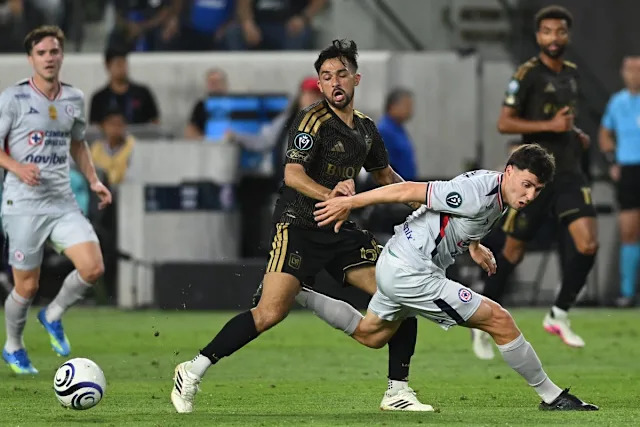
On April 8 at BMO Stadium, LAFC overcame a difficult opening phase to secure a commanding 3–0 victory. The result not only gives the MLS side a decisive advantage heading into the second leg but also reinforces a broader shift in competitive balance between Major League Soccer and Liga MX clubs.
Early Control Belonged to Cruz Azul
High Press, High Confidence
For the opening 30 minutes, Cruz Azul—under manager Nicolás Larcamón—executed a near-flawless high-press strategy. Their tempo disrupted LAFC’s rhythm and forced repeated defensive interventions.


Goalkeeper Hugo Lloris emerged as the key figure during this phase, producing critical saves:
- 9th minute: Denied Gabriel Fernández
- 19th minute: Stopped Agustín Palavecino
Cruz Azul controlled possession—recording over 65%—and generated 15 total shots across the match. However, their inability to convert early dominance into goals proved decisive.


The Turning Point: A Single Moment of Quality
Son Heung-Min Changes the Game
At the half-hour mark, the match pivoted sharply. Son Heung-Min delivered the breakthrough, finishing a precise cross from Mathieu Choinière.
The goal did more than open the scoring—it altered the psychological balance. Cruz Azul, previously composed, began to show signs of vulnerability.
Son’s performance underlined his enduring quality:
- Goal at 30’
- Six goal contributions (2 goals, 4 assists) in his first five tournament appearances
David Martínez: Pace, Precision, and Ruthlessness
Exploiting Defensive Gaps
Once LAFC gained momentum, the game opened up—and David Martínez capitalized with clinical efficiency.


- 39’: Martínez doubled the lead, accelerating past Érik Lira and finishing from a tight angle
- 58’: A solo run from midfield culminated in a composed finish into the bottom corner
This brace marked:
- His second multi-goal performance for LAFC
- Another standout display against Liga MX opposition
Martínez’s direct running and transitional threat exposed Cruz Azul’s defensive structure, particularly as they pushed forward in search of an away goal.
Tactical Shift: From Pressure to Control
LAFC’s Counterattacking Blueprint
After weathering the early storm, LAFC adjusted effectively:
- Transitioned into a compact defensive shape
- Targeted quick counterattacks through pace on the wings
- Leveraged Choinière’s playmaking (two assists)
Meanwhile, Cruz Azul’s structure deteriorated:
- Loss of composure after conceding
- Increased fouls and confrontations
- Reduced efficiency in final-third execution
Despite their statistical dominance in possession, they failed to register a single away goal—an outcome that significantly complicates their path forward.
Defensive Solidity: Lloris Anchors the Clean Sheet
Experience Under Pressure
While LAFC’s attacking players took the headlines, Hugo Lloris’ contribution was foundational:
- Five saves across the match
- Key stops against Luka Romero and Carlos Rotondi
- Maintained composure during Cruz Azul’s strongest phases
LAFC’s defensive record at home in the competition remains notable:
- Eight wins in 11 home matches
- Clean sheets in all eight victories
The Bigger Picture: MLS vs Liga MX
A Changing Competitive Landscape
Historically, Liga MX teams dominated regional competitions. However, this result signals a broader trend:
- MLS clubs demonstrating tactical maturity
- Increased depth and international talent integration
- Stronger home performances in continental fixtures
For Cruz Azul—defending champions—the defeat raises structural questions:
- Inefficiency despite possession dominance
- Vulnerability in transition defense
- Psychological response after conceding
What Comes Next: The Second Leg in Puebla
The tie now shifts to Estadio Cuauhtémoc on April 14. The aggregate scenario is clear:
- LAFC: Hold a 3–0 advantage
- Cruz Azul: Require a significant comeback without conceding
Given LAFC’s counterattacking threat and defensive discipline, the Mexican side faces a high-risk tactical dilemma—attack aggressively and risk further exposure, or balance cautiously and risk elimination.
Conclusion: A Statement Performance
This match was not merely a victory—it was a statement.
LAFC demonstrated:
- Tactical resilience after a slow start
- Clinical finishing in key moments
- Defensive organization under pressure
Cruz Azul, by contrast, illustrated the limitations of possession without efficiency.
With one foot in the semifinals, LAFC now controls the narrative heading into the return leg. The second leg will determine whether this performance becomes a defining milestone—or simply the first chapter of a dramatic comeback attempt.