

Lady Gaga’s “RUNWAY” Is a Fashion Time Machine — A Narrative Journey Through Couture, Nostalgia, and Pop Reinvention
A Runway Where Past and Present Collide
Lady Gaga has never treated fashion as mere aesthetics—it is narrative, identity, and performance rolled into one. With the release of her new music video “RUNWAY” on April 27, 2026, the global pop icon takes that philosophy to its most theatrical extreme.
Serving as the first musical release tied to The Devil Wears Prada 2 soundtrack, the video isn’t just a promotional tie-in—it’s a layered, high-concept visual story that merges Gaga’s personal fashion history with the fictional world of Runway magazine.
Directed by renowned choreographer and creative visionary Parris Goebel, “RUNWAY” unfolds like a cinematic fashion retrospective, where each outfit, pose, and frame acts as a deliberate callback to the past—while simultaneously redefining Gaga’s evolving artistic identity.
Scene One: The Reinvention of Iconic Gaga
The video’s most compelling thread is its deliberate revisiting of Gaga’s own fashion legacy. Rather than simple homage, these moments feel like reinterpretations—almost as if Gaga is rewriting her own mythology.
One standout sequence features her in a sparkly blue blazer paired with a flowing skirt, a yellow wig, and a reflective blue headpiece. Fans quickly identified the resemblance to her unforgettable 2010 “Telephone” music video look, where she wore a similar color palette and a sculptural headpiece featuring a telephone.
Elsewhere, she appears in a porcelain-inspired top while holding a delicate teapot, echoing her 2009 Brit Awards performance with the Pet Shop Boys—an era-defining moment that fused performance art with couture spectacle.
These visual echoes are not accidental. They function as a curated archive—Gaga revisiting her past personas, reframing them through a modern lens, and placing them in dialogue with her present self.
Enter Doechii: A New Voice in Couture Storytelling
While Gaga’s fashion callbacks anchor the video in nostalgia, collaborator Doechii brings a fresh, contemporary edge that prevents the project from becoming purely retrospective.
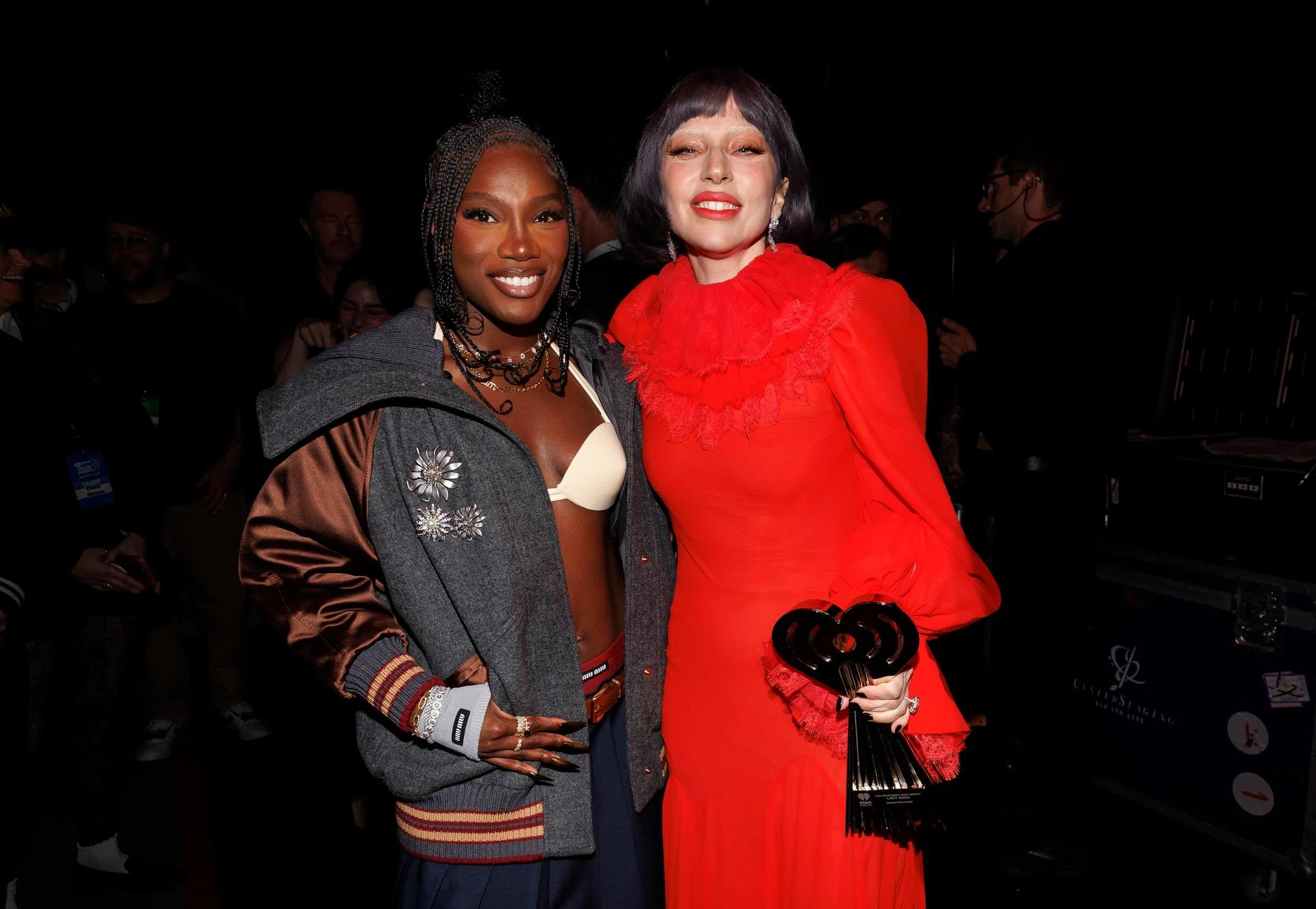
At just 27, Doechii stands confidently alongside Gaga, not as a supporting act but as an equal creative force. Her wardrobe choices are bold, experimental, and unapologetically futuristic—mirroring Gaga’s early-career ethos while pushing it forward.
The synergy between the two artists is particularly evident in their shared couture moments, where both performers embody different facets of the same fashion philosophy: identity as performance.
The Craft Behind the Spectacle: Couture as Armor
The visual centerpiece of “RUNWAY” is undoubtedly its couture—most notably the custom creations by Gaurav Gupta Couture.
Both Gaga and Doechii wear intricately designed bodysuits featuring more than 3,000 crystals, crafted over approximately 800 hours by a team of more than 20 artisans.
Designer Gaurav Gupta described the concept succinctly:
“These looks were designed as a second skin… the idea was to create something immersive and unapologetic, where couture becomes both armour and identity.”
Gaga’s version is a pearl-toned bodysuit, densely embellished to reflect light with almost liquid intensity. In contrast, Doechii’s is a black, spike-studded design layered with sequins and crystals, projecting strength and defiance.
Together, these looks symbolize two complementary interpretations of power—one luminous and fluid, the other sharp and confrontational.
A Cinematic Bridge to The Devil Wears Prada 2
Beyond its standalone artistry, “RUNWAY” serves as an extension of the Devil Wears Prada universe. The video cleverly incorporates subtle references to the film, including:
- A magazine cover featuring Emily Blunt’s character, Emily Charlton
- A striking visual of Gaga posing beside a giant red crocodile heel with a pitchfork detail, a surreal nod to fashion excess and editorial drama
These elements reinforce the central theme of the franchise: fashion as power, spectacle, and storytelling.
The connection runs deeper still. Gaga’s involvement in the film itself was personally facilitated by Meryl Streep, who reached out directly:
“I just said, ‘Would you do this? ’Cause it’s gonna be really good… And she said, ‘Yeah.’ [Just] like that.”
This anecdote underscores Gaga’s unique position—not just as a musician contributing to the soundtrack, but as a creative collaborator within the film’s broader cultural ecosystem.
The Soundtrack Strategy: Expanding the Fashion Narrative
“RUNWAY” is only the beginning. The Devil Wears Prada 2 soundtrack also includes two additional Lady Gaga tracks—“Shape of a Woman” and “Glamorous Life”—alongside contributions from artists like Dua Lipa, SZA, Miley Cyrus, and RAYE.
This multi-artist lineup reflects a deliberate strategy: positioning the soundtrack as a cultural event in its own right, blending fashion, music, and cinema into a unified narrative.
Fashion Nostalgia as Cultural Currency
What makes “RUNWAY” particularly resonant is its timing. The release coincides with a broader cultural moment defined by nostalgia and revival.
From Anne Hathaway revisiting iconic Andy Sachs looks during the press tour to the film’s recreation of the original “Vogue” montage, The Devil Wears Prada 2 is steeped in references to its own legacy.
Gaga’s video fits seamlessly into this trend—but elevates it. Instead of merely referencing the past, she transforms it into a narrative device, turning fashion into a timeline that audiences can visually decode.
The Final Frame: Why “RUNWAY” Matters
At its core, “RUNWAY” is more than a music video—it is a cultural artifact that bridges eras, industries, and identities.
It achieves several things simultaneously:
- Reasserts Lady Gaga’s role as a fashion innovator
- Introduces Doechii as a rising force in visual storytelling
- Extends the narrative universe of a beloved film franchise
- Demonstrates the enduring power of couture as artistic expression
In an industry often driven by fleeting trends, “RUNWAY” stands out as something more deliberate: a carefully constructed dialogue between past and present, spectacle and substance.
And in doing so, it reminds us that fashion—at its highest level—is never just about clothing. It is about memory, identity, and the stories we choose to tell.


