




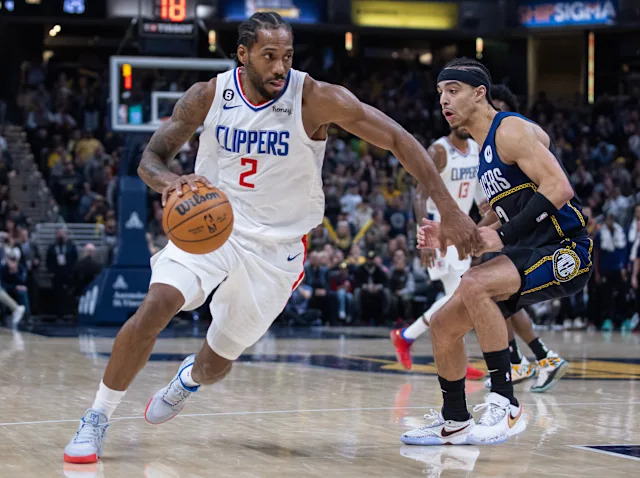
Kawhi Leonard: Dominance, Discipline, and the Clippers’ Playoff Push
In a league defined by personality and spectacle, Kawhi Leonard has long operated differently—quiet, methodical, and relentlessly efficient. Yet when it matters most, his performances speak with unmistakable authority.
- Kawhi Leonard: Dominance, Discipline, and the Clippers’ Playoff Push
- A Night That Defined Control Under Pressure
- The Statistical Consistency Behind the Performance
- The 65-Game Threshold: A Strategic Late-Season Push
- Clippers’ Supporting Cast and Team Dynamics
- Tactical Identity: Why Kawhi Leonard Remains Elite
- Cultural Impact: The Power of a Different Archetype
- What Comes Next: Playoff Positioning and Legacy Stakes
- Conclusion: A Season Defined by Precision and Risk
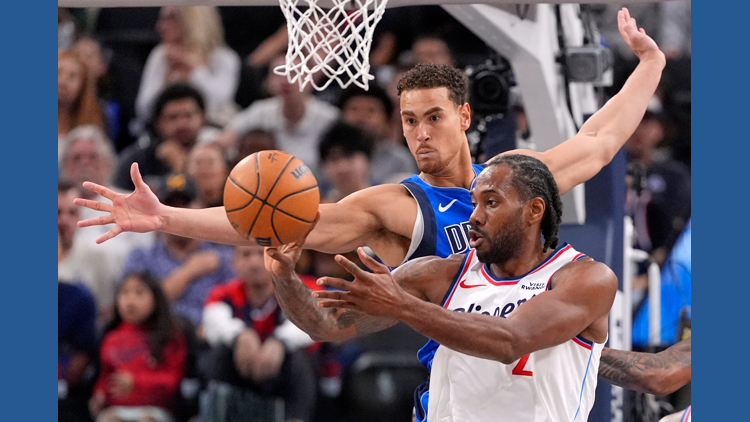
That reality was once again evident in Los Angeles, where Leonard delivered a commanding display to guide the Los Angeles Clippers to a critical late-season victory over the Dallas Mavericks. The performance not only reinforced his elite status but also highlighted the delicate balance between individual ambition and team success as the NBA season approaches its defining stretch.
A Night That Defined Control Under Pressure
The Clippers’ 116–103 win over Dallas was far from straightforward. Despite opening the game with a dominant 17–0 run and building a 23-point lead, Los Angeles found itself under pressure as the Mavericks clawed back into contention.


At the center of that storm was Leonard.
He finished with 34 points, six three-pointers, four rebounds, and three assists, delivering a performance that ultimately stabilized his team when momentum shifted.
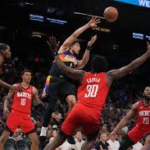
More importantly, Leonard’s scoring was timely. As Dallas briefly seized the lead in the third quarter, he responded by scoring seven of the Clippers’ final 11 points in that period, regaining control and setting the tone for the closing stages.
The result was not just a win—it was a demonstration of composure, execution, and leadership.
The Statistical Consistency Behind the Performance
Leonard’s latest outing is not an isolated incident but part of a broader trend of sustained excellence.
- He has recorded 55 consecutive games with 20 or more points
- Over recent games, he has averaged 27.1 points, 6.0 rebounds, and 3.3 assists
- His shooting efficiency remains elite, highlighted by 11-of-19 field goals and 6-of-10 from three-point range
This level of consistency places Leonard firmly in the conversation for postseason honors—provided he meets the league’s participation requirements.


The 65-Game Threshold: A Strategic Late-Season Push
A significant subplot surrounding Leonard’s current run is his pursuit of eligibility for major NBA awards.
With 62 games played, Leonard must appear in three more games to reach the 65-game minimum required for recognition such as:
- Most Valuable Player (MVP)
- All-NBA selections
This requirement has influenced both his availability and approach in recent weeks. Notably, Leonard is playing through a wrist injury, a departure from his historically cautious load-management strategy.
This shift reflects a calculated decision:
- Short-term goal: Secure eligibility and maintain rhythm
- Long-term risk: Potential aggravation ahead of the playoffs
For the Clippers, it represents a high-stakes balancing act between immediate competitiveness and postseason durability.
Clippers’ Supporting Cast and Team Dynamics
While Leonard was the focal point, the Clippers’ victory was supported by meaningful contributions from teammates:
- Darius Garland added 22 points
- Brook Lopez contributed 11 rebounds
- Derrick Jones Jr. recorded a double-double impact
On the opposing side, rookie Cooper Flagg impressed with 25 points and 9 rebounds, continuing to build his reputation despite the loss.
The game itself evolved through multiple phases:
- Clippers dominance early (39–26 after first quarter)
- Mavericks resurgence (tie at 47–47)
- Tight third-quarter battle
- Clippers’ controlled finish
This progression underscores both the volatility of NBA contests and the value of a reliable closer—something Leonard consistently provides.
Tactical Identity: Why Kawhi Leonard Remains Elite
Leonard’s impact extends beyond scoring totals. His effectiveness is rooted in a multidimensional skill set:
1. Midrange Precision
Leonard remains one of the league’s most efficient midrange shooters, capable of generating high-percentage looks under defensive pressure.
2. Defensive Versatility
Even as his offensive role has expanded, his defensive instincts—anticipation, positioning, and strength—remain defining traits.
3. Game Management
Perhaps his most underrated skill is tempo control. Leonard dictates pace, choosing moments to accelerate or slow the game based on situational demands.
4. Efficiency Over Volume
Unlike many high-scoring players, Leonard maximizes output without excessive shot attempts, maintaining elite shooting splits.
Cultural Impact: The Power of a Different Archetype
In an era dominated by outspoken personalities and social media presence, Leonard represents an alternative blueprint for superstardom.
He is:
- Reserved in interviews
- Minimalist in public persona
- Highly disciplined in preparation
Yet his influence is profound. For younger players and fans, Leonard’s career demonstrates that performance—not personality—can define legacy.
His sustained excellence reinforces a broader cultural message within professional sports: results remain the ultimate currency.
What Comes Next: Playoff Positioning and Legacy Stakes
The Clippers’ victory carries implications beyond a single result. It directly affects their standing in the Western Conference playoff race.
Upcoming challenges include:
- A back-to-back matchup against the Oklahoma City Thunder
- Maintaining momentum while managing player health
- Securing favorable playoff seeding
For Leonard, the immediate objectives are clear:
- Reach the 65-game threshold
- Enter the postseason in peak form
- Lead the Clippers on a deep playoff run
The broader question remains whether this calculated late-season push will enhance or compromise the team’s championship aspirations.
Conclusion: A Season Defined by Precision and Risk
Kawhi Leonard’s recent performances encapsulate the defining tension of elite sports: the intersection of opportunity and risk.
His 34-point outing against Dallas was more than a statistical achievement—it was a strategic statement. It demonstrated his willingness to push physical limits, assert leadership, and position both himself and his team for postseason success.
As the regular season closes, Leonard’s trajectory will be closely watched. Whether this calculated gamble results in individual accolades, team success, or both will ultimately define the narrative of his season.
What remains certain is this: when the stakes rise, Kawhi Leonard continues to deliver with precision.