


Julian Nagelsmann Under the Spotlight: Wins, Tactics, and Controversy Ahead of the 2026 World Cup
As the 2026 FIFA World Cup approaches, Julian Nagelsmann finds himself at the center of intense scrutiny, despite leading Germany through a successful run of results. The recent international break has delivered both optimism and controversy, highlighting the dual reality of Nagelsmann’s tenure: tactical progress on the pitch and growing debate off it.
Germany secured back-to-back victories, including a dramatic 2-1 win over Ghana, extending their strong form and reinforcing their status as a serious World Cup contender. Yet, instead of universal praise, Nagelsmann’s comments, decisions, and communication style have sparked widespread discussion among fans and analysts alike.
This moment reflects a broader narrative: Germany may be improving, but the path under Nagelsmann remains complex, calculated, and at times divisive.
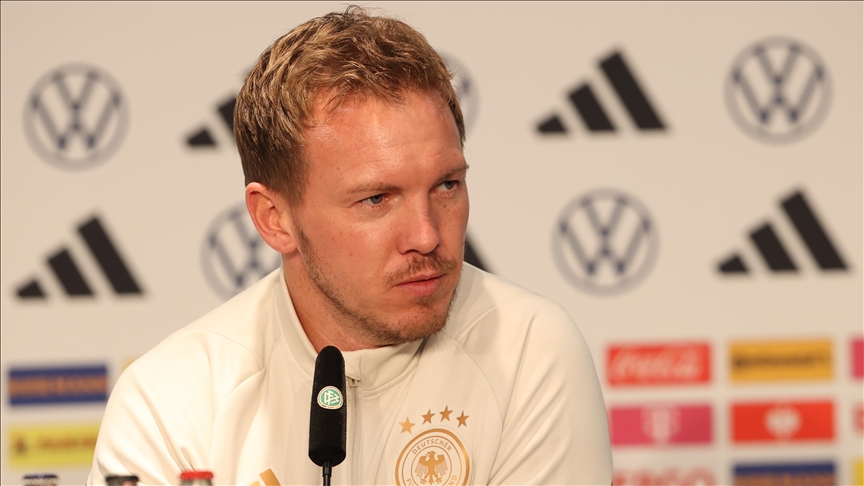
Late Drama Against Ghana Highlights Squad Depth
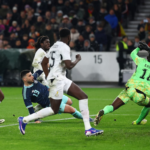
Germany’s latest victory over Ghana provided a compelling snapshot of Nagelsmann’s evolving squad. The match, played in Stuttgart, saw the hosts dominate possession and create numerous chances before ultimately sealing a late win.
A penalty from Kai Havertz gave Germany the lead, but Ghana responded through Abdul Fatawu in the second half. Just when the match appeared headed for a draw, substitute Deniz Undav scored in the 88th minute, securing a 2-1 victory.

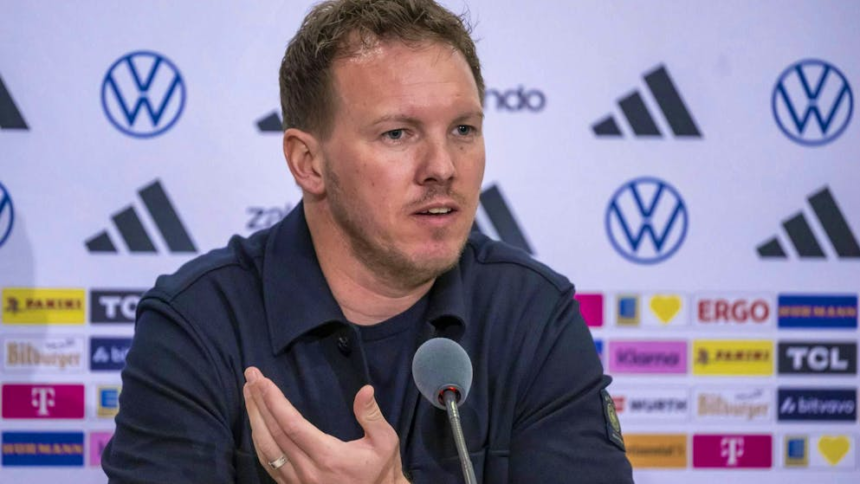
Nagelsmann acknowledged both the positives and the flaws in his team’s performance:
“If we play our game and are tactically disciplined, then we’re really good… Then it became more difficult because we got a bit impatient and played too freely.”
The match underlined Germany’s attacking quality and depth, but also exposed moments of inconsistency—an issue Nagelsmann continues to address ahead of the World Cup.
The Deniz Undav Debate: Selection vs Performance
While Undav’s late goal secured victory, it also intensified one of the most talked-about issues surrounding Nagelsmann: his handling of player roles.
Despite scoring the winner, Undav was not widely praised by his coach. Instead, Nagelsmann offered a measured—and to some, controversial—assessment:

“He wasn’t very involved… But then he scored, that’s what he’s there for.”
Nagelsmann emphasized that Undav fits a specific tactical role, particularly as a late-game finisher when opponents tire. He further reinforced that these predefined roles would not change easily:
“We have defined roles… otherwise I can forget about my credibility.”
This approach reflects a broader philosophy: selection decisions are not reactionary but based on long-term planning for the World Cup. However, it has also drawn criticism from fans who expected a more flexible response to in-game performances.
A Coach Who Explains Everything—Perhaps Too Much
One of the defining traits of Nagelsmann’s leadership style is his transparency. He is known for explaining tactical decisions in detail, often down to individual player roles and match-specific reasoning.
While this clarity can help players understand expectations, it has also contributed to controversy. His candid comments have been described as “overly detailed” and, at times, contradictory, fueling debates across media and fan communities.
Yet, within the squad, this communication appears to have a stabilizing effect. Players are aware of their roles, expectations, and limitations—reducing uncertainty, even if it limits spontaneity.
In essence, Nagelsmann prioritizes structure over sentiment, a choice that may define Germany’s success or failure on the global stage.
Tactical Evolution: The “Double Diamond” System
Beyond the headlines, Nagelsmann’s most significant contribution lies in his tactical innovation. Germany’s recent performances reflect a structured yet fluid system built around what analysts describe as a “double diamond” formation.
This system operates on two key layers:
- Build-up phase: A base diamond involving defenders and midfielders ensures control and progression.
- Attacking phase: A forward diamond creates movement, exploiting spaces between defensive lines.
Key figures such as Joshua Kimmich and Florian Wirtz play central roles in dictating tempo and unlocking defenses.
The system emphasizes:
- Vertical and diagonal passing
- Constant positional rotation
- Intelligent exploitation of defensive gaps
However, it also presents risks. The structure can leave Germany vulnerable during transitions, particularly against physically strong opponents. Balancing attacking ambition with defensive stability remains a critical challenge.
Results vs Perception: A Growing Disconnect
Statistically, Germany’s form under Nagelsmann is impressive. The team has:
- Won multiple consecutive matches
- Scored freely
- Demonstrated tactical cohesion
Yet, public perception remains mixed. This disconnect stems from two main factors:
- Communication style: Nagelsmann’s blunt and analytical comments often generate controversy.
- Selection rigidity: His commitment to predefined roles can appear inflexible, especially when players like Undav deliver decisive contributions.
Despite this, results continue to validate many of his decisions. Even critics acknowledge that his tactical framework is producing tangible improvements on the pitch.
World Cup 2026: The Ultimate Test
Looking ahead, Germany’s immediate schedule includes friendlies against Finland and the United States before beginning their World Cup campaign.
These matches will serve as final preparation for a tournament that carries significant expectations. After disappointing performances in recent World Cups, Germany is aiming for redemption—and Nagelsmann is central to that mission.
The key questions remain:
- Can his tactical system hold up against elite opposition?
- Will his rigid role-based approach limit adaptability?
- Can he manage external pressure while maintaining internal clarity?
Conclusion: Progress Amid Pressure
Julian Nagelsmann’s current chapter with Germany is defined by a paradox. On one hand, the team is improving, winning matches, and developing a clear tactical identity. On the other, the manager himself remains a polarizing figure.
The recent win over Ghana encapsulates this dynamic: a strong performance, a dramatic finish, and immediate controversy in its aftermath.
As the World Cup approaches, the focus will shift from debate to results. If Germany succeeds, Nagelsmann’s methods will be validated. If not, the very qualities that define his leadership—precision, structure, and outspoken analysis—may come under even greater scrutiny.
For now, one conclusion is clear: Germany is evolving, and Julian Nagelsmann is shaping that evolution in his own distinct, uncompromising way.