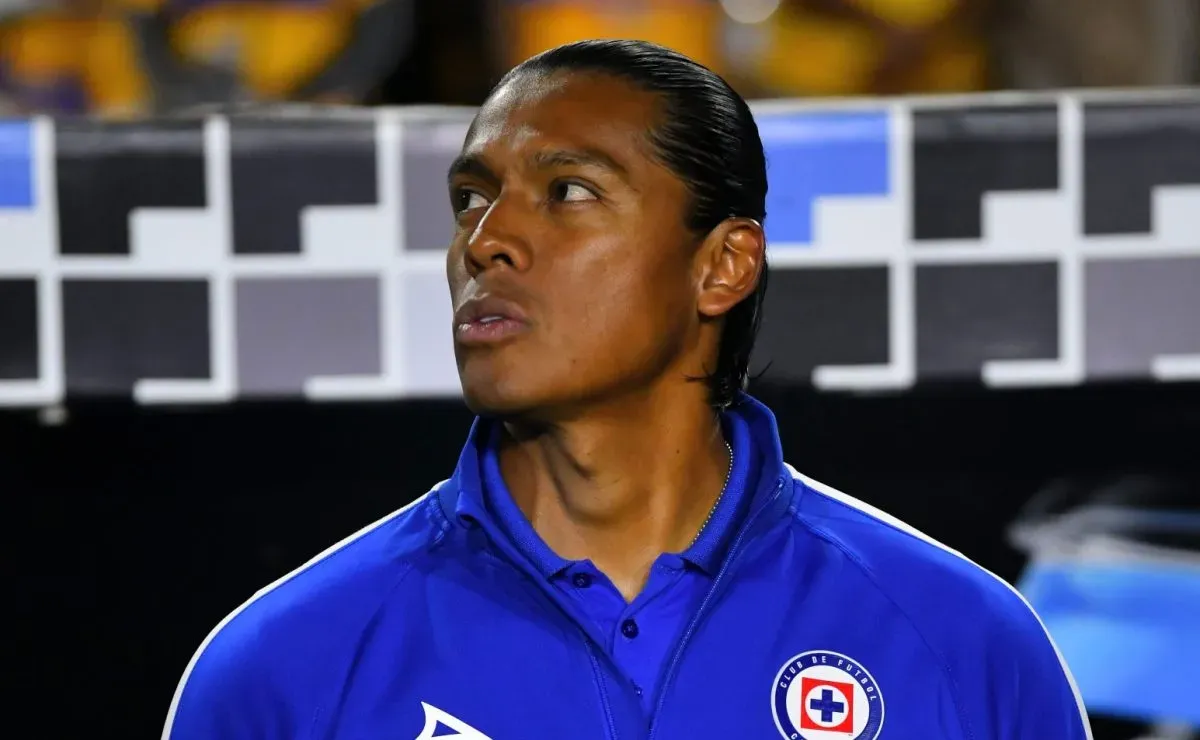
Joel Huiqui’s Redemption Run: How Cruz Azul’s Interim Coach Sparked a Clausura 2026 Revival
Joel Huiqui’s name has long carried complicated emotions among Cruz Azul supporters and Liga MX followers. For some, he remains linked to one of Mexican soccer’s most infamous defensive moments — the 2009 “muertinha” handball against Morelia. For others, he was a loyal defender who spent years fighting for the club’s badge.
Now, in May 2026, Huiqui is writing a dramatically different chapter.
The former Cruz Azul defender has guided the club into the Clausura 2026 semifinals after eliminating Atlas 4-2 on aggregate, transforming a team that looked directionless only weeks earlier into one of the league’s most dangerous postseason sides. His rapid rise from interim replacement to legitimate title contender has become one of the defining stories of the Mexican soccer playoffs.
With Chivas awaiting in the semifinals and Cruz Azul chasing what would be its tenth Liga MX title, Huiqui suddenly finds himself at the center of Mexican football once again — but this time, under very different circumstances.

Cruz Azul’s Sudden Turnaround
When Joel Huiqui took over as director técnico on April 22, 2026, Cruz Azul was spiraling.
The club had endured a disastrous stretch under Nicolás Larcamón, going nine matches without a victory across Liga MX and the CONCACAF Champions Cup. Confidence inside the squad had collapsed, and the team’s season appeared to be slipping away just as the postseason approached.
Management responded by making a bold and emotional decision: handing control to a former player whose coaching résumé was still developing but whose understanding of the club culture ran deep.
The gamble has paid off immediately.
Under Huiqui, Cruz Azul closed the regular season with an emphatic 4-1 victory over Necaxa before carrying that momentum into the playoffs. Against Atlas, the team showed composure and attacking sharpness that had been missing for months.
Cruz Azul claimed a 3-2 win in one quarterfinal meeting before securing a steadier 1-0 result in the return leg, completing a 4-2 aggregate triumph and booking a semifinal clash with Guadalajara’s Chivas.
The numbers alone tell the story of the transformation:
- 4-1 victory over Necaxa
- 4-2 aggregate playoff win over Atlas
- First semifinal appearance after a nine-match winless streak
What looked like a season collapsing under pressure has become a serious title chase.
A Familiar Name Returns to the Spotlight
For Mexican football fans, Joel Huiqui is not an unknown figure.
Born Joel Adrián Huiqui Andrade on February 18, 1983, in Ohuira, Sinaloa, Huiqui’s journey to professional football was never straightforward. Ohuira, a town with fewer than 3,000 inhabitants, was far removed from the glamour and visibility of Mexico’s football powerhouses.
His rise began after a primary school teacher encouraged him to attend a private school in Los Mochis, helping open a pathway into organized football development. Huiqui later entered Cruz Azul’s youth system, progressing through every stage of the club’s academy structure.
By the time he reached the first team, he had become known for his physical defending, commitment, and leadership qualities.
He also represented Mexico at youth World Cup level, adding international experience to his growing reputation.
Yet despite a long career, Huiqui’s playing legacy became overshadowed by a single controversial moment.
The “Muertinha” That Never Fully Disappeared
In 2009, during a match against Morelia, Huiqui committed what became one of Liga MX’s most memorable defensive acts.
While on the ground inside the penalty area, he used his hand to push the ball away from goal — a play later referred to by fans as the “muertinha.” The incident remained attached to his public image for years, frequently resurfacing whenever his name appeared in football discussions.
For many players, moments like that become permanent scars on their professional identity.
Huiqui retired as a player in 2019, but the handball memory continued to define much of how he was viewed publicly. That is part of why his sudden emergence as Cruz Azul’s postseason coach feels especially compelling.
This is no longer just a story about tactics or short-term results.
It has become a story about redemption.
Cruz Azul’s Pressure Has Only Increased
The semifinal matchup against Chivas now carries enormous pressure.
Cruz Azul remains one of Mexico’s most historic clubs, but expectations surrounding the team are always intense because of its long and emotionally charged championship history. The pursuit of a tenth Liga MX title hangs heavily over every postseason appearance.
For Huiqui, the challenge is particularly complex.
He inherited a team low on confidence, stabilized it quickly, and reignited belief among supporters. But semifinal success would elevate expectations even further. What began as an emergency appointment has suddenly become a potential long-term coaching audition.
The stakes surrounding the Chivas series are enormous:
- A place in the Clausura 2026 final
- Validation of Huiqui’s rapid managerial rise
- A chance to erase years of frustration around the club
- The possibility of reshaping Huiqui’s entire football legacy
The pressure is no longer about merely rescuing the season. It is about sustaining the revival.
Tactical Stability Has Changed Cruz Azul’s Identity
One of the most noticeable differences under Huiqui has been tactical balance.
During the final weeks of Larcamón’s tenure, Cruz Azul struggled defensively while also lacking attacking efficiency. The team frequently appeared disconnected between midfield and defense, leading to costly mistakes and dropped points.
Huiqui’s approach has been noticeably more controlled.
Against Atlas, Cruz Azul combined aggressive attacking moments with improved defensive structure. The second-leg 1-0 victory particularly highlighted the team’s newfound discipline, showing an ability to protect leads and manage pressure effectively.
Players have also appeared more energized and emotionally engaged since the coaching change.
That emotional lift can often become decisive in playoff football, especially in Liga MX, where momentum and confidence frequently shape postseason outcomes.
The Semifinal Against Chivas Could Define Everything
The semifinal clash with Chivas represents far more than another playoff series.
It is a meeting between two massive institutions in Mexican football, both carrying enormous fan expectations and national attention. Every tactical decision, lineup change, and coaching adjustment will face intense scrutiny.
For Huiqui personally, this is the biggest test of his managerial career.
AP photographs from Mexico City on May 13, 2026, captured Huiqui intensely directing his players during the semifinal first leg against Chivas, illustrating just how rapidly he has transitioned from club alumnus to central figure on Liga MX’s biggest stage.
Whether Cruz Azul ultimately wins the championship or not, Huiqui has already altered the narrative surrounding the club’s season.
Weeks ago, Cruz Azul looked broken.
Now, they look dangerous.
A Story Bigger Than Soccer
Part of what makes Joel Huiqui’s rise resonate so strongly is the human element behind it.
Football history is full of players remembered for one mistake. Very few receive an opportunity to redefine themselves in front of the same supporters who witnessed those difficult moments.
Huiqui’s journey from a small town in Sinaloa to Cruz Azul’s bench during a title chase reflects resilience more than perfection. His current run is not erasing the past — instead, it is expanding the story beyond a single controversial moment.
That distinction matters.
For younger coaches and former players across Liga MX, Huiqui’s emergence also reinforces how quickly football narratives can change. Careers rarely move in straight lines, and reputations are often rebuilt through persistence rather than instant success.
What Comes Next for Cruz Azul?
Cruz Azul’s immediate future depends on whether this surge can continue against Chivas.
If Huiqui guides the club into the final, pressure will mount for the organization to consider him as more than a temporary solution. His understanding of the club culture, combined with the team’s rapid improvement, could make him a powerful long-term option.
However, Liga MX playoff football can change quickly.
One difficult result could halt the momentum just as rapidly as it appeared.
Still, the reality remains undeniable: Joel Huiqui has already transformed the atmosphere around Cruz Azul.
What started as a desperate managerial change has evolved into one of the most compelling stories of the Clausura 2026 season.
And for a man once remembered primarily for a controversial handball, that transformation may already represent a victory of its own.