

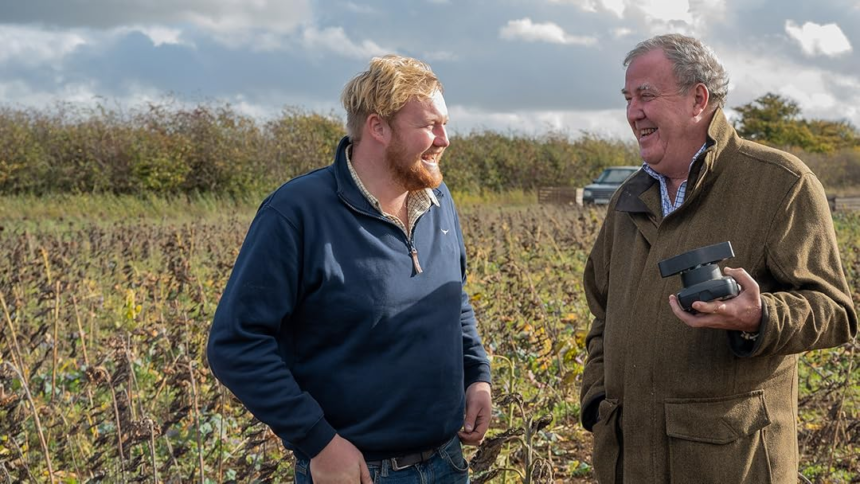
Jeremy Clarkson: A Life of Controversy, Reinvention, and Unfiltered Opinions
Introduction: The Man Who Refuses to Be Conventional
Few media personalities have built a career as polarizing—and enduring—as Jeremy Clarkson. Known initially as a sharp-tongued motoring journalist, Clarkson has evolved into something far broader: a television icon, columnist, farmer, and outspoken commentator on modern Britain.
- Introduction: The Man Who Refuses to Be Conventional
- From Top Gear to Farming: A Career Built on Reinvention
- A Health Scare That Changed the Conversation
- Funeral Plans: Characteristically Unconventional
- Organ Donation: A Personal and Controversial Stance
- Politics, Farming, and the Inheritance Tax Debate
- Clarkson’s Farm and Cultural Impact
- A Public Figure Who Thrives on Contradiction
- What Comes Next: Television, Advocacy, and Legacy
- Conclusion: A Legacy Defined by Defiance
In recent weeks, Clarkson has once again captured public attention—not for cars or television, but for his candid reflections on mortality, inheritance, and even organ donation. His remarks, drawn from personal health experiences and ongoing political frustrations, offer a revealing glimpse into a figure who has always thrived on saying what others avoid.
This is not just a story about a celebrity’s unusual statements. It is a broader narrative about aging, legacy, and the tension between personal beliefs and public expectations.
From Top Gear to Farming: A Career Built on Reinvention
Clarkson’s public identity was forged through automotive television, most notably on Top Gear and later The Grand Tour. Alongside colleagues like Richard Hammond and James May, he created one of the most successful entertainment formats in global television.
Yet in recent years, Clarkson has pivoted toward an entirely different stage: agriculture.
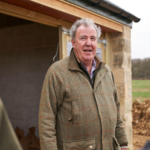

His series Clarkson’s Farm documents life on his 1,000-acre Diddly Squat Farm in Oxfordshire. What began as a curiosity-driven project has evolved into a significant cultural phenomenon, exposing the economic and logistical realities of farming in the UK.
Beyond entertainment, Clarkson has become a vocal advocate for farmers, frequently highlighting financial pressures, regulatory burdens, and policy changes affecting rural communities.
A Health Scare That Changed the Conversation
Clarkson’s recent reflections cannot be separated from his health crisis in 2024.
After experiencing symptoms including chest tightness, clamminess, and pins and needles in his arm, he was admitted to Oxford’s John Radcliffe Hospital. Although a heart attack was ruled out after ECGs, blood tests, and X-rays, doctors delivered a stark warning.


He later revealed:
“It seems that of the arteries feeding my heart with nourishing blood, one was completely blocked and the second of three was heading that way.”
A stent was fitted during a procedure that lasted around two hours. The experience left Clarkson confronting a reality he had long joked about but never seriously addressed—his own mortality.
By his own account, he had been “days away” from a far more severe outcome.
Funeral Plans: Characteristically Unconventional
Clarkson’s response to this brush with death has been predictably unconventional.
Rather than adopting a somber or traditional tone, he has approached end-of-life planning with a mix of dark humor and deliberate inconvenience.
Among his stated plans:
- Playing the full 23-minute version of “Supper’s Ready” by Genesis at his funeral
- Leaving certain acquaintances just “20p” in his will so they won’t think they were forgotten
- Bequeathing a cow to James May—specifically because it would be “something he’d find irritating”
- Giving “all my trousers” to Richard Hammond
He summarized his approach with a blunt observation:
“Dying in this day and age is unbelievably complicated.”
The choices are intentionally theatrical, consistent with a personality that has always blurred the line between sincerity and satire.
Organ Donation: A Personal and Controversial Stance
Perhaps the most widely discussed revelation is Clarkson’s decision not to donate his organs after death.
Despite acknowledging the ethical expectation, he expressed a personal hesitation rooted in uncertainty about the afterlife:
“I know I should carry one. It’s the right thing to do.
But I’ve always had a nagging doubt that I might be wrong about God and that if I give my eyes to a motorcyclist and it turns out there is a heaven, I’d be pretty cross with myself.”
The statement reflects Clarkson’s broader tendency to frame serious topics through personal skepticism and humor, though it has also sparked debate about public influence and social responsibility.
Politics, Farming, and the Inheritance Tax Debate
Clarkson’s recent commentary is also tied closely to his opposition to changes in UK agricultural taxation.
He has been particularly vocal about a planned inheritance tax affecting farms valued over certain thresholds, set to come into force from April 2026. The policy, aimed at reforming Agricultural Property Relief, has drawn strong reactions from farming communities.
Clarkson has participated in protests in London and used his platform to criticize the policy, describing it as an “absurd tax on the dead.”
His concerns extend beyond finances. He argues the policy could reshape family farming structures and create difficult decisions around inheritance and succession.
In one of his more provocative remarks, he suggested that such policies could even influence end-of-life decisions, joking about staying on life support to avoid triggering tax implications.
Clarkson’s Farm and Cultural Impact
Clarkson’s transition into agriculture has had a measurable cultural impact.
Through Clarkson’s Farm, he has:
- Increased public awareness of farming economics
- Highlighted labor shortages and supply chain challenges
- Elevated discussions around rural policy
Even critics acknowledge the show’s role in reshaping public perception. Wildlife presenter Michaela Strachan noted that the series has helped audiences understand “how difficult farming is,” even if she does not personally watch it.
The program’s success has also translated into business ventures, including farm retail operations and the Hawkstone beverage brand.
A Public Figure Who Thrives on Contradiction
Clarkson remains a figure defined by contradiction:
- A critic of modern systems who benefits from global media platforms
- A provocateur who occasionally reveals genuine vulnerability
- A celebrity who has reinvented himself as a farmer and advocate
His recent emotional reaction to a farmers’ choir performance—where he admitted, “I actually welled up”—offers a rare glimpse of a softer dimension beneath his typically abrasive persona.
What Comes Next: Television, Advocacy, and Legacy
Clarkson is set to return to screens with the fifth season of Clarkson’s Farm, expected to premiere in May.
The series continues to function as both entertainment and commentary, bridging lifestyle television with policy discourse in a way few programs manage.
Looking ahead, Clarkson’s influence is likely to remain significant in three areas:
- Television storytelling – blending humor with real-world challenges
- Agricultural advocacy – amplifying issues facing farmers
- Public debate – provoking conversation on topics others avoid
Conclusion: A Legacy Defined by Defiance
Jeremy Clarkson’s latest remarks about death, organ donation, and inheritance are consistent with a career built on defiance.
They are not simply headline-grabbing statements. They reflect a broader pattern: confronting uncomfortable subjects with candor, humor, and a willingness to challenge consensus.
Whether one agrees with him or not, Clarkson remains a figure who shapes conversation—not by following expectations, but by resisting them.