

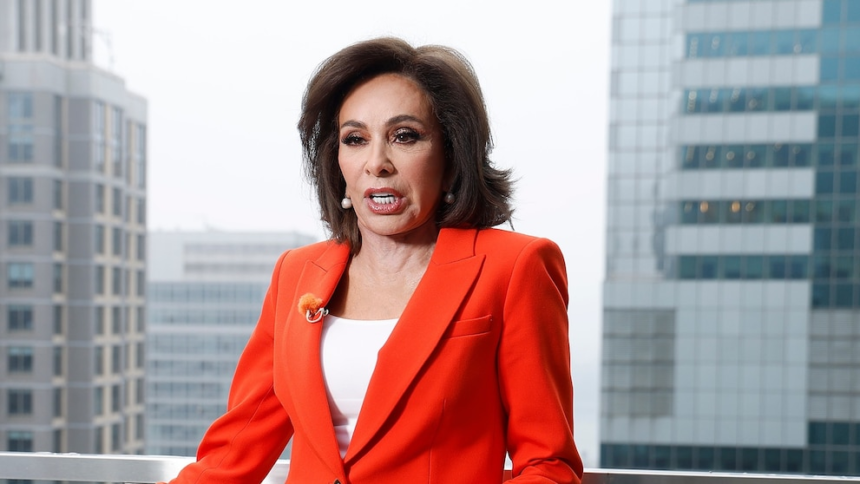
Jeanine Pirro: Power, Controversy, and the Politics of Prosecution
Inside the Rise—and Scrutiny—of a High-Profile Legal Figure
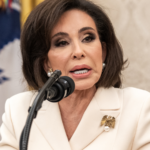
Few figures in American politics and media occupy as many intersecting roles as Jeanine Pirro. A former judge, prosecutor, television personality, and now a central player in Washington’s legal landscape, Pirro’s trajectory reflects both personal ambition and the shifting dynamics of modern political power.
- Inside the Rise—and Scrutiny—of a High-Profile Legal Figure
- From Courtroom to Cable News—and Back to Power
- A Challenging Record in the Courtroom
- The Jury Problem: Trust and Perception
- Controversial Cases and Public Attention
- The Trump Connection and Questions of Independence
- Ambition and the Attorney General Question
- Internal Pressures and Institutional Change
- High-Stakes Trials Ahead
- The Broader Implications
- Conclusion: A Defining Moment for Pirro—and the Justice System
In 2026, she stands at a critical crossroads. As U.S. Attorney for Washington, D.C., her performance in the courtroom, her proximity to President Donald Trump, and speculation about her future ambitions have placed her under intense public and institutional scrutiny.
This analytical feature examines Pirro’s current influence, the challenges facing her office, and the broader implications of her leadership in a politically charged justice system.


From Courtroom to Cable News—and Back to Power
Before returning to a prominent prosecutorial role, Pirro had already built a multi-decade career that blended law and media visibility. Known widely as “Judge Jeanine,” she transitioned from a New York judicial career into television, becoming a recognizable face on political commentary platforms.
Her appointment to lead the U.S. Attorney’s Office in Washington, D.C., marked a return to formal legal authority—but in a far more polarized environment than the one she left years earlier.


At 74, Pirro entered the role with both experience and expectations. Supporters viewed her as a decisive law-and-order figure aligned with Trump-era priorities. Critics, however, questioned whether her overt political affiliations could complicate the impartiality expected of a federal prosecutor.
A Challenging Record in the Courtroom
Pirro’s tenure has been defined, in part, by measurable outcomes in court—and those outcomes have drawn attention.
In the first eight criminal trials handled by her office in 2026, prosecutors secured convictions in only half of the cases. This performance stands in contrast to a national average where approximately 90% of federal criminal trials result in convictions.
The disparity has raised concerns among legal observers and former prosecutors. Several factors appear to contribute:
- A jury pool increasingly skeptical of federal prosecutions tied to political narratives
- Public perceptions of the Justice Department’s alignment with executive priorities
- Complex or controversial cases that face resistance during indictment stages
Grand jury dynamics have further complicated matters. In multiple instances, jurors declined to indict individuals perceived as political opponents of the administration, signaling a breakdown in traditional prosecutorial momentum.
Pirro, however, has rejected the notion that her office is underperforming.
When questioned about trial outcomes, she responded bluntly: “Hogwash!”
She has emphasized broader metrics, including guilty pleas, noting that dozens of defendants have accepted responsibility rather than proceeding to trial.
The Jury Problem: Trust and Perception
A recurring theme in assessments of Pirro’s leadership is the issue of trust—specifically, whether juries believe in the neutrality of prosecutions.
Legal professionals familiar with Washington’s federal court environment suggest that skepticism toward government motives has grown significantly. Some jurors appear unwilling to convict in cases they perceive as politically motivated, even when evidence is presented.
This shift has had tangible consequences:
- Increased mistrials due to deadlocked juries
- Higher rates of acquittals in politically sensitive cases
- Reluctance among grand juries to issue indictments
One attorney summarized the situation starkly: prosecutors may now face juries that are “comfortable with losing” because they believe the system itself is compromised.
For Pirro, this represents a structural challenge rather than a purely legal one—an environment where courtroom success depends as much on public perception as on evidentiary strength.
Controversial Cases and Public Attention
Several high-profile cases have amplified scrutiny of Pirro’s office.
One widely discussed incident involved a man accused of throwing a sandwich at a federal agent. Despite initial efforts to pursue serious charges, the case ultimately collapsed, with a jury finding the defendant not guilty.
In another instance, prosecutors failed to secure indictments against political figures, including Democratic lawmakers, in cases tied to broader national debates.
These outcomes have fueled criticism that the office may be pursuing aggressive or politically charged cases without sufficient legal grounding.
At the same time, Pirro’s defenders argue that such cases reflect necessary enforcement efforts in a highly polarized climate, where legal accountability intersects with political conflict.
The Trump Connection and Questions of Independence
Pirro’s close relationship with Donald Trump remains central to her public image and professional trajectory.
Reports indicate that she maintains frequent communication with the president and is considered part of his inner political circle.
This proximity has sparked ongoing debate about prosecutorial independence. One moment that encapsulated these concerns occurred when Pirro declined to answer a hypothetical question about whether she would prosecute Trump if he committed a crime in public.
Rather than addressing the scenario directly, she avoided the question, citing the impropriety of discussing hypotheticals.
For critics, this response reinforced concerns about impartiality. For supporters, it reflected a disciplined refusal to engage in speculative or politically loaded discourse.
Ambition and the Attorney General Question
As political shifts reshape the Justice Department, Pirro’s name has emerged in discussions about potential advancement.
Following the removal of Pam Bondi, speculation intensified about who might fill the role permanently. Pirro is widely viewed as a contender, though she has publicly denied actively pursuing the position.
The competition is not limited. Figures such as Alina Habba have also been floated as candidates, reflecting a broader contest among loyalists within Trump’s political orbit.
This internal jockeying underscores a key reality: in the current administration, loyalty and alignment may carry as much weight as traditional qualifications.
Internal Pressures and Institutional Change
Beyond courtroom outcomes, Pirro’s office faces internal challenges.
A significant turnover of experienced prosecutors has altered the institutional landscape, leaving fewer seasoned attorneys to navigate complex federal cases.
This shift has practical implications:
- Reduced continuity in case strategy
- Increased burden on remaining staff
- Potential impact on trial preparation and execution
Pirro has attempted to address these issues by seeking feedback from federal judges on her team’s performance, emphasizing the need for continuous improvement.
However, responses from the judiciary have reportedly been mixed, reflecting broader tensions within the legal system.
High-Stakes Trials Ahead
Despite recent setbacks, Pirro’s office is preparing for several major cases that could redefine its reputation.
These include:
- A hate crime case involving a fatal attack near a Jewish community event
- A shooting involving National Guard members
- A long-running international terrorism case tied to the 1988 Pan Am Flight 103 bombing
The outcomes of these trials will be critical. Success could reinforce Pirro’s standing as a capable prosecutor. Failure, however, may deepen existing concerns about her leadership.
The Broader Implications
Pirro’s tenure raises fundamental questions about the intersection of law and politics in the United States.
At its core, the issue is not simply about win rates or individual cases. It is about whether the justice system can maintain credibility in an era of intense political polarization.
Key implications include:
- The erosion of trust between juries and federal prosecutors
- The increasing difficulty of securing convictions in politically sensitive cases
- The potential long-term impact on the Justice Department’s authority
As one legal expert noted, weakened credibility in high-profile prosecutions can spill over into routine cases, affecting public safety and legal consistency.
Conclusion: A Defining Moment for Pirro—and the Justice System
Jeanine Pirro’s current role places her at the center of a complex and evolving legal landscape.
Her career has long been defined by visibility, assertiveness, and alignment with powerful political figures. Now, those same traits are being tested against the realities of courtroom performance, institutional trust, and public scrutiny.
Whether she ultimately ascends to higher office or remains in her current position, the outcomes of her tenure will have lasting consequences—not only for her own legacy but for the credibility of the justice system she represents.
In a climate where legal authority and political influence are increasingly intertwined, Pirro’s story is less about a single individual and more about the broader question facing modern democracies: can justice remain impartial when politics is never far from the courtroom?