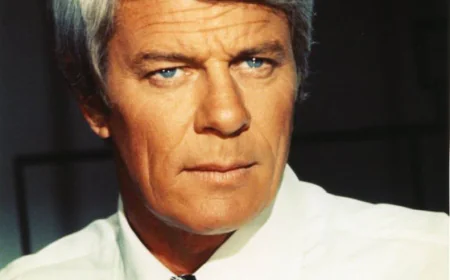
Jaz Coleman Net Worth, Relationships, Age/Birthdate & Birthday
Overview of Jaz Coleman — net worth, relationships, age/birthdate, and birthday.
 loveness92
Jaz Coleman: A Maverick Between Punk Roar and Orchestral Majesty
From the quiet lanes of Cheltenham to global concert stages and symphony halls, Jaz Coleman’s journey is anything but ordinary. Known for his razor-edged voice, frenetic energy, and a restless aesthetic that fuses punk nihilism with classical ambition, Coleman has spent decades defying musical boundaries. His life — physical, spiritual, and creative — reads like a mythic odyssey. This profile explores his birthdate and birthday, net worth, relationships, and more — painting a portrait of an artist whose contradictions are the very source of his power.
A Rooted Beginning With Unsettled Seeds
Born Jeremy Coleman on February 26, 1960 in Cheltenham, Gloucestershire — celebrated each year on that date as his birthday — he grew up under the tutelage of two schoolteacher parents: an English father and a mother of Anglo-Indian, half-Bengali descent.
From a very young age, Coleman’s life was shaped by classical discipline. He studied piano and violin under the guidance of the head of music at Cheltenham College and sang in various cathedral choirs until his late teens.
In a twist of fate, the early promise of classical music morphed into a hunger for something rawer. By his mid-teens, inspired by chance encounters and the underground energy of London’s late-1970s music scene, Coleman swapped violin strings for amplifiers — setting in motion the radical transformation that would define his life.
Channeling Chaos — From Punk Fury to Post-Punk Pioneering
In late 1978, Coleman and drummer Paul Ferguson co-founded what would become the legendary post-punk outfit Killing Joke. The band soon expanded with guitarist and bassist recruits, and by 1979 they were ready to unleash their vision.
With Coleman on vocals and synthesizer, Killing Joke introduced a fierce blend of post-punk, industrial undertones, and apocalyptic urgency. His rasping baritone and intense stage presence — sometimes masked with theatrical makeup — delivered a sound and mood that challenged complacency and provoked introspection.
Their early work struck a nerve. Over time, the band’s angular riffs, tribal rhythms, and political edge influenced emerging genres — from industrial metal to alternative rock — and left a lasting imprint on artists across decades.
Reinvention Through Sound — Classical Aspirations and Orchestral Heights
Coleman’s relationship with classical music never truly ended — it simply found new expression. In 1982, after a tense period with Killing Joke, he retreated to Iceland, announcing his intention to become a classical composer.
Over the next years, he immersed himself in diverse musical traditions — from studying Arabic quarter-tones at the Cairo Conservatoire to working with European and global orchestras.
The result: a body of work that merged punk’s raw energy with orchestral grandeur. Coleman has composed and conducted pieces with esteemed ensembles, often reimagining rock’s rebelliousness through the structure and weight of symphonic form.
For Coleman, both the band and the orchestra remain vital: the former as a collective roar, the latter as a controlled voice. “Punk gave me that sense of having no fear of failure,” he once reflected — a freedom he carries into his more cerebral compositions.
Beyond Sound — Beliefs, Bridges, and Global Identity
Coleman’s life has always been as much spiritual as musical. His interest in mysticism, ritual, and magic have informed both the ethos of Killing Joke and his classical compositions. He has spoken about the role of ceremony in art — viewing music not just as entertainment but as a vehicle for transformation.
Over time, he became a citizen of New Zealand — adding a second nationality to his British origin — while continuing to travel, compose, lecture, and produce.
Coleman regards music as a bridge: between the primal and the refined, the visceral and the cerebral, the personal and the universal. That duality remains at the heart of his enduring influence.
Estimating Worth — The Business of a Boundary-Pusher
According to public sources, Jaz Coleman’s net worth has been estimated at around US $3 million.
That figure reflects decades of touring, recording, composing, orchestral work, and rights management — across multiple musical styles — rather than a flash of commercial fame. For an artist who has never played by conventional rules, that kind of financial consolidation is itself a quiet achievement. The net worth estimation, like many in the entertainment world, remains approximate; it offers only a partial reflection of the value Coleman has built through influence, legacy, and creative breadth.
The Enigma of Private Life — Relationships, Mystery, and the Road Less Traveled
Despite decades in the public eye, little is reliably documented about Coleman’s personal relationships or romantic life. Biographies, interviews, and official profiles remain mostly silent on marital status or long-term partnerships. Even his many travels and global residences — from New Zealand to Europe — rarely yield concrete insight into a domestic sphere.
What is clear is Coleman's philosophical distance from stardom’s glamor. He seems more invested in music, ritual, and creative evolution than in celebrity trappings. That ambiguity — the refusal to settle — has become part of his myth. It’s as if Coleman intentionally keeps certain doors closed, letting only his art speak.
A Legacy Indexed in Influence, Not Just Sales
Jaz Coleman’s life is not easily summarized by charts or album sales. His influence — on punk, industrial, metal, and classical spheres — has rippled across genres, generations, and geographies. He remains a compelling example of what happens when raw energy meets education, rebellion meets discipline, and dissonance meets orchestral structure.
His story — from Cheltenham’s cathedral choirs to global stages — is not just about musical success. It’s about unrelenting transformation, creative integrity, and the refusal to settle for easy definitions. For anyone seeking inspiration in music or life, his path offers a powerful lesson: that boundaries are there to be challenged, not merely accepted.