J.J. Cale Net Worth, Relationships, Age/Birthdate & Birthday
Overview of J.J. Cale — net worth, relationships, age/birthdate, and birthday.
 loveness92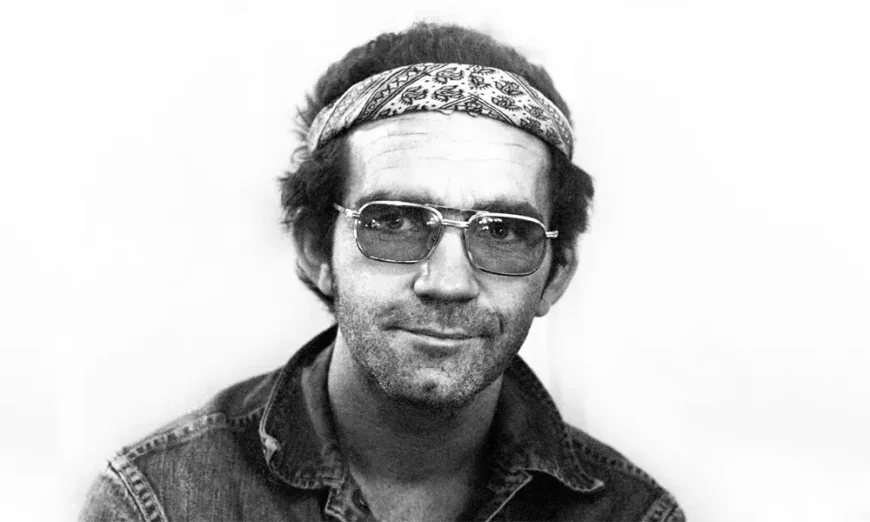
The Quiet Power of J.J. Cale: A Life in Song and Shadows
Few artists in modern music have shaped entire soundscapes without ever chasing the spotlight — and even fewer have shaped them as deeply and quietly as J.J. Cale. Born John Weldon Cale on December 5, 1938, Cale’s journey from Oklahoma City to the pantheon of rock-blues folklore is less about glamour and more about substance. In tracing his life, relationships, and enduring legacy, one sees the portrait of a man who valued privacy, authenticity, and the soulful honesty of a chord played just right.
A Tulsa Sound in the Making: Roots and Early Years
Cale entered the world on December 5, 1938, in Oklahoma City, but much of his upbringing unfolded in Tulsa, Oklahoma — a city that would eventually give birth to the laid-back, groove-driven style now often called the “Tulsa Sound.”
From early on, Cale didn’t just pick up a guitar: he studied sound engineering, building a home studio that would become his creative laboratory. After graduating high school in 1956, he found himself drafted into the Air Force; there he honed technical skills in electronics — knowledge that later harmonized with his musical instincts to shape his unique sonic signature.
In the early 1960s, Cale moved to Los Angeles alongside other Tulsa musicians. He took work as a studio engineer and played in local clubs — but at the behest of a club owner who feared confusion with another famous musician, he adopted the stage name “J.J. Cale.”
It was there, between work in the studio and gigs on the Sunset Strip, that Cale recorded a demo single featuring the song “After Midnight.” Little did he know that this modest recording would alter the trajectory of his life.
From Under-the-Radar to Recognition: Songwriting Over Stardom
Despite his early footsteps in Los Angeles, Cale struggled to gain traction as a solo artist. By 1967 he had returned to Tulsa. Yet, destiny had other plans: a copy of his demo found its way to the hands of a rising British guitarist — Eric Clapton. Clapton’s 1970 cover of “After Midnight” became a Top-20 hit — and overnight, Cale’s songwriting was vaulted into the limelight, even if his own name remained relatively obscure.
That success opened the door: Cale released his debut album Naturally in 1972, which included another enduring track, “Crazy Mama.” That song reached No. 22 on the U.S. Billboard Hot 100 and remains the most commercially successful single Cale ever performed himself.
Still, Cale never chased fame. He turned away from large-scale touring and frequent press appearances. Instead, he embraced a solitary, studio-centric lifestyle — writing, recording, mixing. As described by some critics, Cale often played nearly all the instruments on his records, layered them with his signature grooves, and produced the final mix himself.
This creative philosophy — privileging subtlety, groove, and groove over flash — resonated deeply across musical generations. Artists as varied as Lynyrd Skynyrd, Johnny Cash, Carlos Santana, John Mayer and many more recorded Cale’s songs.
A Muse and a Partnership: Life with Christine Lakeland
Behind the softly strummed guitar and the low-key vocals stood a quieter personal life. Cale’s long-term partner and muse was Christine Lakeland — a guitarist and musician who contributed to his music for decades, though they never made a show of their relationship in public.
According to available sources, their personal bond was no secret in circles familiar with his life, but Cale shunned the spotlight — refusing to marry publicly, refusing interviews, refusing fame beyond what his songs brought him.
The result: a decades-long creative partnership grounded in mutual respect, subtlety, and a shared love of music — even if very little was ever said out loud.
The Bank Account of a Songwriter: Net Worth and Legacy Earnings
Despite his reserved public profile, Cale’s influence and songwriting success translated into tangible financial rewards. According to most widely cited estimates, his net worth at the time of his death was approximately US $15 million.
Much of that wealth came not from blockbuster concert tours or radio hits of his own, but from decades of royalties — earned each time one of his compositions was covered by a major artist. As he once put it plainly: writing songs paid the bills better than playing guitar alone.
That quiet financial success reflects the ethos Cale lived by: meaningful music rather than showmanship, longevity over flash, and consistency rather than celebrity.
The Final Chapter — And the Gift After Departure
On July 26, 2013, J.J. Cale passed away after suffering a heart attack at a hospital in La Jolla, California.
Yet death did not silence Cale’s music. In April 2019 — six years after his passing — an album of previously unreleased tracks was issued under the name Stay Around, compiled lovingly by Christine Lakeland and longtime manager Mike Kappus. The album included material the world had never heard — home recordings, outtakes, demos — mixed and produced by Cale in his lifetime but left untouched until then.
Critics hailed it as vital, intimate, and unmistakably Cale — proof that his music wasn’t just of an era, but timeless.
Why J.J. Cale Matters: The Gentle Force in Music History
To understand J.J. Cale is to understand the power of understatement. In an industry often driven by spectacle, he forged a path defined by subtle grooves, minimalist guitar lines, and an unwavering commitment to songwriting craft. His legacy resides not only in his own recordings but in the countless versions of his songs — each reinterpretation a testament to the strength of his craft.
Today, when one hears the silky shuffle of a blues-rock riff, or the soft strum of a guitar mixing country, rock, and jazz influences, one might well be hearing echoes of the “Tulsa Sound” Cale helped create. His music — like him — quietly endures, reminding us that sometimes the deepest impact comes not from loud declarations, but from whispered chords, steady rhythms, and a lifetime lived on one’s own terms.