


Dominic Sessa Steps Into Anthony Bourdain’s Origin Story in A24’s Tony
Dominic Sessa’s fast-rising screen career is entering a defining new chapter. After breaking through in The Holdovers, the young actor is now taking on one of contemporary culture’s most beloved and complicated figures: Anthony Bourdain.
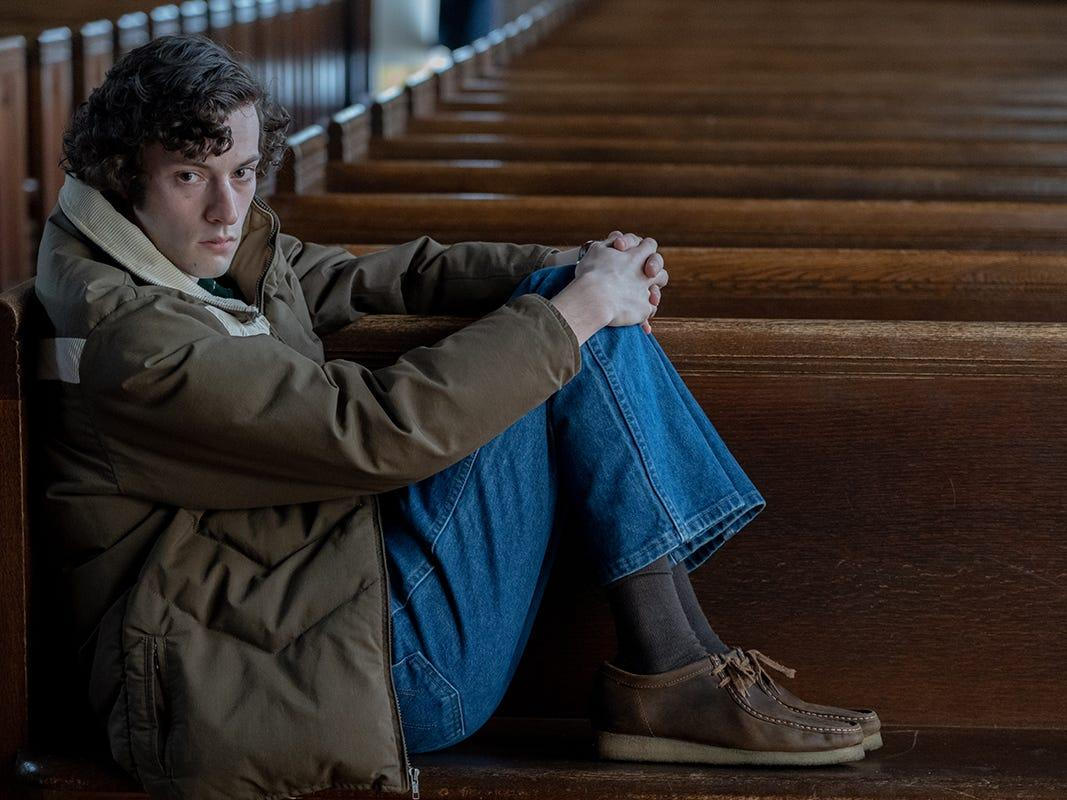
A24’s upcoming film Tony casts Sessa as a 19-year-old Bourdain during a formative summer in Provincetown, Massachusetts, long before the chef, author, and television host became a global symbol of curiosity, appetite, candor, and restless exploration. Directed by Matt Johnson, the film is scheduled for release in August 2026 and has already attracted awards-season attention because of its subject, its cast, and its unusually focused approach to biography.
Rather than attempting to summarize Bourdain’s entire life, Tony narrows its lens to the early years — the moment before fame, before Kitchen Confidential, before television, and before the world knew him as the man who could turn a meal into a meditation on place, people, politics, and belonging.
A Young Actor Meets a Cultural Giant
The casting of Dominic Sessa is central to the intrigue around Tony. Sessa became widely known through The Holdovers, where his screen presence suggested a performer capable of carrying vulnerability, intelligence, defiance, and emotional uncertainty at once. That combination makes him a compelling choice for a film about Bourdain before he became “Anthony Bourdain.”
The story places Sessa’s Bourdain in 1975, at 19 years old, when he arrives in Provincetown and begins working in a restaurant kitchen. The period is important because it captures Bourdain before the public mythology: not yet the bestselling author, not yet the television traveler, not yet the cultural figure whose voice became synonymous with authenticity.
Director Matt Johnson has described the project as an investigation into a mysterious period of Bourdain’s life. He said the script “covered a period of his life that remained mysterious and shrouded in self-report,” with Bourdain’s 2000 memoir Kitchen Confidential: Adventures in the Culinary Underbelly helping open the door to the story.
Johnson added: “Those two chapters of Kitchen Confidential read like ‘Genesis’ to me. So little happens, but the margins are packed. It meant the cast and I could investigate this man’s origin together, knowing only where he would end up 20 years later.”
Why Tony Is Not a Standard Biopic
The most striking thing about Tony is what it does not appear to be. It is not a cradle-to-grave biographical drama. It does not try to compress Bourdain’s full life — his literary fame, television career, culinary influence, personal struggles, and death — into a conventional prestige-film structure.
Instead, it focuses on one transformative summer.
That choice matters. Bourdain’s public life was already extensively documented through his books, essays, interviews, and travel series. What remains less fixed is the beginning: the formation of the sensibility that would later make him such a magnetic storyteller.
The estate of Anthony Bourdain has publicly supported the film and emphasized this distinction, stating: “We chose to support Tony because it is not a standard biopic and doesn’t attempt to summarize a life. Guided by the vision of director Matt Johnson, the film depicts one transformative summer in 1975 in Provincetown, Massachusetts. It is an interpretation, as that part of Tony’s life will always remain somewhat unknown.”
That wording gives the film room to operate as an interpretation rather than a definitive record. It also acknowledges the challenge of portraying Bourdain: his legend is familiar, but his origin is not easily reduced to a clean explanation.
Inside the Story: Provincetown, 1975
The film follows a young Bourdain as he enters the chaotic environment of a restaurant kitchen after a personal setback derails his ambitions of becoming a writer. In the trailer, Sessa’s Bourdain is shown meeting Nancy, played by Emilia Jones, after his application for a writing fellowship has been rejected. He drinks to cope with the disappointment and eventually becomes a helper in Ciro’s kitchen, where he begins learning the rhythms of cooking.
Antonio Banderas plays Ciro, a demanding head chef who draws Bourdain into the pressure, discipline, danger, and seduction of professional kitchen life. The cast also includes Emilia Jones, Dagmara Dominczyk, Rich Sommers, Stavros Halkias, Leo Woodall, and Antonio Banderas.
One line from the trailer captures the mixture of appetite, ambition, and provocation that the film appears to be chasing. Sessa’s Anthony pitches to Ciro: “Every Friday, something fancy, not pretentious. Something sexy, makes you want to fuck. Something only you can do.”
It is a line that feels deliberately Bourdain-like: crude, theatrical, sensual, and serious about food without making food polite.
Matt Johnson’s Unusual Partnership With Dominic Sessa
Johnson’s account of casting Sessa suggests that Tony became a collaborative actor-director project from the beginning. He said he had lunch with Sessa in New York with his producer, and “within an hour we were writing what would become the screenplay of the movie together.”
Johnson also pointed to “uncanny” connections between Sessa and Bourdain: “both from Jersey, both sent to private school, but didn’t fit in, both restless and searching.” He added: “I knew if a scene was working when Dom said, ‘Seems right,’ and I knew it wasn’t when he said, ‘Why would I say this?’ More than any movie I’ve ever made, this film was a partnership with an actor. He is in every shot of the movie, and carries the entire story on his hunched shoulders.”
That description frames Sessa not just as a performer hired to imitate Bourdain, but as a creative engine within the film. For a story about a young man not yet fully formed, that may be crucial. The task is not to reproduce the famous Bourdain audiences already know, but to suggest the raw material from which that figure eventually emerged.
Bourdain Before the Brand
Part of Bourdain’s cultural power came from the fact that he resisted easy branding even after he became a brand. He was a chef, but not only a chef. He was a traveler, but not a tourist. He was a television host, but often seemed skeptical of television’s simplifications. He could be funny, abrasive, tender, self-critical, political, literary, and profane within the same episode or essay.
Tony appears interested in where that outlook began.
The film draws from the period before Kitchen Confidential turned Bourdain into a literary and culinary phenomenon. Two chapters of that memoir — “Food is Sex” and “Food is Pain” — touch on his experience working in seafood restaurants in Cape Cod in the 1970s, which served as his entry into the culinary world.
Those chapter titles alone reveal the emotional territory of the film. Food, for Bourdain, was never just cuisine. It was desire, discipline, labor, failure, pleasure, class, identity, and survival. By focusing on the kitchen before celebrity, Tony may be able to explore the roots of that worldview without being overwhelmed by the later fame.
Sessa’s Approach to Playing Bourdain
Sessa has said he found inspiration in Bourdain’s curiosity. “Bourdain never wanted to feel like the smartest guy in the room. He had an unwavering desire to learn as much as he could from the world and the people around him,” Sessa said. “The rules by which he lived his life were the result of feeling a responsibility towards the people that surrounded him in the kitchen at a young age, as well as messing things up…a lot.”
That observation is important because it avoids reducing Bourdain to swagger. The public image — the cigarettes, leather jackets, sharp tongue, and fearless appetite — was only one part of the man. Beneath it was a learner’s mind, a deep respect for working people, and a belief that food could reveal the truth of a place more honestly than polished tourism ever could.
Sessa also brought some practical familiarity to the kitchen setting. “I had worked at a bakery for several years in the past, so I guess that felt like a similar type of environment to the kitchen on set. I learned a lot about seafood, particularly dishes that are served in Cape Cod,” he said, before joking, “Someone probably got zinc poisoning from the amount of oysters we ate.”
A24’s Bet on the Anti-Biopic
A24’s involvement also shapes expectations. The studio has built a reputation for backing distinctive, filmmaker-driven projects, and Tony fits that profile more than a traditional celebrity biography would. The material is recognizable, but the execution appears deliberately narrow and character-focused.
That could be a strength. Many biopics struggle because they try to cover too much: childhood, rise, romance, addiction, fame, collapse, redemption, legacy. Tony seems to be taking the opposite route — one place, one summer, one young man at the edge of becoming someone else.
The cast further suggests an ensemble built around atmosphere and pressure rather than simple biography. Banderas as Ciro gives the kitchen story a figure of authority. Emilia Jones’s Nancy appears to challenge Bourdain’s identity and morality, reportedly asking whether he is “a good guy or a bad guy.” Leo Woodall, Stavros Halkias, Dagmara Dominczyk, and Rich Sommers round out a world of people who help shape the young Bourdain’s sense of self.
Why the Film Matters Culturally
Anthony Bourdain’s death in 2018 at age 61 shocked the culinary and entertainment worlds. But the reason his absence still feels so large is not only because he was famous. It is because he represented a type of public curiosity that now feels increasingly rare.
He encouraged audiences to go beyond comfort, beyond prejudice, beyond the familiar menu. He made eating an act of listening. He taught viewers that the best travel stories were not about luxury, but about humility — about entering someone else’s world without pretending to own it.
That is why a film about his beginning carries emotional weight. The estate’s statement captures this significance: “We appreciate the portrayal of Tony’s complexity, his intellectual appetite and his conviction — qualities that eventually took him around the globe and endeared him to so many. We hope this film serves as a reminder that every journey has a start, and that audiences see the beginnings of the man who taught us how to be better explorers on our own paths.”
For longtime admirers, Tony may offer a way to revisit Bourdain without turning him into a monument. For younger viewers, it may introduce him not as an icon, but as a restless 19-year-old still figuring out who he was.
A Career Moment for Dominic Sessa
For Sessa, Tony is more than another role. It is a test of whether he can move from breakout actor to leading performer in a film built almost entirely around his presence. Johnson’s comment that Sessa is “in every shot of the movie” underlines the scale of that responsibility.
The role also places Sessa in a difficult dramatic position. He must evoke Bourdain without simply impersonating the older, familiar version. The film’s success may depend on whether audiences can see hints of the future figure — the wit, hunger, arrogance, insecurity, empathy, and intelligence — while still believing in the unfinished young man onscreen.
That is a much subtler challenge than mimicry. It requires playing becoming rather than arrival.
Conclusion: The Beginning of a Man the World Still Misses
Tony arrives with strong emotional and cultural expectations. Anthony Bourdain remains one of the most missed public figures of the last decade, and any portrayal of him will naturally invite scrutiny. But the film’s decision to focus on his early years gives it a chance to avoid the traps of the conventional biopic.
By centering on a 19-year-old in Provincetown in 1975, Tony looks for the first sparks of the curiosity, conviction, appetite, and contradiction that later defined Bourdain’s life and work. With Dominic Sessa in the lead, Matt Johnson behind the camera, and A24 preparing an August 2026 theatrical release, the film may become both a major career moment for Sessa and a fresh cinematic reflection on the beginning of Anthony Bourdain’s extraordinary journey.


