



C-SPAN and the Classroom That Reached a Nation
How a Student Documentary Became Part of America’s 250-Year Conversation
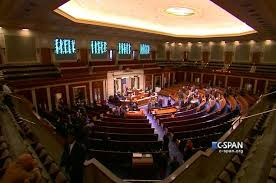
In an era where media is often shaped by speed, spectacle, and commentary, C-SPAN continues to operate with a different premise: access without interruption. Yet its influence is not confined to broadcasting congressional hearings or policy debates. Increasingly, it extends into classrooms—where students are not just consumers of civic content, but creators of it.
- How a Student Documentary Became Part of America’s 250-Year Conversation
- A Classroom Project That Traveled Beyond School Walls
- StudentCam: Where Civics Meets Storytelling
- Scale and Reach: A Nationwide Civic Exercise
- What Organizers See in Student Work
- The Institutional Model Behind the Initiative
- Why This Matters for Civic Education
- From Local Story to National Reflection
- Looking Ahead: The Role of Youth in Civic Narratives
- Conclusion: A Quiet but Expanding Influence
That dynamic came into sharp focus in Montgomery, Alabama, where a 10th grader transformed a classroom assignment into a nationally recognized documentary. The moment illustrates how C-SPAN’s educational initiatives are quietly redefining how civic engagement is taught—and practiced—across the United States.
A Classroom Project That Traveled Beyond School Walls
At Booker T. Washington Magnet High School, student Carson French began with what appeared to be a standard academic task: research, editing notes, and a documentary timeline tied to a broader historical theme. The assignment was connected to America’s upcoming 250th birthday—a milestone prompting reflection on the nation’s founding ideals.
What followed elevated the project beyond the classroom.



C-SPAN honored French for his documentary, “When Equality Ends at the Prison Gates,” naming it a 2026 honorable mention winner in its national StudentCam competition. The recognition included a $250 prize, but more significantly, it placed his work within a national civic dialogue.
This was not simply an award. It was an acknowledgment that a student’s interpretation of equality—framed through research and storytelling—could contribute to how a nation reflects on its past and present.


StudentCam: Where Civics Meets Storytelling
At the center of this moment is StudentCam, C-SPAN’s annual documentary competition. Its premise is deceptively simple but structurally rigorous: ask students to connect the language of the Declaration of Independence to real-world issues.
The 2026 challenge invited participants to pursue one of two directions:
-
Examine how the Declaration influenced a key moment in America’s 250-year history
-
Explore how its values apply to a contemporary issue affecting their communities
The objective is not just content creation. It is analytical engagement.
Students are required to conduct in-depth research, evaluate evidence, and construct a narrative argument. The process forces them to move beyond abstract ideals—such as equality or liberty—and interrogate how those ideas function in lived experience.

This design is deliberate. It positions the competition as a bridge between civic theory and practical understanding, compelling students to test national principles against modern realities.
Scale and Reach: A Nationwide Civic Exercise
The 2026 StudentCam competition operated at a significant scale:
-
More than 1,800 documentary submissions
-
Nearly 4,000 student participants
-
Representation from 38 states and Washington, D.C.
These figures point to more than participation—they indicate a coordinated national exercise in civic reflection.
Each submission represents a localized interpretation of shared foundational language. Students from different regions, backgrounds, and communities are effectively responding to the same question: what does the Declaration of Independence mean today?
For French, the outcome was an honorable mention. For the broader cohort, the competition created a distributed network of inquiry—thousands of young voices examining the same text through distinct perspectives.
What Organizers See in Student Work
C-SPAN’s leadership frames these documentaries as more than academic exercises. They are viewed as contributions to public discourse.
Craig McAndrew, Director of Education Relations at C-SPAN, emphasized this perspective:
“As we recognize America’s 250th anniversary, this year’s StudentCam participants masterfully documented important political as well as societal issues and key moments from our nation’s history through compelling videos that highlight the values and enduring legacy of the Declaration of Independence,” McAndrew said. “Each of their prize-winning videos is sure to spark meaningful reflections among viewers across the country and inspire future generations of filmmakers. On behalf of everyone at C-SPAN, congratulations to the exceptionally gifted young people who triumphed in the 22nd annual competition!”
The statement clarifies the intended impact. These films are not confined to grading rubrics—they are meant to provoke discussion, challenge assumptions, and extend into public interpretation.
The Institutional Model Behind the Initiative
C-SPAN operates as a commercial-free public service, funded by America’s cable, satellite, and streaming television companies. This funding model is central to understanding how initiatives like StudentCam are sustained.
Without reliance on advertising revenue, the network can prioritize educational programming and civic access. In this case, that translates into:
-
A nationwide documentary competition
-
Structured learning frameworks for students
-
Financial incentives, such as the $250 prize awarded to French
The result is an ecosystem where media, education, and civic engagement intersect.
Why This Matters for Civic Education
The challenge StudentCam addresses is longstanding: how to make foundational political documents relevant to younger generations.
Traditional approaches often rely on memorization or historical overview. C-SPAN’s model shifts the emphasis toward interpretation and application.
By requiring students to:
-
Research deeply
-
Analyze competing perspectives
-
Construct narrative arguments
the competition transforms passive learning into active inquiry.
It also introduces a critical dimension: accountability. Students must defend their interpretations with evidence, making their work both creative and analytical.
From Local Story to National Reflection
Back in Montgomery, the significance of French’s documentary lies not only in its recognition but in its trajectory.
A project that began as a classroom assignment now exists within a national archive of student interpretations tied to America’s 250th anniversary. It represents one perspective among thousands—yet it carries the same fundamental question forward:
What does equality mean, and where does it fail?
The title itself, “When Equality Ends at the Prison Gates,” suggests a direct confrontation with that question. It invites viewers to examine whether the principles outlined in the Declaration extend fully into contemporary systems.
Looking Ahead: The Role of Youth in Civic Narratives
As the United States approaches its 250th birthday, initiatives like StudentCam indicate a shift in how national reflection is conducted.
Instead of relying solely on historians, policymakers, or media institutions, the process is expanding to include students—individuals who are both learning about and actively shaping civic discourse.
The implications are structural:
-
Classrooms become sites of public inquiry
-
Students act as interpreters of national identity
-
Media platforms amplify youth perspectives
For C-SPAN, this aligns with its broader mission: providing access not only to government proceedings, but to the evolving conversation about what those proceedings represent.
Conclusion: A Quiet but Expanding Influence
C-SPAN’s impact is often measured in its coverage of legislative sessions and public affairs. However, its educational initiatives reveal a different layer of influence—one that operates through classrooms, competitions, and student voices.
The recognition of Carson French underscores this shift. A single documentary, developed through research and storytelling, becomes part of a national dialogue about equality, history, and identity.
As America’s 250th anniversary approaches, the question is no longer just how the past will be remembered. It is also who gets to interpret it—and how those interpretations will shape the future.