


Hyundai at 30: How the Korean Carmaker Became a Global Mobility Giant
Few automotive brands have transformed India’s car market as dramatically as Hyundai. What began in 1996 as an ambitious foreign investment project has evolved into one of the country’s biggest automotive success stories — one now shaping the future of electric mobility, exports, robotics, and next-generation manufacturing.
In 2026, Hyundai Motor India marked its 30th anniversary with more than nostalgia. The company celebrated the milestone by announcing an enormous ₹45,000 crore investment plan through fiscal 2030, signaling that its ambitions in India are only accelerating.
At the same time, Hyundai is expanding its global mobility vision beyond traditional automobiles. From hybrid SUVs and EVs to robotics ecosystems and application-specific robots, the company is redefining itself as a technology-led mobility enterprise rather than simply a car manufacturer.
From Santro to Global Scale
Hyundai entered India in 1996 and quickly disrupted a market dominated by utilitarian hatchbacks. The turning point came in 1998 with the launch of the Hyundai Santro, a model that fundamentally changed consumer expectations in India.
The tall-boy hatchback offered a more refined driving experience, modern styling, and features that felt premium for the era. By 2004, Hyundai had sold more than one million Santro units in India.
Over the next three decades, Hyundai steadily expanded its influence:
- More than 13.5 million customers served globally from India
- 9.6 million domestic sales
- 3.9 million exported vehicles
- Exports to over 150 countries
- Presence in more than 1,100 Indian cities
- Over 1,500 sales outlets and 1,675 service touchpoints
Hyundai’s Chennai manufacturing facility became one of the company’s most important export hubs, shipping vehicles to regions including:
- Saudi Arabia
- South Africa
- Mexico
- Chile
- Peru
This manufacturing scale helped India emerge as a strategic production base within Hyundai’s global network.
Hyundai Motor India MD and CEO Tarun Garg described the company’s journey by saying:
“HMIL’s 30-year journey is defined by trust earned over time and the pride of our teams delivering consistently for customers across India.”
A ₹45,000 Crore Bet on the Future
Hyundai’s latest investment announcement may prove to be one of the most significant automotive commitments in India’s modern manufacturing era.
The automaker plans to invest ₹45,000 crore between FY26 and FY30, targeting:
- Manufacturing expansion
- Electrification
- Hybrid vehicle growth
- Next-generation mobility solutions
- Localization improvements
The company also plans to launch 26 new products and variants by FY2030.
By 2028, Hyundai’s Chennai and Pune facilities are expected to increase output by 8%, bringing annual production capacity close to 1.1 million vehicles.
This aggressive expansion reflects the industry’s rapid shift toward electrification and software-driven vehicles. Hyundai is positioning India not merely as a sales market, but as a global development and manufacturing center.
Localization currently averages around 82%, a major factor helping Hyundai remain competitive despite growing pressure from domestic rivals and Chinese automakers.
The Rise of the Creta Era
While the Santro defined Hyundai’s early years, the Hyundai Creta transformed the company’s modern identity.
Launched in 2015, the Creta became one of India’s most influential SUVs and helped establish the mid-size SUV segment as the country’s dominant passenger vehicle category.
Hyundai has sold more than 1.2 million Creta units, and the model continues to rank among India’s strongest-selling SUVs.
The SUV’s success also shaped broader market trends. Hyundai helped mainstream features that buyers now expect even in affordable vehicles, including:
- Touchscreen infotainment systems
- Connected car technology
- Ventilated seats
- Panoramic sunroofs
- ADAS driver-assistance features
In many ways, Hyundai reshaped the definition of “value” in India’s mass-market car industry.
Hyundai Tucson Shows Hyundai’s New Direction
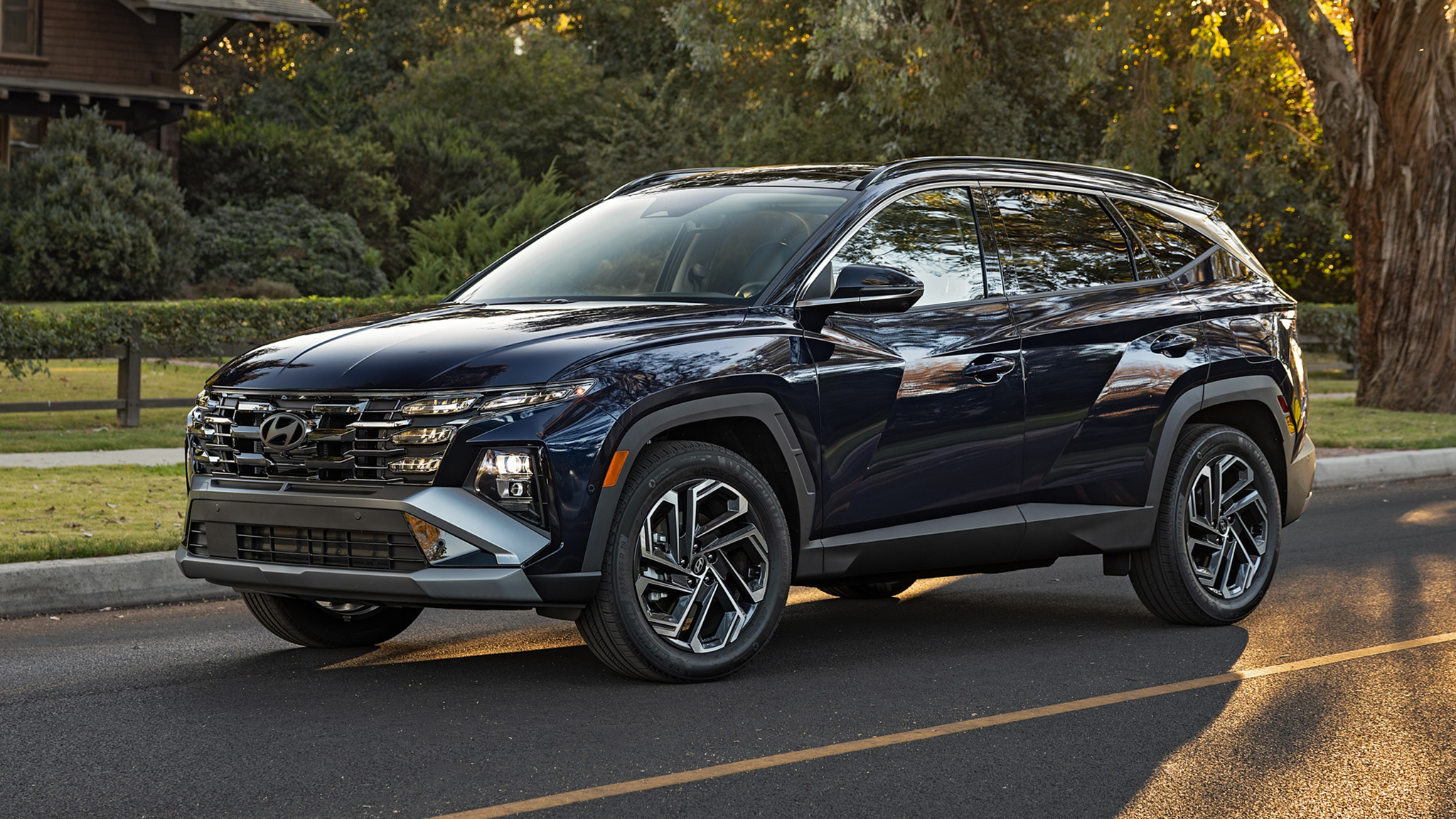
Hyundai’s evolution is perhaps best reflected in newer products like the 2026 Hyundai Tucson Hybrid.
The Tucson represents Hyundai’s strategy of combining:
- Hybrid efficiency
- Premium interiors
- Advanced technology
- Family practicality
- Competitive pricing
The hybrid variant produces 172kW and 367Nm from a 1.6-litre turbocharged hybrid powertrain while delivering claimed fuel economy of 5.3L/100km.
The model also highlights Hyundai’s push toward a more tech-focused driving experience, featuring:
- Twin 12.3-inch displays
- Wireless Apple CarPlay and Android Auto
- Digital Key functionality
- Bluelink connected services
- Advanced driver assistance systems
At the same time, reviews suggest Hyundai still faces challenges balancing technology with usability. Critics have pointed to intrusive ADAS systems and some refinement shortcomings compared with rivals like the Toyota RAV4.
Still, the Tucson demonstrates how Hyundai has matured from an entry-level carmaker into a serious global competitor across premium mainstream segments.
Challenges Hyundai Could Not Avoid
Despite its achievements, Hyundai’s India journey has not been without controversy and setbacks.
Regulatory Scrutiny
In 2015, the Competition Commission of India imposed a ₹420 crore penalty related to anti-competitive practices in spare parts distribution. Regulators alleged Hyundai restricted access to genuine spare parts and limited independent garages from performing repairs.
Later, Hyundai also faced scrutiny over dealer discount control practices, resulting in another penalty nearing ₹87 crore.
Market Position Pressure
For years, Hyundai comfortably held the position of India’s second-largest automaker. However, FY26 reflected changing market dynamics as aggressive SUV strategies from Mahindra and Tata Motors intensified competition.
Hyundai reportedly slipped to fourth place in market rankings during FY26, highlighting how rapidly India’s automotive market is evolving.
Product and Customer Concerns
The company has also faced:
- White paint peeling complaints
- Investor criticism regarding its IPO structure
- Pressure to improve EV competitiveness
- Increasing competition from Chinese brands
Yet Hyundai’s ability to respond quickly, expand warranty coverage, and maintain strong dealer infrastructure has helped preserve customer loyalty.
Hyundai’s EV and Technology Push
Electrification is now central to Hyundai’s long-term strategy.
The company has already launched EV models such as:
- Hyundai Ioniq 5
- Kona Electric
- Upcoming EV-focused variants across segments
Hybrid technology is also becoming increasingly important, especially in markets where charging infrastructure remains inconsistent.
Recent updates to the Hyundai Creta lineup further show Hyundai’s emphasis on premium technology positioning. The company discontinued certain mid-range variants, making ADAS features exclusive to more expensive trims.
This move reflects a broader industry trend:
manufacturers are increasingly using software, safety technology, and premium features to improve margins and move customers toward higher-priced vehicles.
Hyundai’s Unexpected Robotics Ambitions
One of Hyundai’s most fascinating future-facing strategies is robotics.
The Hyundai Motor Group Robotics Lab is reportedly pursuing an “application-specific” robotics ecosystem instead of focusing solely on humanoid robots.
The strategy prioritizes:
- Specialized robotics products
- Industrial automation
- Mobility-support systems
- Real-world use cases over generalized humanoids
This aligns with Hyundai’s broader investments in:
- Boston Dynamics
- AI-assisted manufacturing
- Smart mobility
- Autonomous systems
Rather than treating robotics as a publicity showcase, Hyundai appears focused on practical deployment and scalable commercial value.
Sustainability Becomes Core Strategy
Hyundai’s India operations are also increasingly tied to sustainability goals.
According to company data:
- All Hyundai India plants and offices now operate on 100% renewable energy under the RE100 initiative
- More than 350 energy-efficiency projects have been completed in five years
- Chennai operations maintain zero liquid discharge systems
- The Chennai plant sources 80% of its water through recycling and rainwater harvesting
The company’s corporate social responsibility initiatives have also expanded significantly.
Since 2014, Hyundai Motor India Foundation has invested over ₹803 crore in:
- Healthcare
- Education
- Skill development
- Environmental restoration
These programs reportedly impact an average of 2.2 million lives annually across India.
Why Hyundai Still Matters Globally
Hyundai today occupies a unique position in the automotive industry.
Unlike many legacy automakers struggling with EV transitions, Hyundai has managed to:
- Maintain strong combustion-engine sales
- Grow hybrid offerings
- Expand EV development
- Invest heavily in robotics
- Scale exports
- Improve localization
The company also continues generating enormous employment impact:
- 15,000–18,000 direct jobs
- Up to 450,000 indirect employment opportunities
This combination of manufacturing scale, technology investment, and export capability has turned Hyundai into one of the most influential mobility companies operating in emerging markets.
The Road Ahead
Hyundai’s next decade may prove even more transformative than its first three.
The automotive world is shifting toward:
- Electrification
- AI-assisted mobility
- Software-defined vehicles
- Autonomous systems
- Smart manufacturing
Hyundai appears determined to compete across all of them.
Its India strategy alone now combines:
- Massive capital investment
- Export expansion
- EV development
- Hybrid growth
- Sustainability initiatives
- Future mobility research
At 30 years old in India, Hyundai is no longer simply a challenger brand trying to gain market share.
It has become one of the defining forces shaping how millions of people experience mobility — and how the global automotive industry may evolve in the years ahead.


