





Hugo Broos’ Wife: The Private Anchor Behind a Public Football Career
A Quiet Presence in a High-Profile Life
In the world of international football, where scrutiny is constant and reputations are shaped by results, few figures have managed to maintain a clear separation between public achievement and private life as effectively as Hugo Broos. Known for his disciplined coaching style and decades-long career across Europe and Africa, Broos has consistently kept one aspect of his life largely out of the spotlight: his wife.
- A Quiet Presence in a High-Profile Life
- The Symbolism of a Wedding Ring
- Family at the Center of Crisis
- A Career That Spans Continents—and Its Personal Cost
- Privacy as a Deliberate Choice
- The Human Dimension Behind Leadership
- Broos’ View of Commitment and Identity
- Broader Implications: Family in Professional Sport
- Conclusion: A Private Partnership, A Public Impact
While there is limited public information about her identity or personal background, what is clear from Broos’ own words is that his wife plays a central, stabilizing role in his life. Her presence becomes particularly visible not through headlines or interviews, but through moments where Broos himself references family as a source of grounding, especially during periods of professional pressure.
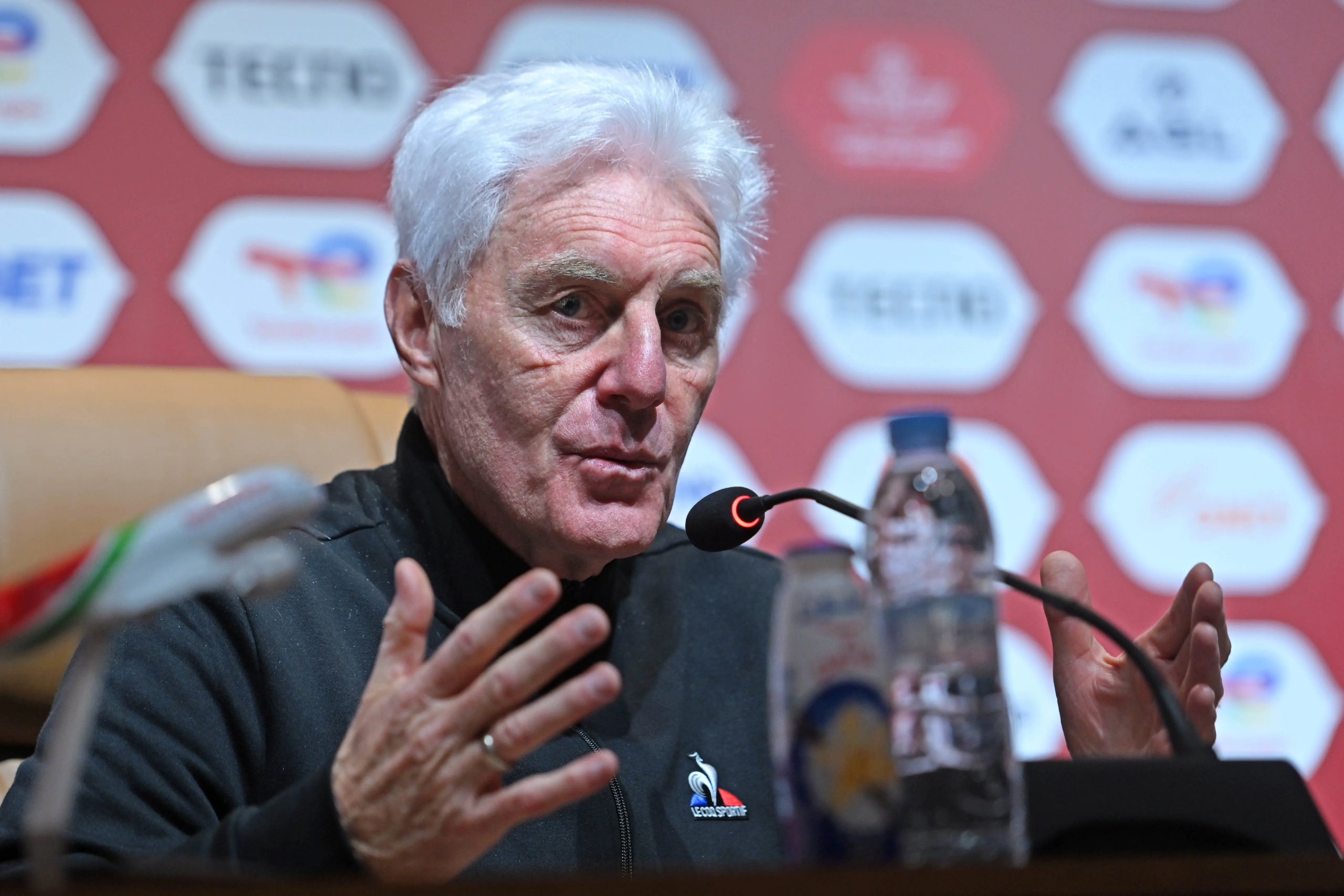
The Symbolism of a Wedding Ring
One of the few personal insights into Broos’ marriage comes from a simple yet telling detail: he wears his wedding ring on his right hand rather than the traditional left. Addressing this, he remarked:



“It doesn’t matter where I wear it, my wife knows that I am her husband. That’s what matters.”
This statement is revealing in its simplicity. It reflects a pragmatic and understated view of marriage—one that prioritizes mutual understanding over outward conventions. Rather than adhering to symbolic norms, Broos emphasizes the internal certainty of the relationship.
In a profession often characterized by public image management, this perspective aligns with his broader personality: direct, practical, and unconcerned with superficial expectations.



Family at the Center of Crisis
The role of Broos’ wife becomes more prominent during moments of controversy. In December 2025, amid backlash over remarks made during a press conference, Broos publicly acknowledged the personal toll of the situation.
He stated:
“I’m deeply hurt by what’s happened in recent days. The worst part is that my family – my wife, children and grandchildren – have also suffered.”
This admission provides a rare glimpse into the private impact of public scrutiny. While criticism is often directed at the individual, Broos explicitly highlights how such situations extend beyond the professional sphere, affecting those closest to him.
The inclusion of his wife in this statement underscores her importance within his support system. It also reflects a broader reality for high-profile figures: family members often experience the consequences of public controversies despite remaining out of the spotlight.



A Career That Spans Continents—and Its Personal Cost
To understand the significance of Broos’ marriage, it is necessary to consider the demands of his career. Born in Belgium in 1952, Broos built a distinguished playing career before transitioning into management, where he coached across multiple countries, including Algeria, Cameroon, and South Africa.
His managerial highlights include:
- Leading Cameroon to victory in the 2017 Africa Cup of Nations
- Guiding South Africa to a third-place finish at the 2023 AFCON
- Managing top European clubs such as Anderlecht and Club Brugge
These achievements required frequent relocation, cultural adaptation, and prolonged periods away from home. For any long-term relationship, such conditions present significant challenges.
Although Broos has not publicly detailed how his wife navigates these realities, the longevity of their marriage suggests a partnership built on resilience and adaptability. In elite football, where careers often involve instability and constant movement, such stability is not incidental—it is foundational.
Privacy as a Deliberate Choice
Unlike many modern public figures, Broos has chosen not to share details about his wife’s identity, profession, or personal life. This absence of information is not accidental; it reflects a deliberate boundary between his professional persona and private relationships.
In an era dominated by social media exposure and personal branding, this approach is increasingly rare. It signals a preference for privacy over publicity, and for substance over narrative construction.
This decision also aligns with Broos’ broader communication style. Known for his candid and sometimes blunt remarks in press conferences, he tends to focus on football matters rather than personal storytelling. His wife’s anonymity, therefore, is consistent with his overall public posture.
The Human Dimension Behind Leadership
Broos’ reference to his wife during moments of stress reveals an important dimension of leadership: the need for personal grounding. Coaching at the international level involves managing expectations from federations, players, fans, and media—often simultaneously.
During the 2025 controversy, Broos explained that his emotional response to a player’s behavior was partly driven by a “fatherly” instinct. This perspective—seeing players as individuals requiring guidance—suggests a leadership style influenced by personal values, likely shaped within his own family environment.
While direct connections cannot be drawn without speculation, it is reasonable to observe that long-term personal relationships often inform professional attitudes, particularly in roles that require mentorship and authority.
Broos’ View of Commitment and Identity
The recurring theme in Broos’ limited public comments about his wife is clarity of commitment. His statement about the wedding ring encapsulates this:
- Marriage is defined by mutual recognition, not external symbols
- Commitment is internal rather than performative
- Personal identity is not dependent on public validation
This philosophy extends to his professional life, where he has often resisted external pressures and maintained a strong sense of independence.
Broader Implications: Family in Professional Sport
Broos’ situation highlights a broader dynamic within professional sports: the often unseen role of family members in sustaining long careers.
Key observations include:
- Emotional support: Family provides stability during periods of criticism or uncertainty
- Adaptability: Frequent relocations require flexible personal arrangements
- Shared impact: Public controversies affect not only the individual but also their family
In Broos’ case, his explicit acknowledgment of his wife during a difficult period reinforces the idea that success in high-pressure environments is rarely achieved in isolation.
Conclusion: A Private Partnership, A Public Impact
The story of Hugo Broos’ wife is not one defined by public appearances or detailed biographies. Instead, it is characterized by absence—an intentional privacy that contrasts sharply with the visibility of modern sports culture.
Yet within that absence lies significance. Through brief but meaningful references, Broos has made it clear that his wife is a central figure in his life, particularly during moments of challenge. His comments reveal a relationship grounded in mutual understanding, resilience, and discretion.
In a career spanning decades and continents, marked by both triumph and controversy, this private partnership appears to have provided a consistent foundation. While the public may know little about her, her influence is evident in the stability and perspective that Broos brings to his role.