



NASA’s New Moon Era: Inside the Artemis II Mission and What Comes Next
A Defining Moment for Modern Space Exploration
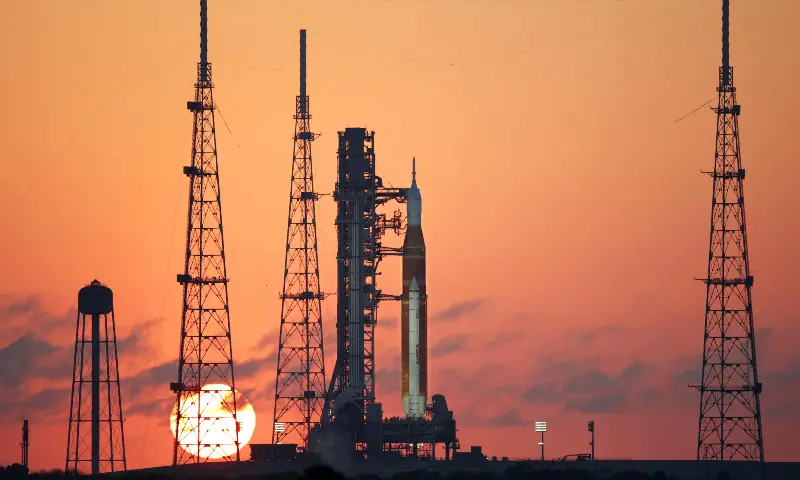
The NASA has entered a new phase of human space exploration, marked by the successful launch of the Artemis II mission—its first crewed journey toward the Moon in more than half a century. This mission is not just a return to familiar territory; it represents a strategic shift from exploration to long-term presence in deep space.
- A Defining Moment for Modern Space Exploration
- The Artemis II Mission: A Test Flight With High Stakes
- Life in Deep Space: Testing Human Limits
- Engineering Precision: Why Every Detail Matters
- From Exploration to Settlement: NASA’s Long-Term Vision
- A Global Effort: The Rise of International Space Collaboration
- Cultural and Scientific Impact
- Conclusion: NASA’s Strategic Return to the Moon
As Commander Reid Wiseman declared at liftoff, “We go for all humanity,” a statement that reflects both the ambition and the global significance of the program.
The Artemis II mission is designed as a critical test flight—one that bridges the gap between historic achievements like the Apollo 8 and future lunar landings planned later this decade.
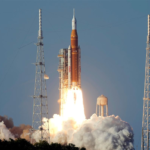
The Artemis II Mission: A Test Flight With High Stakes
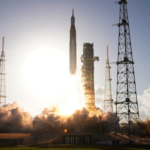
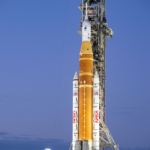
The Artemis II mission launched aboard NASA’s most powerful operational rocket, the Space Launch System (SLS), generating approximately 8.8 million pounds of thrust at liftoff.
This 10-day mission includes four astronauts:

- Reid Wiseman (Commander)
- Victor Glover (Pilot)
- Christina Koch (Mission Specialist)
- Jeremy Hansen (Canadian Space Agency astronaut)
Notably, Hansen’s inclusion marks a significant step toward international collaboration in deep space missions.
What the Mission Aims to Achieve
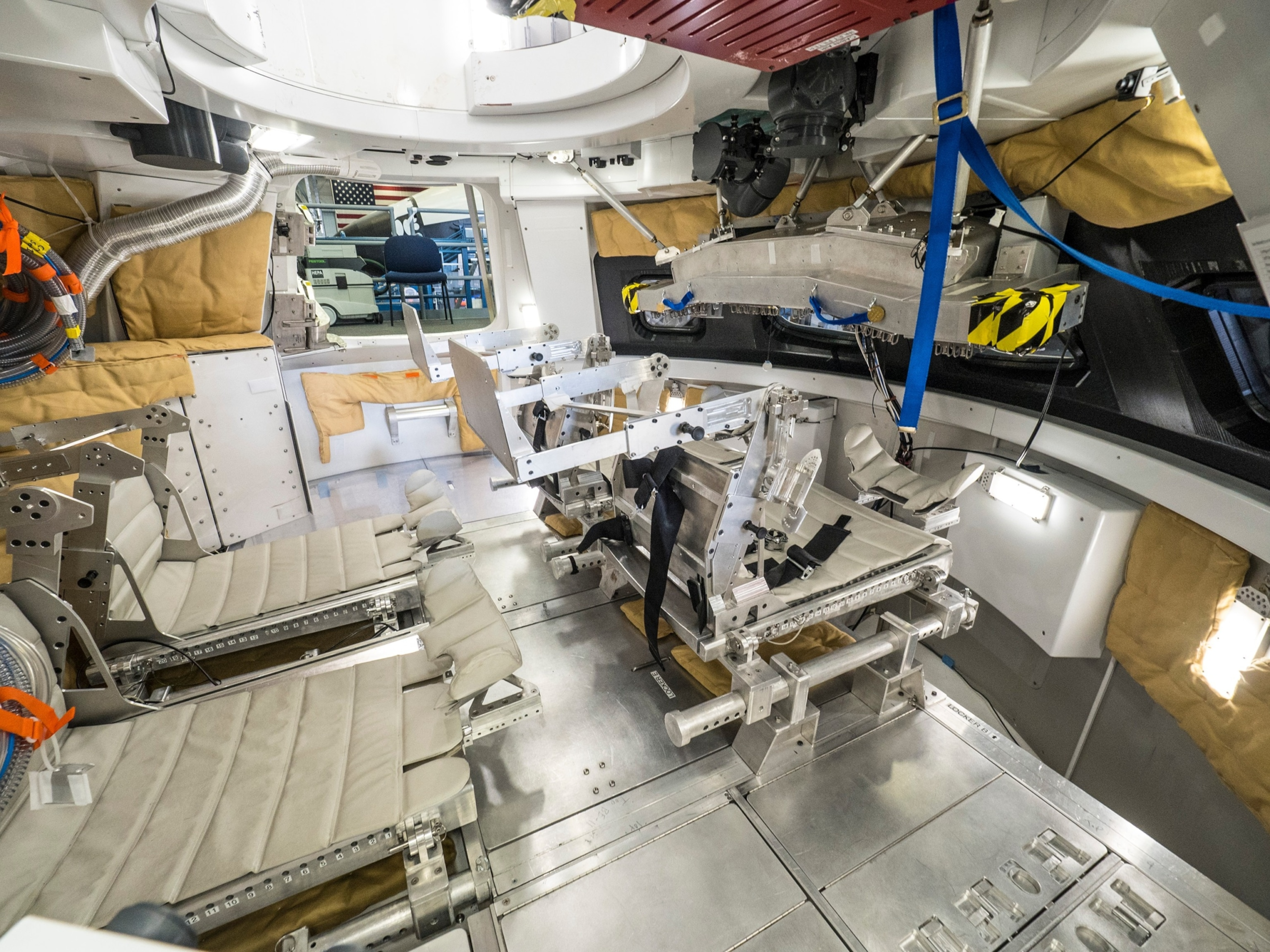
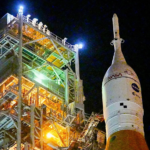
Before outlining the steps, it is important to understand what Artemis II is testing. The mission is designed to validate the Orion spacecraft’s systems, assess human performance in deep space, and ensure readiness for future lunar landings.
Below are the key phases of the mission:
- Earth Orbit and System Checks
After launch, the Orion spacecraft enters Earth orbit, where astronauts conduct extensive system diagnostics. - Translunar Injection Burn
A critical engine burn propels the spacecraft out of Earth’s gravity toward the Moon. - Lunar Flyby
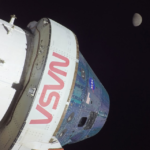
The crew will travel around the far side of the Moon, reaching distances farther than any human has previously traveled. - Scientific Observations
Astronauts will photograph geological features and collect data to support future missions to the Moon’s south pole. - Return and Splashdown
The mission concludes with a high-speed reentry and splashdown in the Pacific Ocean.
Life in Deep Space: Testing Human Limits
Artemis II is not only a technological test—it is also a human experiment.

Astronauts must adapt to:
- Sleeping while strapped to walls in microgravity
- Continuous work schedules involving experiments and system monitoring
- Physical strain from radiation exposure and long-duration spaceflight
NASA is closely studying how deep space affects both the body and mind, with implications for future missions to Mars.
Even seemingly minor issues—such as a temporary malfunction in the spacecraft’s toilet system—highlight the complexity of sustaining human life in space. These are not trivial problems; they are essential engineering challenges that must be resolved before longer missions are attempted.
Engineering Precision: Why Every Detail Matters
Before committing to the Moon trajectory, astronauts and engineers perform rigorous tests—some deliberately designed to stress the spacecraft.
This includes:
- Switching communication systems between satellites
- Testing life-support responses to environmental changes
- Verifying propulsion and navigation systems
If any system fails to meet expectations, NASA retains the option to abort the mission and return to Earth.
This cautious approach underscores a fundamental principle: Artemis II is a validation mission, not a destination mission.
From Exploration to Settlement: NASA’s Long-Term Vision
Artemis II is only one step in a broader roadmap.
Upcoming Milestones
- Artemis III & IV (Target: ~2028)
Planned lunar landing missions that will return humans to the Moon’s surface. - Lunar Base Development
NASA aims to establish a sustained human presence on the Moon, particularly at the south pole. - Gateway Program Adjustments
The proposed lunar space station, Gateway, has been postponed as NASA prioritizes surface infrastructure.
This shift has prompted new negotiations with international partners such as the European Space Agency, which is seeking a role in future lunar surface missions.
A Global Effort: The Rise of International Space Collaboration
Unlike the Apollo era, Artemis is fundamentally international.
Key developments include:
- Participation from Canada, Europe, Japan, and other partners
- Deployment of CubeSats from multiple countries to study space conditions
- Shared technological and scientific contributions
The inclusion of non-American astronauts signals a transition toward cooperative space exploration—one that reflects geopolitical realities and shared scientific goals.
Cultural and Scientific Impact
NASA’s Artemis program is already influencing multiple domains:
Technology
- Advances in propulsion, life support, and materials science
- New spacecraft architectures designed for deep space
Science
- Improved understanding of lunar geology
- Data supporting future Mars missions
Society
- Renewed global interest in space exploration
- Inspiration for future generations of scientists and engineers
The iconic “Earthrise” image from Apollo 8 remains a benchmark for cultural impact, and Artemis II may produce similarly defining visuals.
Conclusion: NASA’s Strategic Return to the Moon
The Artemis II mission represents more than a symbolic return—it is a calculated, data-driven step toward sustainable human presence beyond Earth.
NASA is not merely revisiting the Moon; it is building the infrastructure, partnerships, and knowledge required for long-term exploration and eventual settlement.
If successful, Artemis II will validate the systems and strategies needed to transition from short-term missions to a permanent human foothold in space.
The trajectory is clear: from orbit, to flyby, to landing—and ultimately, to living beyond Earth.