


Greg James and the Power of Collective Momentum
Inside the Cultural Impact of a 1,000km Ride That United a Nation
In an era where attention is fragmented and public engagement often fleeting, moments of genuine collective unity stand out. The recent achievement of Greg James, who completed a gruelling 1,000km cycling challenge for Comic Relief, represents one such moment—an intersection of endurance, media influence, and public goodwill.
- Inside the Cultural Impact of a 1,000km Ride That United a Nation
- A Challenge That Became a National Event
- The Emotional Core: Vulnerability as Strength
- The Role of Media Amplification
- Celebrity and Institutional Support
- The Journey’s Defining Moments
- Beyond Fundraising: A Social Message
- The Physical Toll: A Test of Endurance
- A Blueprint for Future Campaigns?
- Conclusion: More Than a Finish Line
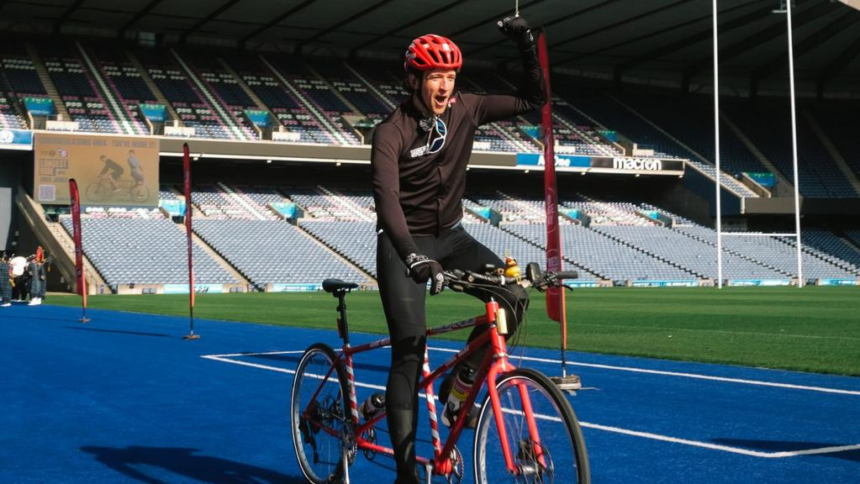
Crossing the finish line at Murrayfield Stadium in Edinburgh after eight days of relentless effort, the Radio 1 DJ did more than complete a physical feat. He catalyzed a nationwide response that translated into over £3.3 million raised, with donations continuing to climb even after the ride concluded.
But beyond the headline numbers lies a deeper story about influence, resilience, and the evolving role of broadcasters in shaping public action.
A Challenge That Became a National Event
What began as a charity bike ride quickly escalated into a national spectacle. Starting in Weymouth, Dorset, Greg James embarked on an eight-day journey across England, Wales, and Scotland—covering a distance equivalent to cycling from London to Rome.

By the time he approached the final kilometers, the event had transcended sport or fundraising. It had become a shared experience.
At the finish line, visibly overwhelmed, he summed up the emotional toll and relief:



“I can’t believe it’s done! I couldn’t see, I just kept bursting into tears at everyone I saw. Please, let me get off this bike!”
Crowds gathered in Edinburgh, cheering him into Murrayfield, reflecting the level of public investment in the journey. This was not passive spectatorship—it was participation.
The Emotional Core: Vulnerability as Strength
A defining characteristic of the challenge was not just physical endurance, but emotional transparency. Throughout the ride, Greg James openly shared moments of doubt, exhaustion, and vulnerability.
At one point, he admitted:
“I’m in a world of pain. I am aching all over and I am so nearly done and completely depleted from this challenge.”
In another moment of reflection, he articulated the broader message behind the effort:


“That is the message of the whole thing, which is, you can rally.”
This willingness to show weakness—rare in traditional broadcasting—became a key driver of engagement. It reframed the challenge from a spectacle of strength into a relatable human struggle.
The Role of Media Amplification
The success of the campaign cannot be separated from the ecosystem in which it unfolded. As a central figure at BBC Radio 1, Greg James leveraged a powerful platform that enabled real-time storytelling.
Listeners followed daily updates, sent messages of support, and contributed donations. The campaign’s visibility expanded beyond radio:
-
Live television appearances
-
News coverage during primetime broadcasts
-
Social media engagement from fans and public figures
As Greg himself noted:
“The Radio 1 listeners have propelled this challenge on to the news… that’s newsworthy!”
This illustrates a critical dynamic in modern media: audience participation is not just reactive—it actively shapes what becomes national news.
Celebrity and Institutional Support
While grassroots engagement formed the backbone of the campaign, high-profile endorsements amplified its reach.
Among the notable moments:
-
The Prince of Wales joining him on the bike during the ride
-
Messages of encouragement from Olympic legend Sir Chris Hoy
-
A £100,000 donation from Coldplay
Reflecting on the royal encounter, Greg said:
“Fair play, he did not need to do that… I’m so, so grateful that happened.”
These moments served a dual purpose: boosting morale and extending visibility. In media terms, they created “shareable spikes”—points where attention surged and new audiences were drawn in.
The Journey’s Defining Moments
Across eight days, the ride produced a series of memorable and often surreal episodes:
-
Emotional breakdowns triggered by personal reflections on family
-
A flyover by the Red Arrows in diamond formation
-
Jamie Laing fulfilling a donation-driven forfeit by riding in white lingerie
-
A surprise reunion with his wife, Bella Mackie, at a critical stage
These moments balanced gravity with humor, maintaining audience engagement while reinforcing the campaign’s human dimension.
Beyond Fundraising: A Social Message
While the financial outcome—over £3.3 million—is significant, Greg James consistently emphasized a broader objective.
He articulated a vision centered on empathy and community:
“What I’ve seen is the spirit of everyone coming together… please treat everyone you see like a minor celebrity… be good to people.”
He also highlighted the importance of inclusivity and awareness:
“It’s about making sure that those kids know that it’s okay to be themselves… and to ask for help and also help other people.”
This framing positions the challenge not merely as a fundraiser, but as a cultural intervention—encouraging behavioral change at a societal level.
The Physical Toll: A Test of Endurance
The scale of the challenge was substantial:
-
Distance: 1,000km
-
Duration: 8 days
-
Terrain: Varied, including significant elevation gains
-
Format: Tandem cycling
At multiple points, Greg described himself as “completely depleted,” underscoring the physical limits being tested.
Yet, the presence of supporters—both physical and virtual—proved decisive. As he acknowledged:
“Everyone has got me through it.”
This highlights a critical insight: endurance challenges of this scale are rarely individual achievements. They are collective efforts.
A Blueprint for Future Campaigns?
The success of this initiative raises important questions for future charity campaigns and media-driven fundraising:
1. Authenticity Over Perfection
Audiences responded not to polished messaging, but to genuine emotion.
2. Continuous Narrative Engagement
Daily updates created a serialized story, maintaining attention over time.
3. Multi-Platform Integration
Radio, television, and social media worked in tandem to maximize reach.
4. Audience Participation
Listeners were not passive donors—they became part of the journey.
Conclusion: More Than a Finish Line
When Greg James crossed the finish line in Edinburgh, the moment carried significance beyond personal achievement. It represented the culmination of a collective effort involving millions of listeners, donors, and supporters.
His final reflections captured the essence of the experience:
“It’s been the biggest privilege to do this.”
In a media landscape often defined by fragmentation, this challenge demonstrated the enduring power of shared purpose. It showed that when storytelling, authenticity, and public engagement align, the results can extend far beyond expectations.
The ride may be over, but its implications—for charity, broadcasting, and collective action—are likely to endure.