

Giants vs Dodgers: Rivalry Drama Intensifies as San Francisco Stuns Los Angeles
The San Francisco Giants and Los Angeles Dodgers added another memorable chapter to one of baseball’s fiercest rivalries on May 12, 2026, when the Giants stormed into Dodger Stadium and handed Los Angeles a convincing 9-3 defeat in the opener of a four-game National League West series.
What began as a matchup heavily tilted toward the Dodgers quickly transformed into a statement victory for San Francisco. Powered by Rafael Devers, a late offensive surge, and continued struggles from Los Angeles’ bullpen and lineup, the Giants disrupted the Dodgers’ attempt to stabilize their season and intensified pressure in the NL West race.
The result also highlighted the unpredictable nature of baseball’s most historic divisional rivalry — a matchup that rarely follows the script.
A Rivalry With Major NL West Implications
Heading into the series, the Dodgers entered as strong favorites. Los Angeles carried a 24-17 record and was tied for first place in the NL West, while San Francisco sat fourth at 17-24. Betting markets heavily favored the Dodgers, listing them around a -300 moneyline favorite against the Giants’ +240 underdog status.
Much of that confidence centered around starting pitcher Yoshinobu Yamamoto, who had consistently delivered quality outings throughout the early part of the season. The Japanese right-hander entered the game with a 3.09 ERA and a strong history against San Francisco hitters. Analysts pointed to his command, splitter, and strikeout ability as key reasons Los Angeles was expected to dominate.
Meanwhile, San Francisco starter Adrian Houser came into the matchup struggling badly, carrying a 6.19 ERA and an 0-4 record. Pre-game analysis emphasized the enormous pitching discrepancy between the two starters and predicted a low-scoring Dodgers victory.
Instead, the Giants flipped the narrative entirely.
Rafael Devers Sparks the Giants
The game’s tone changed early when Rafael Devers launched a home run in the second inning off Dodgers starter Roki Sasaki. The blast immediately energized San Francisco and signaled that the Giants were prepared to challenge Los Angeles aggressively.
Devers later delivered the game’s defining moment in the seventh inning. With the score tied 3-3, San Francisco loaded the bases against Dodgers reliever Alex Vesia after consecutive singles by Jung Hoo Lee, Luis Arraez, and Casey Schmitt. Devers then worked a bases-loaded walk on a two-strike count, forcing home the go-ahead run and ending Vesia’s night.
Moments later, Willy Adames crushed the Dodgers’ hopes further with a two-run single against Will Klein, extending the Giants’ lead to 6-3. Adames finished the game with three RBIs and emerged as one of the central offensive figures in San Francisco’s breakthrough victory.
The Giants continued piling on in the ninth inning when Dodgers reliever Wyatt Mills struggled with control, issuing four walks and hitting a batter as San Francisco added three more runs.
Dodgers’ Offensive Problems Continue
The loss exposed several alarming trends for Los Angeles.
Despite boasting one of baseball’s most talented rosters, the Dodgers’ offense has entered a concerning slump. The defeat marked their third consecutive blowout loss and their eighth loss in the last 12 games. During that stretch, Los Angeles scored three runs or fewer nine times.
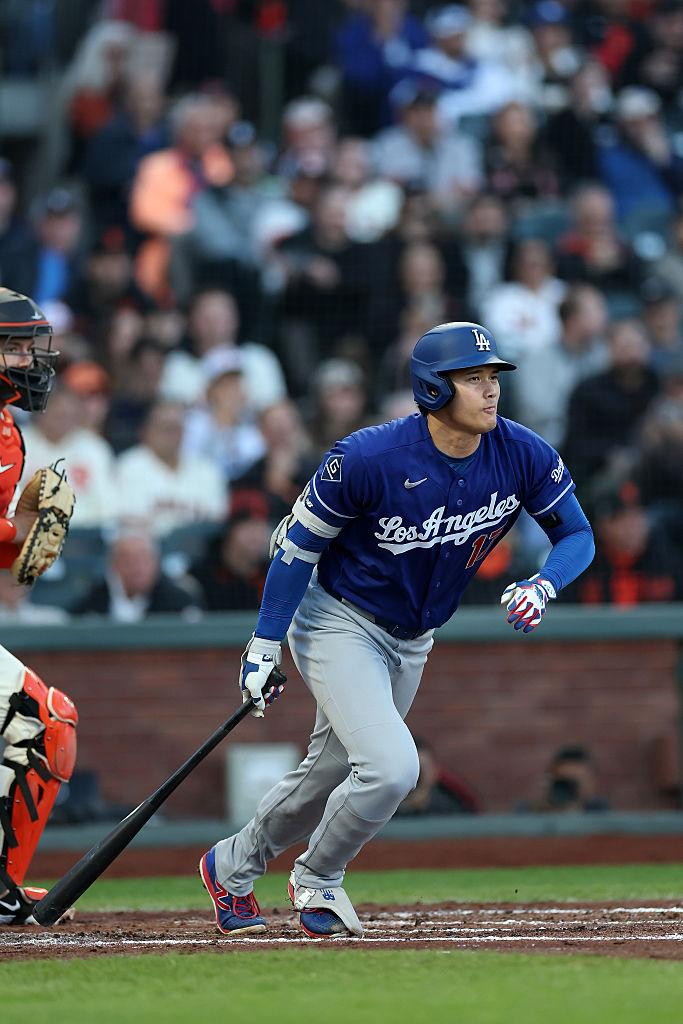
Shohei Ohtani endured another difficult night, finishing 0-for-5 with two strikeouts. The four-time MVP has now gone hitless in 19 of 37 games in which he has recorded a plate appearance.
Mookie Betts returned from the injured list for the first time since April 4, but his comeback offered limited immediate impact. Betts managed just one single in five at-bats.
Max Muncy provided some offense for Los Angeles with a home run and RBI single, but the Dodgers failed to capitalize consistently against Giants pitching.
The defeat also dropped Los Angeles out of first place in the NL West, pushing the club a half-game behind San Diego in the standings.
Giants Snap Major Road Struggles
For San Francisco, the victory represented more than a single win.
The Giants had entered the series mired in a difficult road stretch, losing seven consecutive away games while scoring only nine total runs during that skid. The triumph at Dodger Stadium marked their first road win since April 18 in Washington.
It also gave San Francisco consecutive victories for the first time since late April.
Trevor McDonald delivered a respectable outing for the Giants, allowing three runs over 5 1/3 innings, while reliever Matt Gage earned the victory with 1 2/3 scoreless innings of relief. Harrison Bader also returned from injury and contributed offensively, going 1-for-4.
The performance suggested that the Giants may finally be finding rhythm after a frustrating opening stretch to the season.
Yamamoto Remains Central to Dodgers’ Plans
Even after the loss, Yoshinobu Yamamoto remains one of the Dodgers’ most important figures moving forward.
Before the series opener, Los Angeles emphasized the need for stability from its rotation amid mounting injuries. Tyler Glasnow, Brock Stewart, and Edwin Díaz are all currently sidelined, leaving the Dodgers increasingly dependent on Yamamoto to provide length and consistency.
The Dodgers had specifically highlighted Yamamoto’s ability to adjust during previous meetings with San Francisco. In an earlier April matchup against the Giants, he recovered after a rough first inning to complete seven strong innings, relying heavily on improved fastball command and his devastating splitter.
His scheduled May 12 appearance against San Francisco was viewed as an opportunity for redemption and a chance to halt the Dodgers’ slide. Instead, the Giants’ offensive explosion deepened the club’s concerns.
The Betting Expectations vs. Reality
The outcome also shocked much of the baseball betting community.
Several pre-game predictions heavily favored Los Angeles because of Yamamoto’s dominance against San Francisco and Houser’s struggles. Analysts pointed to Yamamoto’s strong historical numbers against the Giants lineup, including a .532 OPS allowed and 34 strikeouts in 105 career at-bats against San Francisco hitters.
At the same time, Houser’s low strikeout rate and contact-heavy pitching profile were considered dangerous against a Dodgers lineup known for discipline and power.
But baseball’s unpredictability surfaced once again.
Instead of a controlled Dodgers win, San Francisco’s hitters capitalized on bullpen instability, patient plate appearances, and timely hitting to completely reverse expectations.
Why Giants vs Dodgers Still Captivates Baseball
Few rivalries in sports match the emotional intensity and historical significance of Giants vs Dodgers.
Dating back to their days in New York before both franchises moved west to California, the rivalry has defined generations of baseball history. Every meeting carries playoff implications, regional pride, and enormous fan interest.
Even during seasons when one team appears stronger on paper, momentum can swing instantly — as demonstrated by San Francisco’s upset victory in Los Angeles.
The atmosphere at Dodger Stadium reflected that intensity, with more than 44,000 fans in attendance watching another dramatic installment in the rivalry.
What Comes Next in the Series
The four-game series is far from over.
San Francisco’s win gives the Giants an early 1-0 series lead and potentially valuable confidence heading deeper into the matchup. Meanwhile, Los Angeles faces mounting urgency to stop its slide before the NL West race tightens further.
The Dodgers still possess enormous talent, but injuries, bullpen inconsistency, and offensive struggles have created unexpected vulnerabilities.
For the Giants, the challenge now becomes consistency. One victory over Los Angeles can energize a season, but sustaining momentum against one of baseball’s deepest rosters remains difficult.
Still, if the opener proved anything, it is that Giants vs Dodgers continues to deliver drama regardless of standings, predictions, or expectations.


