

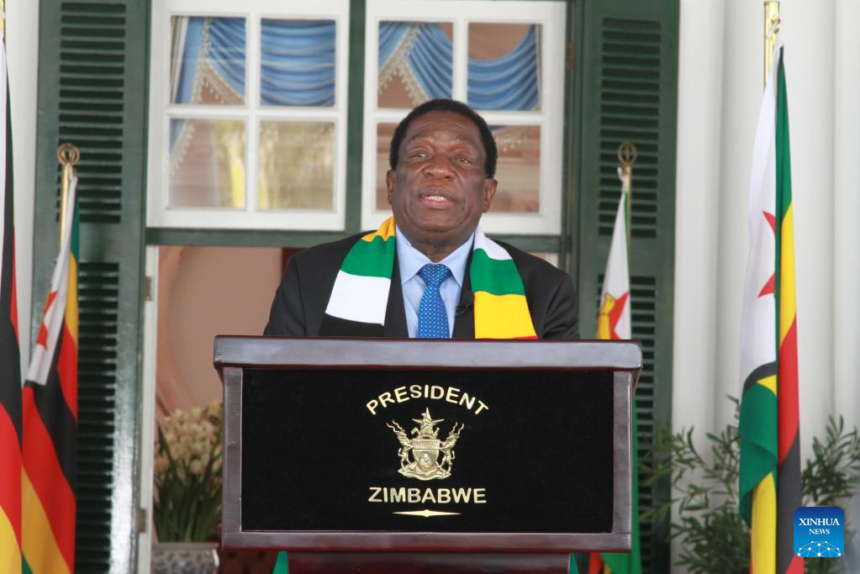
Emmerson Mnangagwa: Power, Reform, and Political Tension in Zimbabwe
A presidency shaped by transition and controversy
Few leaders in modern African politics embody both continuity and disruption as distinctly as Emmerson Mnangagwa. Rising to power in 2017 after the dramatic ousting of long-time ruler Robert Mugabe, Mnangagwa positioned himself as a reformist figure promising economic recovery and political stability. Yet, nearly a decade into his leadership, Zimbabwe remains deeply polarized, with ongoing debates over governance, constitutional reform, and democratic processes.
- A presidency shaped by transition and controversy
- From liberation struggle to state leadership
- Constitutional reform and the current political flashpoint
- Public hearings reveal deep divisions
- Competing narratives: stability vs. democratic backsliding
- The constitutional dilemma
- Regional and continental context
- What lies ahead for Zimbabwe
- Conclusion: A defining moment in Zimbabwe’s political evolution
Recent developments—particularly proposals to reshape how presidents are elected—have intensified scrutiny of Mnangagwa’s administration, raising broader questions about the trajectory of democracy in Zimbabwe.
From liberation struggle to state leadership
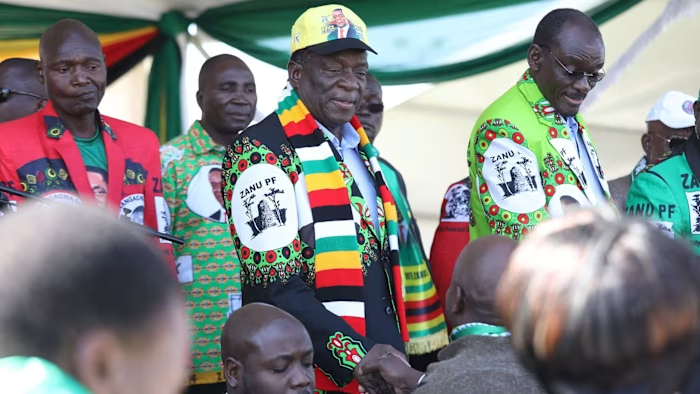
Mnangagwa’s political roots trace back to Zimbabwe’s liberation struggle, where he played a role within the ruling party, ZANU-PF. After independence in 1980, he steadily climbed the political hierarchy, holding key positions including ministerial roles and vice presidency.
The turning point came in 2017, when internal party conflict led to Mugabe’s removal with military backing. Mnangagwa assumed leadership soon after and secured electoral victories in 2018 and again in 2023—both of which were contested by opposition groups.
His presidency has since been characterized by attempts to balance economic reform with political consolidation, a dual strategy that continues to define his leadership.


Constitutional reform and the current political flashpoint
Zimbabwe’s political environment has recently entered a critical phase following proposed constitutional amendments that could significantly alter the country’s governance framework.
At the center of the debate is a plan that would:
- Transfer the power to elect the president from voters to parliament
- Extend presidential and parliamentary terms from five to seven years
- Delay elections scheduled for 2028 to 2030
- Allow Mnangagwa to remain in office until 2030
These proposals have triggered strong reactions across the political spectrum.
Opposition figures, including Tendai Biti, have described the move as a fundamental threat to democracy. One of the most pointed criticisms captures the gravity of the situation:



“This is a coup, a slow coup that is unfolding in Zimbabwe.”
Supporters within ZANU-PF, however, argue that the reforms are pragmatic. Party spokesman Patrick Chinamasa has defended the changes as a way to reduce the costs and tensions associated with presidential elections.
Public hearings reveal deep divisions
Public consultations held in Harare exposed the extent of Zimbabwe’s political polarization. Large crowds gathered, with many expressing support for extending Mnangagwa’s leadership beyond 2028. Some participants openly endorsed the reforms, arguing that they would ensure continuity and stability.
At the same time, the hearings were marked by tension and disorder. Critics reported intimidation, disruptions, and clashes—events that echoed Zimbabwe’s long history of contested political processes.
Opposition voices claim that such incidents highlight a broader pattern of repression. According to reports, opposition meetings have been restricted, and some activists have faced harassment or violence.
These developments underscore a central concern: whether Zimbabwe is moving toward a more controlled political system or navigating a transitional phase toward stability.
Competing narratives: stability vs. democratic backsliding
The proposed reforms have created two sharply contrasting narratives.
The government’s perspective
Supporters argue that:
- Frequent elections contribute to instability and violence
- Longer terms would allow for consistent policy implementation
- Parliamentary election of the president could reduce political tension
Chinamasa emphasized continuity as a key objective, stating that the reforms aim to sustain economic progress achieved since 2018.
The opposition’s warning
Critics see the situation differently. They argue that:
- Removing direct presidential elections weakens democratic accountability
- Extending terms without a referendum violates constitutional principles
- The changes could pave the way for indefinite rule
Biti warned that such moves risk repeating historical patterns of centralized power, stating:
“They are making the mistake that Mugabe made. That of closing [the democratic] space absolutely.”
The constitutional dilemma
Zimbabwe’s 2013 constitution introduced term limits, restricting presidents to two terms and requiring referendums for any extensions. A key legal question now is whether the proposed changes comply with these provisions.
Opponents argue that extending terms without public approval undermines the constitution. Meanwhile, ZANU-PF maintains that the reforms do not violate term limits but merely adjust the duration of each term.
This legal ambiguity is likely to result in court challenges, adding another layer of complexity to an already tense political landscape.
Regional and continental context
Mnangagwa’s leadership also intersects with broader African political dynamics. His recent diplomatic engagement—such as talks with John Mahama in Ghana—illustrates Zimbabwe’s continued involvement in regional affairs.
These discussions, which included initiatives like visa liberalization across Africa, highlight a parallel narrative: while domestic politics remain contentious, Zimbabwe continues to participate actively in continental cooperation efforts.
What lies ahead for Zimbabwe
As parliament moves closer to passing the proposed amendments, Zimbabwe stands at a critical juncture. The decisions made in the coming months will shape not only Mnangagwa’s political future but also the country’s democratic trajectory.
Several possible scenarios are emerging:
- Legislative approval leading to extended terms and delayed elections
- Judicial intervention if courts challenge the constitutionality of reforms
- Heightened political unrest if opposition resistance intensifies
- Negotiated compromise that preserves elements of electoral participation
Each path carries significant implications for governance, investor confidence, and social cohesion.
Conclusion: A defining moment in Zimbabwe’s political evolution
Emmerson Mnangagwa’s presidency began with promises of renewal and reform. Today, it is defined by a complex interplay of ambition, governance, and political contestation.
The proposed constitutional changes represent more than a technical adjustment—they are a test of Zimbabwe’s democratic resilience. Whether the country moves toward greater stability or deeper polarization will depend on how these reforms are implemented and received.
For now, Zimbabwe remains a nation at a crossroads, with Mnangagwa at the center of a debate that will shape its future for years to come.