

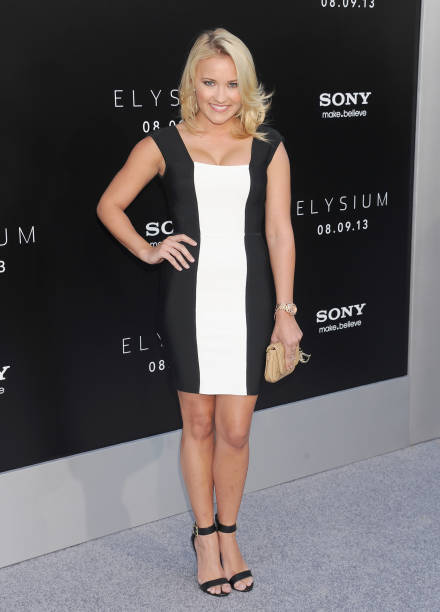
Emily Osment Breaks Her Silence on Missing Hannah Montana Anniversary Special
A nostalgic celebration—with a noticeable absence
When the Hannah Montana 20th Anniversary Special premiered on March 24, 2026, it arrived as a carefully curated tribute to one of Disney Channel’s most defining series. Packed with cameos, emotional reflections, and a central appearance by Miley Cyrus, the special was designed to reconnect audiences with a show that shaped a generation.
- A nostalgic celebration—with a noticeable absence
- The real reason: scheduling, not separation
- A message rooted in gratitude and legacy
- From Lilly Truscott to a new chapter
- Mitchel Musso’s parallel reflection
- Who did make the reunion—and what it delivered
- Why their absence resonated so strongly
- The broader cultural context of reunion specials
- A legacy that extends beyond attendance
- Conclusion: absence as part of the story
Yet amid the celebration, one absence stood out immediately: Emily Osment, who portrayed Lilly Truscott—the loyal best friend and comedic counterpart to Miley Stewart—was nowhere to be seen. Alongside her, Mitchel Musso (Oliver Oken) was also missing, leaving fans questioning why two of the show’s core figures were not part of such a milestone event.
The answer, as it turns out, is less dramatic than speculation might suggest—and far more grounded in the realities of working actors navigating ongoing careers.
The real reason: scheduling, not separation
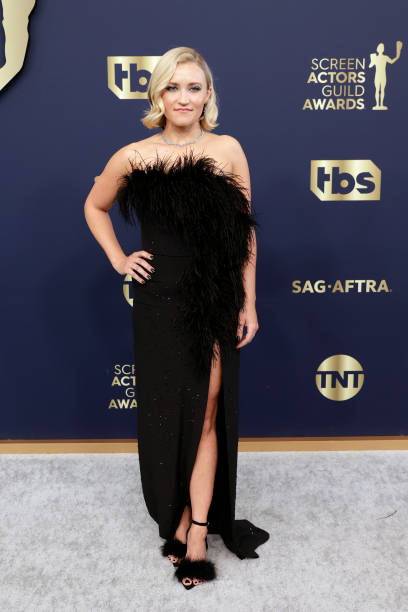
Emily Osment addressed her absence directly on March 23, one day before the special’s release, through a candid Instagram post filmed on the set of her current project, the CBS sitcom Georgie & Mandy’s First Marriage. The explanation was straightforward: she was working.

Her absence was not due to creative differences, personal conflict, or distance from the franchise. Instead, it reflects a familiar industry constraint—conflicting production schedules.
This aligns with additional confirmation that Osment was actively filming at the time of the reunion, making participation logistically impossible.
A message rooted in gratitude and legacy
While she could not attend the reunion, Osment used the moment to reconnect with fans and reflect on the lasting impact of Hannah Montana on her life and career.
She wrote:


“Hannah Montana changed my life, it gave me a lifelong respect for this medium of comedy, it taught me discipline, patience, timing, and respect working in an adult space so young.”
Her message goes beyond nostalgia. It highlights the formative nature of the series—not just as entertainment, but as a professional training ground. For Osment, the show shaped her understanding of performance, timing, and the demands of working in a high-pressure production environment at a young age.
She continued:
“I can’t tell you what your sweet messages mean to me and how lucky I feel to have been apart [sic] of this once in a generation goliath of a television show.”
This framing—“once in a generation goliath”—positions Hannah Montana not merely as a successful show, but as a cultural landmark with enduring relevance.
From Lilly Truscott to a new chapter
Osment’s absence also reflects a broader narrative: the evolution of child actors into established professionals with independent careers.
At 34, Osment is actively working on Georgie & Mandy’s First Marriage, signaling her continued presence in mainstream television. Her inability to attend the reunion underscores a shift from nostalgia-driven appearances to ongoing career commitments.
Interestingly, she acknowledged that her current opportunities are directly tied to the platform Hannah Montana provided:
“Would never be where I am without you guys, working on another beautiful show I love so dearly.”
This creates a clear through-line: the past enabling the present, even as it limits participation in retrospective events.
Mitchel Musso’s parallel reflection
Mitchel Musso, who also did not appear in the special, offered a similar tone—though without explicitly stating his reason for absence.
In his own tribute, he reflected on the shared experience of growing up on the show:
“We literally grew up with ya’ll — long days, crazy schedules, learning lines, cracking up between takes, and figuring out life while the cameras rolled.”
His message emphasizes continuity—between cast members and fans, and between the past and present.
He also reinforced the emotional bond within the cast:
“Miley, Emily, Jason, Billy Ray, Moises, and the whole crew at Disney — you became my family through all the real, messy, beautiful moments.”
While Musso’s absence remains unexplained in logistical terms, the tone of his message suggests no detachment from the franchise—only a physical absence, not an emotional one.
Who did make the reunion—and what it delivered
Despite the missing trio, the anniversary special still assembled a significant portion of the Hannah Montana universe.
Participants included:
- Miley Cyrus, at the center of the special
- Billy Ray Cyrus and Tish Cyrus
- Selena Gomez (in a cameo appearance)
- Additional cast members such as Moisés Arias and Cody Linley at the premiere
The special itself focused heavily on retrospective storytelling, including an in-depth interview format. Miley Cyrus reflected on her early partnership with Osment, describing their on-screen dynamic as essential:
“I had what felt like a teammate, because I didn’t know exactly what I was doing.”
This acknowledgment reinforces Osment’s importance to the show—even in her absence.
Why their absence resonated so strongly
The reaction to Osment and Musso’s absence reveals something deeper about Hannah Montana’s legacy.
The show’s success was not built solely on its central character, but on a tightly woven ensemble. Lilly and Oliver were not peripheral—they were structural to the narrative, providing emotional grounding and comedic balance.
Their absence, therefore, created a noticeable gap—not in the production itself, but in the audience’s sense of completeness.
The broader cultural context of reunion specials
Reunion specials operate within a specific cultural framework: they promise closure, nostalgia, and a sense of reunion—not just for characters, but for audiences.
However, as this case demonstrates, they are also constrained by real-world logistics:
- Actors’ current commitments
- Scheduling conflicts across multiple productions
- Evolving career trajectories
The Hannah Montana special illustrates a recurring tension: the desire for full-circle storytelling versus the practical limitations of assembling a cast decades later.
A legacy that extends beyond attendance
Ultimately, Emily Osment’s absence does not diminish her role in the Hannah Montana story. If anything, her message reinforces it.
Her reflections, combined with Miley Cyrus’s acknowledgment and Musso’s tribute, create a composite narrative: one where the show’s legacy is carried forward not just through appearances, but through continued careers, shared memories, and enduring fan connections.
The reunion may not have been complete in a literal sense—but in emotional and cultural terms, the core of Hannah Montana remains intact.
Conclusion: absence as part of the story
Emily Osment’s explanation reframes what could have been seen as a notable omission into something more grounded and relatable. Her absence is not a sign of distance, but of continuity—evidence that the cast has moved forward while still honoring where they began.
In that sense, the 20th anniversary special is not just a look back—it is also a reflection of how far its stars have come.