Edwin Catmull Net Worth, Relationships, Age/Birthdate & Birthday
Overview of Edwin Catmull — net worth, relationships, age/birthdate, and birthday.
 loveness92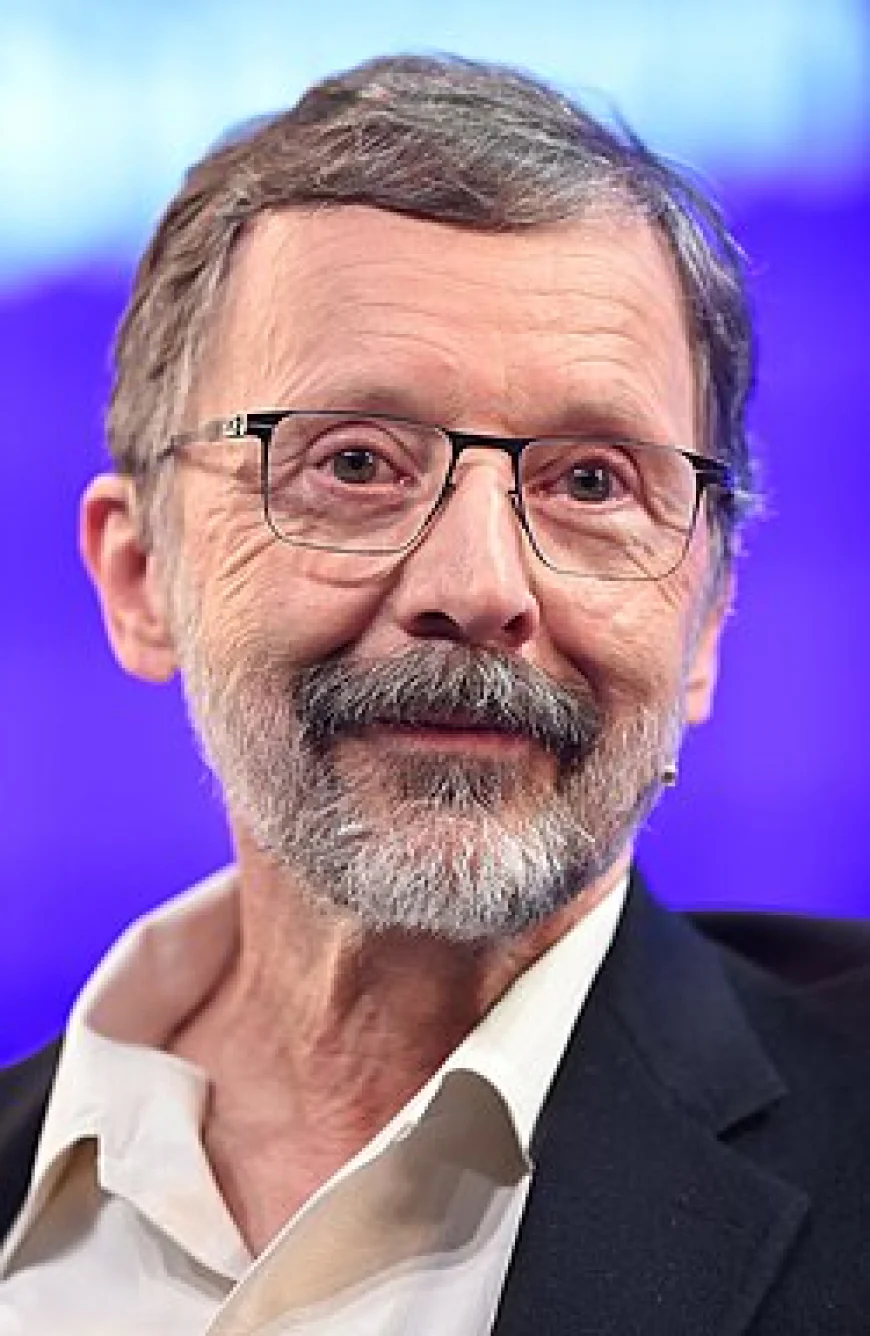
The Visionary Who Brought Pixar to Life: Edwin Catmull
From the quiet hills of West Virginia to the red-carpet premieres of the world’s most beloved animated films, Edwin Catmull’s is a journey that maps the evolution of modern animation — a story marked by scientific breakthroughs, bold leadership, and a relentless drive for creative excellence.
A Childhood Spark — Dreams Kindled in West Virginia and Utah
Edwin Earl Catmull was born on March 31, 1945 in Parkersburg, West Virginia. Though his family relocated to Utah when he was still a baby, that early environment — shaped by parents who worked in education — seeded in him a boundless curiosity and a respect for learning.
As a young boy, Catmull was captivated by the animated films of Walt Disney Animation Studios. Movies like Peter Pan and Pinocchio didn’t just entertain him — they ignited a dream to bring drawings to life. But with no animation schools in sight, he turned instead toward physics and mathematics — a decision that would eventually reshape animation forever.
At the University of Utah, Catmull earned dual B.S. degrees in physics and computer science (1969), and later completed a Ph.D. in computer science (1974). It was during this time that he began to experiment with computer-generated imagery, creating primitive—but groundbreaking—animations such as a 3-D model of his own hand. That hand would later appear in the 1976 film Futureworld, marking one of the first uses of CGI in a feature film.
From Algorithms to Animation — Crafting the Foundations of CGI
Armed with a deep grounding in mathematics and computing, Catmull pioneered techniques that would become central to 3-D computer graphics. Among his major contributions:
-
He introduced methods for modeling curved surfaces rather than relying on flat polygons — a mathematical and computational leap that transformed realism in digital imagery.
-
He co-developed what is now known as the Catmull–Clark subdivision surface — a technique for creating smooth, natural-looking surfaces in 3-D models, now used widely across animation and visual effects.
-
He worked on texture mapping and depth-buffering (Z-buffering), key innovations for rendering realistic 3-D scenes.
These breakthroughs weren’t academic curiosities — they laid the technical foundation for everything from animated feature films to advanced visual effects in Hollywood blockbusters.
Building a Dream — Founding Pixar Animation Studios and Steering Disney’s Creative Renaissance
By 1979, Catmull had joined Lucasfilm, leading its fledgling computer graphics division. When that division was spun off — with backing from Steve Jobs — Catmull played a central role in founding Pixar.
Under his technical leadership and vision, Pixar ushered in a new era of animation, culminating in the release of Toy Story — the first fully computer-animated feature film.
After Pixar’s acquisition by The Walt Disney Company in 2006, Catmull took on the mantle of President of both Pixar and Disney Animation Studios — guiding the creative and technical tapestry of some of the world’s most beloved films.
In October 2018, Catmull announced his retirement as president, stepping back in 2019, though he continued to offer counsel — a testament to his enduring influence and respect in the industry.
Legacy of Innovation — Awards, Influence, and a Culture of Creativity
Catmull’s career is studded with accolades, many of them as unique as his contributions.
-
He is a recipient of numerous Academy Scientific and Technical Awards for his work on rendering technologies used in filmmaking.
-
In 2019, he was honored with the A.M. Turing Award — widely regarded as the “Nobel Prize of computing” — for his fundamental contributions to 3-D computer graphics and their impact on cinema.
-
Through his leadership, he helped build a creative culture at Pixar and Disney that values both technological excellence and storytelling — a rare combination that continues to influence animators, filmmakers, technologists, and creatives around the world.
In 2014, he distilled much of his insight into the celebrated book Creativity, Inc.: Overcoming the Unseen Forces That Stand in the Way of True Inspiration — a guide for managing creativity and innovation in organizations.
The Man Beyond the Millions — Relationships, Personal Life, and Net Worth
Though Catmull’s public persona is mostly associated with his pioneering work, some aspects of his personal life are documented. He has been married to Susan Anderson Catmull since June 11, 1983. Together, they have three children.
Estimating net worth for someone like Catmull — whose legacy is part inventor, part steward of culture — is tricky. Some sources place his net worth at around US$40 million. Other newer sources suggest it could be significantly higher, sometimes citing figures near US$400 million. Given the breadth of his influence and decades-long impact in industries at the intersection of technology and entertainment, either figure reflects only a portion of his true value — the rest resides in the legacy he built.
Why Catmull’s Birthday Matters — Because It Marks the Birth of an Idea
Mentioning his birthdate, March 31, 1945, serves more than mere biographical detail. It anchors a timeline of ambition, innovation, and transformation — a reminder that from humble origins came the technological and creative revolution that reshaped animation. Celebrating Catmull’s birthday, therefore, is more than marking a life: it's acknowledging the birth of an idea that forever changed how stories are told on screen.
Edwin Catmull’s journey — from a small-town dreamer inspired by early Disney films to a celebrated pioneer of CGI and creative leadership — stands as one of the most remarkable narratives in modern entertainment and technology. His technical vision, leadership style, and emphasis on nurturing creativity continue to shape how studios, technologists, and storytellers collaborate around the world.