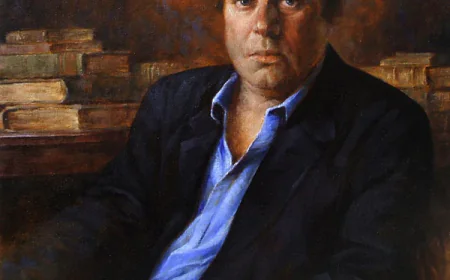
Edward Graydon Carter Net Worth, Relationships, Age/Birthdate & Birthday
Overview of Edward Graydon Carter — net worth, relationships, age/birthdate, and birthday.
 loveness92
The Quiet Empire-Builder: Tracing the Life of Edward Graydon Carter
When discussing modern magazine royalty, few names loom as large as Edward Graydon Carter — editor, publisher, provocateur, restaurateur, and cultural gatekeeper. Born on July 14, 1949, Carter’s story is one of restless ambition, reinvention, and the rare ability to translate editorial taste into lasting influence and wealth.
From Canadian Beginnings to New York’s Magazine Hinterlands
Edward Graydon Carter was born in Toronto, Ontario, Canada, but it was in Ottawa where he came of age — shaped by a middle-class upbringing and a sense that bigger stories lay just across the border.
He briefly attended the University of Ottawa and the Carleton University, though he did not complete a degree at either institution. In those early years, Carter found himself drawn less to academic credentials than to storytelling — a pull that would ultimately guide his life’s trajectory.
After a short stint working as a railway lineman, Carter set his sights on New York. In 1978 he began working at Time magazine — a modest start that would eventually lead to his ascendancy in American media.
Hatching “Spy” and Reinventing the Glossy Magazine
By 1986, alongside friends including Kurt Andersen, Carter co-founded the satirical monthly Spy. It offered a biting, often gleeful critique of New York’s elites — in tone somewhere between irreverent humor and sharp journalism. It was definitely not the establishment.
Spy’s voice was distinctive: witty, skeptical, and unafraid to mock money, fame, and power. Its legacy endured long after the magazine folded, and the magazine’s satirical spirit would prove to be a school for Carter’s editorial instincts.
Then, in 1992, came a pivotal turn: Carter was named editor-in-chief of Vanity Fair — a publication practically synonymous with glamour, celebrity, and high society. Under his stewardship for the next 25 years, Vanity Fair would reshape itself into a cultural touchstone, combining investigative journalism, political commentary, Hollywood glitz, and social reportage.
Carter’s Vanity Fair didn’t just chase headlines — it made headlines. The magazine became a place where long-form journalism coexisted with Oscar-season parties, where sharp essays sat beside celebrity portraits. That hybrid identity would define an era and cement Carter’s influence.
Beyond the Pages: Publishing, Producing, and Reinvention
Carter’s ambitions didn’t end with magazines. Over years, he moved into film and theater production — a natural extension for someone long accustomed to storytelling in print.
He co-produced documentaries for major outlets, as well as a Broadway play, demonstrating a willingness to explore different media.
After stepping down from Vanity Fair in 2017 — an editorial reign that many regard as the last golden age of glossy print media — Carter didn’t fade into retirement. Instead, he co-founded Air Mail, a weekly digital newsletter aimed at worldly, cosmopolitan readers, blending his old-school editorial instincts with the possibilities of modern media.
In 2025, he published a memoir titled When the Going Was Good: An Editor’s Adventures During the Last Golden Age of Magazines — a reflective work revisiting his decades at the helm of influential cultural institutions.
A $30 Million Legacy — The Money Behind the Magic
Estimates of Carter’s net worth vary, but one of the more commonly cited figures is $30 million, a testament to the financial value of his decades-long editorial career, media ventures, and business investments.
This wealth reflects more than just salary from media jobs — it’s the result of a diversified career: magazine leadership, production credits, restaurant ownership, and a sharp sense for cultural capital.
Relationships, Family, and the Life Behind the Headlines
Carter’s personal life has seen its share of chapters. He has been married three times. His first marriage — to a Canadian woman — ended before he moved to the United States. His second marriage, to Cynthia Williamson, lasted 18 years and produced four children.
In 2005, he married Anna Scott; together they have a daughter. In total, Carter is father to five children.
He divides his time between a townhouse in Greenwich Village, New York, and a quieter estate in Roxbury, Connecticut. Beyond media, he’s been part-owner of iconic New York institutions like the The Waverly Inn, and formerly the historic Monkey Bar — blending his editorial flair with a taste for hospitality and nightlife.
The Man Who Made Magazines Matter — and Still Does
What sets Edward Graydon Carter apart is his restless evolution. He didn’t simply ride the wave of magazine journalism — he reshaped it. From founding a satirical magazine in the 1980s to redefining a glossy heavyweight in the 1990s and 2000s, to launching a digital newsletter in the 2010s — Carter has always followed where culture and media converge.
His story demonstrates how editorial instinct, ambition, and a willingness to take risks can turn taste and influence into a lasting legacy. For both aspiring journalists and culture-watchers alike, his journey remains a roadmap — and a warning — that power in media doesn’t come from prestige alone, but from adaptability, vision, and sometimes, a little bit of mischief.