


Dricus du Plessis: Inside the Rise, Rivalries, and Reinvention of South Africa’s UFC Trailblazer
A Fighter Defined by Pressure, Persistence, and Breaking Barriers
In the modern era of mixed martial arts, few fighters have reshaped perceptions as decisively as Dricus du Plessis. Known by his nickname “Stillknocks,” the South African athlete has built a career not only on victories but on defying expectations—inside the octagon and beyond it.
- A Fighter Defined by Pressure, Persistence, and Breaking Barriers
- From Welkom to the World Stage
- Career Trajectory: Building a Champion Across Promotions
- The Championship Era: History and High-Stakes Rivalries
- Technical Identity: Unorthodox but Effective
- The Fighters Who Tested Him Most
- Beyond the Octagon: Business Expansion and Global Influence
- Personal Life and Public Persona
- Cultural Impact: Redefining African Representation in MMA
- What Comes Next: The Future Outlook
- Conclusion: More Than a Champion
From becoming the first South African to capture a UFC championship to securing global business deals, du Plessis represents a rare combination of elite athletic performance and expanding commercial influence. His story is not linear; it is defined by evolution, setbacks, and calculated reinvention.
From Welkom to the World Stage
Born on January 14, 1994, in Welkom, South Africa, du Plessis began his athletic journey early. His foundation in combat sports was structured: judo at age five, wrestling at twelve, and kickboxing by fourteen. This progression created a hybrid skill set that later became his signature fighting identity.


By 2012, he had already achieved international recognition, winning gold at the WAKO Junior World Championships in K-1 kickboxing.
However, the transition to mixed martial arts was a strategic decision. Financial sustainability and long-term career prospects pushed him toward MMA, where he would ultimately redefine his trajectory.


Career Trajectory: Building a Champion Across Promotions
Du Plessis’ career path reflects a methodical climb through multiple promotions:
Early Dominance in Africa and Europe
- Became a two-division champion in Extreme Fighting Championship (EFC)
- Captured the KSW Welterweight title in Poland
- Established a reputation as a finisher with strong submission skills
UFC Breakthrough and Rapid Ascent
His entry into the Ultimate Fighting Championship marked a turning point. A series of high-profile wins positioned him as a serious contender:
- Knockout victory over Markus Perez in his debut
- Wins against Brad Tavares and Darren Till
- Breakout performance against Robert Whittaker
These results culminated in a title opportunity.
The Championship Era: History and High-Stakes Rivalries
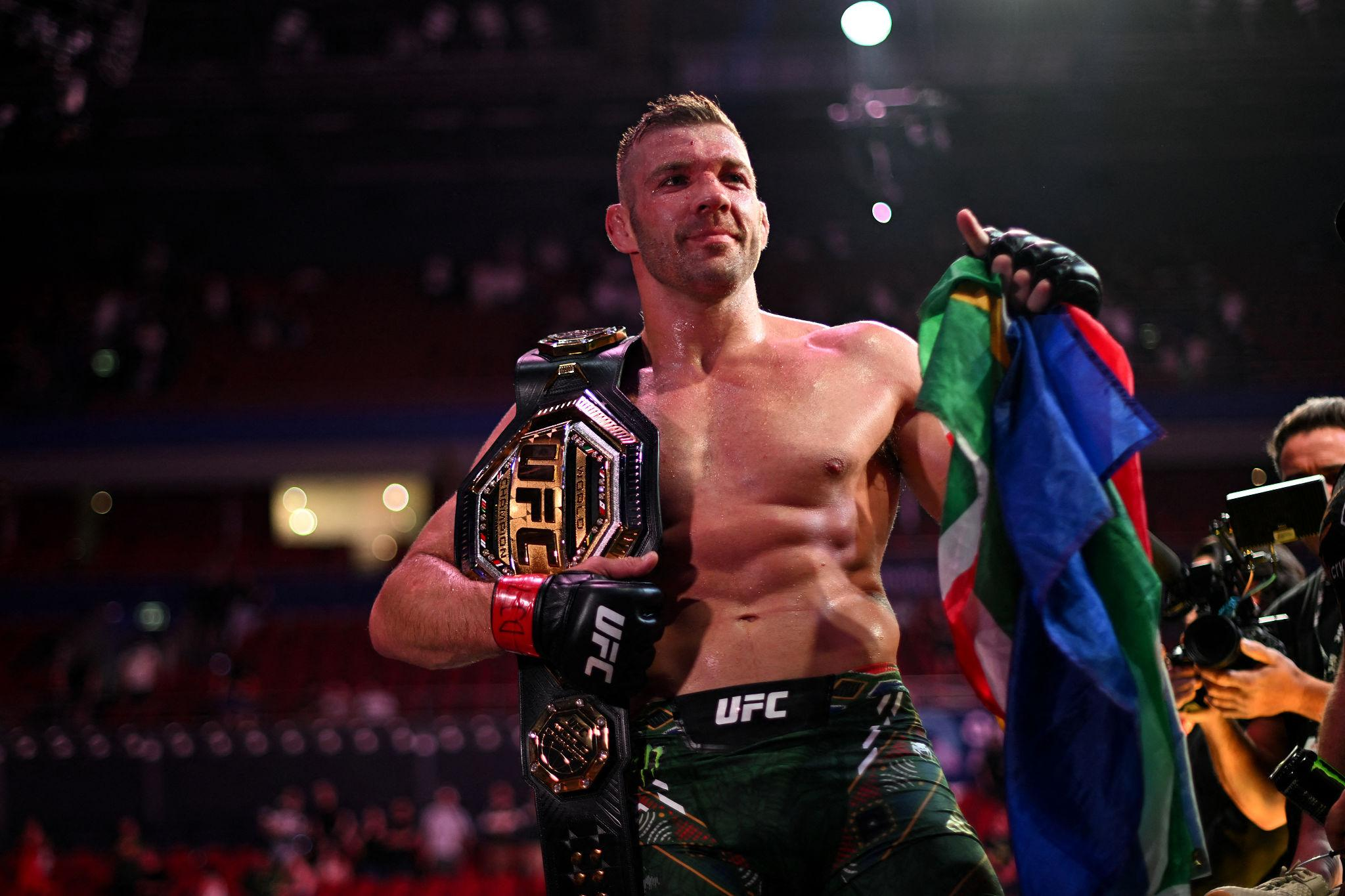
Du Plessis made history in January 2024 by defeating Sean Strickland to win the UFC Middleweight Championship. This moment was significant beyond sport—it marked the first time a South African held a UFC title.



Title Defenses and Defining Wins
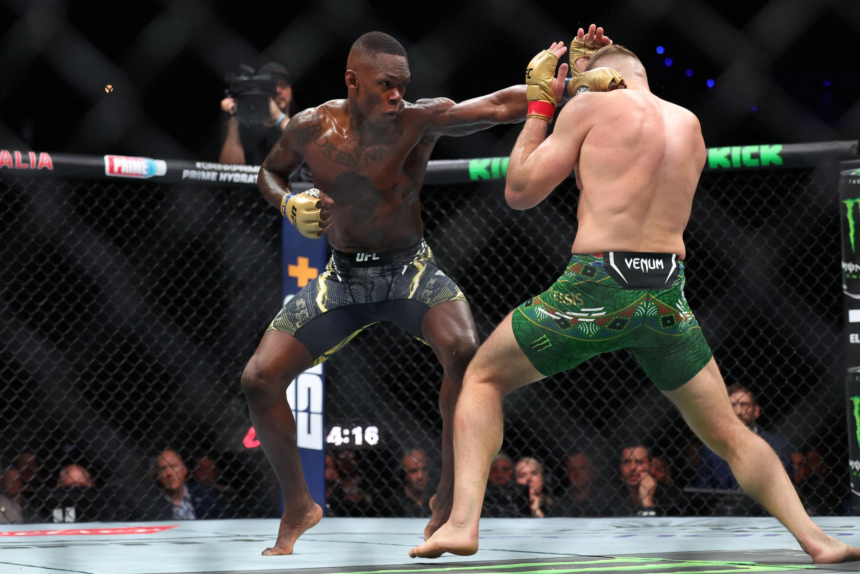
- Submission victory over Israel Adesanya (first submission loss of Adesanya’s career)
- Unanimous decision win in a rematch against Strickland
Title Loss and Competitive Reality
His reign ended in August 2025, when he lost to Khamzat Chimaev via unanimous decision.
This loss did not diminish his standing—it reframed him as a fighter capable of both dominance and resilience at the highest level.
Technical Identity: Unorthodox but Effective
Du Plessis’ fighting style is frequently described as unconventional. His movement lacks traditional fluidity, and his striking angles appear irregular. Yet, this unpredictability is precisely what disrupts opponents.
Key characteristics include:
- Constant forward pressure
- High-volume striking targeting head, body, and legs
- Aggressive takedown entries resembling rugby tackles
Critics initially labeled the approach as “sloppy,” but results have consistently contradicted that narrative.
The Fighters Who Tested Him Most
In recent reflections, du Plessis offered insight into the toughest and most skilled opponents of his career:
-
Most technically skilled: Israel Adesanya
“His timing, the speed, the power he kicks with… everything. He was the best technical guy that I’ve ever faced.”
-
Toughest opponents: Brad Tavares and Sean Strickland
Fighters who absorbed heavy damage yet continued standing and competing
This distinction highlights an important nuance: technical excellence and physical durability are not always aligned in MMA.
Beyond the Octagon: Business Expansion and Global Influence
Du Plessis’ influence now extends well beyond fighting.
A major development in 2026 saw him secure a landmark commercial partnership through his hydration brand, Knox. The deal—valued at nearly R400 million—includes naming rights for a major training facility associated with Newcastle United.
Key elements of the deal:
- Renaming of Darsley Park training base to “The Knox”
- Sponsorship across men’s, women’s, and academy teams
- Expansion into international markets
This agreement represents a structural shift: a combat sports athlete leveraging brand equity to penetrate global football infrastructure.
Personal Life and Public Persona
Outside competition, du Plessis maintains a disciplined but visible public profile:
- Bilingual in English and Afrikaans
- Underwent surgery to correct a breathing impairment that previously limited oxygen intake to just 8%
- Known for psychological tactics during fight promotion, often unsettling opponents
In January 2025, he proposed to his fiancée, Vasti Spiller, marking a personal milestone alongside his professional achievements.
Cultural Impact: Redefining African Representation in MMA
Du Plessis’ career carries broader implications:
1. Geographic Representation
He became the first UFC champion from South Africa, expanding the sport’s global narrative beyond traditional powerhouses.
2. Style Disruption
His success challenges conventional coaching frameworks that prioritize textbook technique over adaptability.
3. Athlete as Entrepreneur
Through Knox, he exemplifies a shift toward athletes as business operators rather than solely competitors.
What Comes Next: The Future Outlook
At 32, du Plessis remains within his competitive prime. Several trajectories are plausible:
- A rematch with top contenders in the middleweight division
- Continued expansion of his business ventures into international markets
- Increased crossover into global sports partnerships
With Knox targeting expansion into 22 new markets in the near term, his influence may soon rival his athletic legacy.
Conclusion: More Than a Champion
Dricus du Plessis is not simply a former UFC champion—he is a case study in adaptation. His career reflects how technical imperfection can coexist with elite effectiveness, and how athletic success can translate into broader economic and cultural impact.
Whether inside the octagon or in global business arenas, his trajectory suggests a continued presence at the intersection of sport, identity, and enterprise.