


Denza: Inside the Rise of China’s Premium Electric Challenger
A Brand Repositioning Itself at the Top End of the EV Market
The global automotive industry is undergoing a structural shift, and few brands illustrate that transformation more clearly than Denza. Once a relatively low-profile joint venture, Denza is now emerging as a serious contender in the premium electric and hybrid segment, backed by the technological depth and scale of BYD.
- A Brand Repositioning Itself at the Top End of the EV Market
- From Joint Venture to Independent Identity
- The Denza B8: Redefining Off-Road Performance
- Interior Technology and Passenger Experience
- The Denza D9: Dominating the Premium MPV Segment
- Technology as a Competitive Lever
- Market Implications: A Shift in Competitive Dynamics
- Global Expansion and Future Outlook
- Conclusion: Denza as a Signal of Industry Transition
What makes Denza particularly notable is not just its product lineup, but the strategic direction it represents: a move by Chinese automakers into territory historically dominated by European, Japanese, and American luxury brands. With vehicles like the Denza B8 SUV and Denza D9 MPV, the brand is targeting both performance-oriented buyers and high-end family or executive transport markets.
This is not incremental growth. It is a repositioning.

From Joint Venture to Independent Identity
Denza’s origins lie in a partnership between BYD and Mercedes-Benz, established to create premium electric vehicles for the Chinese market. Over time, however, BYD assumed greater control, and Denza evolved into a more distinctly Chinese luxury EV brand.
This shift coincided with broader changes in the global automotive landscape:


- Accelerated electrification mandates
- Rising fuel costs and efficiency pressures
- Rapid advancements in battery technology
- Increased consumer acceptance of EVs
Within this context, Denza’s strategy has been clear: combine high-performance electrified drivetrains with luxury features and aggressive pricing to disrupt established segments.
The Denza B8: Redefining Off-Road Performance
A New Breed of Electrified 4WD
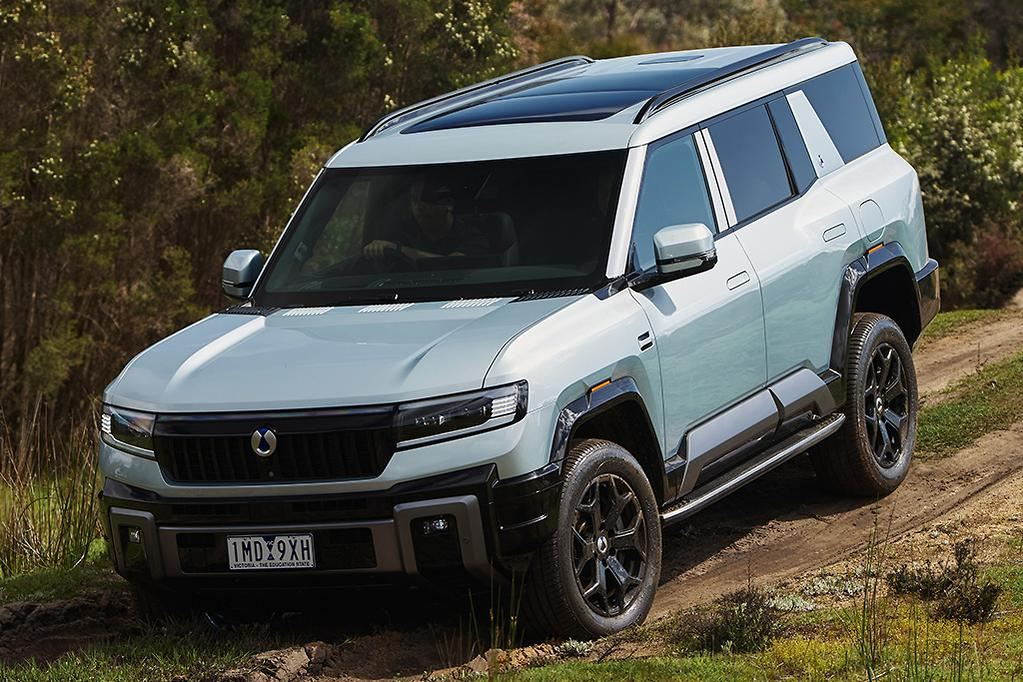
The Denza B8 represents one of the most ambitious entries in the brand’s lineup. Built on a body-on-frame architecture and derived from BYD’s Fangchengbao off-road division, the B8 introduces a hybridized approach to rugged performance.
Its powertrain is a plug-in hybrid system combining:
- A 2.0-litre turbocharged petrol engine producing 197 PS and 350 Nm
- Dual electric motors (272 PS front, 408 PS rear)
- Total system output of 578 PS and 760 Nm
This places the B8 in a performance category that challenges traditional off-road benchmarks.
For context, legacy vehicles like the Toyota LandCruiser 200 Series and Nissan Patrol historically relied on large-displacement V8 engines to achieve comparable torque figures. The B8 achieves similar—or greater—outputs through electrification.
Performance Metrics That Shift Expectations
- 0–100 km/h: 4.8 seconds
- Electric range: ~100 km WLTP
- Combined range: up to 905 km
These figures highlight a critical industry trend: electrified off-roaders are no longer compromising between efficiency and capability.
Engineering for Real Off-Road Use
Unlike many urban-focused SUVs, the B8 retains genuine off-road credentials:
- Front and rear locking differentials
- 890 mm water wading depth
- Adjustable hydraulic suspension (DiSus-P) with 140 mm height variation
This combination of hardware and software places it closer to traditional off-roaders than crossover SUVs, while still delivering modern electrified performance.
Interior Technology and Passenger Experience
Inside, the Denza B8 reflects a clear emphasis on digital integration and comfort:
- 12.3-inch instrument cluster
- 17.3-inch central infotainment screen
- Additional 12.3-inch passenger display
Seating configurations include both six- and seven-seat layouts, with features such as:
- Second-row captain’s chairs with ottomans
- Electrically adjustable and ventilated seating
- Flexible cargo capacity up to 920 litres
This positioning aligns the B8 with premium family SUVs, rather than purely utilitarian off-road vehicles.
The Denza D9: Dominating the Premium MPV Segment
A Different Kind of Success Story
While the B8 targets performance and off-road enthusiasts, the Denza D9 has become the brand’s commercial backbone.
Since its launch in 2022, the D9 has achieved:
- Over 300,000 global deliveries by late 2025
- Approximately 60% share of China’s high-end new energy MPV market
These figures indicate not just popularity, but market dominance in a specific segment.
Design and Cabin Philosophy
The D9 emphasizes executive transport and family comfort:
- Three-screen dashboard layout
- Premium second-row seating with entertainment systems
- Panoramic roof and electric sliding doors
Rather than reinventing the MPV category, Denza has refined it—focusing on usability, comfort, and technology integration.
Battery and Charging Advancements
The latest D9 introduces significant improvements in battery technology:
- Flash charging: 10% to 70% in ~5 minutes
- Up to ~497 miles (CLTC) electric range in some variants
These metrics address one of the primary concerns for EV adoption: charging time.
Technology as a Competitive Lever
Across both models, Denza leverages several key technologies:
Blade Battery Platform
BYD’s Blade Battery is central to Denza’s strategy, offering:
- Improved thermal stability
- Higher energy density
- Faster charging capabilities
Hybrid Architecture (DMO System)
The Dual-Mode Off-road (DMO) system allows:
- Pure electric driving at low battery usage
- Seamless transition to petrol engine at ~25% charge
This hybrid approach mitigates range anxiety while maintaining performance.
Advanced Driver Assistance
Systems like “God’s Eye 5.0” (in the D9) indicate Denza’s focus on:
- Semi-autonomous driving
- Safety enhancements
- Software-driven vehicle evolution
Market Implications: A Shift in Competitive Dynamics
Denza’s emergence reflects broader structural changes in the automotive market:
1. Electrification Is Redefining Performance
Traditional metrics—engine size, cylinder count—are becoming less relevant. Electrified systems now deliver superior torque and acceleration.
2. Chinese Brands Are Moving Upmarket
Rather than competing solely on price, brands like Denza are targeting premium segments with:
- Advanced technology
- High specifications
- Competitive pricing
3. Hybrid Systems Are Gaining Strategic Importance
Plug-in hybrids offer a transitional pathway between internal combustion and full electrification, particularly in markets with limited charging infrastructure.
Global Expansion and Future Outlook
Denza is not confined to China. The brand is actively expanding into international markets:
- Planned launches in regions such as the UK
- New model introductions across SUV and MPV segments
The Denza B8’s arrival in markets like Malaysia further signals a broader geographic strategy.
Key Trends to Watch
- Increased competition with established luxury brands
- Continued improvements in battery and charging technology
- Expansion of hybrid and fully electric offerings
- Integration of advanced software ecosystems
Conclusion: Denza as a Signal of Industry Transition
Denza is more than a brand; it is a case study in how the automotive industry is evolving.
By combining electrification, performance, and luxury, Denza is challenging long-held assumptions about what defines a premium vehicle. The Denza B8 demonstrates that off-road capability and electrification can coexist, while the D9 shows how comfort and technology can redefine family and executive transport.
As global markets continue to adapt to electrification, brands like Denza are not simply participating in the transition—they are actively shaping it.