



Deadloch Season 2: A Dark Comedy Reinvented in the Heat of the Top End
The return of Deadloch marks a deliberate shift in tone, setting, and narrative ambition. After a breakout first season set in Tasmania, Season 2 relocates the story to Australia’s Northern Territory—transforming the series into something broader, harsher, and more volatile, while retaining its distinctive blend of crime and satire.
- From Coastal Noir to Tropical Gothic
- A New Case with Expanding Complexity
- Characters Under Pressure: A Shift in Dynamics
- The Environment as a Narrative Force
- Expanding the World: New Faces and Broader Stakes
- Themes Beneath the Comedy
- Production, Community, and Cultural Engagement
- A Tonal Evolution That Retains Identity
- Release and Audience Expectations
- Conclusion: A Series That Evolves Without Losing Its Core
This is not simply a continuation. It is a structural reinvention.
From Coastal Noir to Tropical Gothic
Season one of Deadloch leaned heavily on a moody, coastal noir atmosphere. Season two, by contrast, embraces what its creators describe as a “tropical gothic” tone—defined by heat, unpredictability, and environmental intensity.
Filming took place in Batchelor, a small town near Litchfield National Park, temporarily reimagined as the fictional Barra Creek. The transformation was extensive: signage was replaced, local landmarks were redesigned, and the town became the staging ground for a new mystery layered with eccentric detail and dark humor.
Production designer Helen O’Loan summarized the scale of the takeover succinctly:
“We own it for a couple of weeks.”
The result is a setting that feels deliberately disorienting—less contained than the first season, and more chaotic.


A New Case with Expanding Complexity
Season 2 opens with detectives Dulcie Collins (Kate Box) and Eddie Redcliffe (Madeleine Sami) traveling north to investigate the death of Eddie’s former police partner.
What begins as a personal inquiry quickly escalates into a wider investigation involving:
- Human remains discovered in a remote outback community
- Multiple missing persons cases
- Local tensions and competing interests
- A network of suspects tied to the region
The narrative structure expands significantly compared to Season 1. Rather than a single-thread investigation, the story unfolds through overlapping mysteries and conflicting motivations.
As noted in the provided material, the case “may involve more than a single victim,” signaling a broader and more layered storyline.


Characters Under Pressure: A Shift in Dynamics
One of the most notable developments in Season 2 is the evolution of the central partnership.
By the end of Season 1, Dulcie and Eddie had established a functional, if uneasy, working relationship. Season 2 disrupts that balance:
- Dulcie becomes the outsider, removed from her familiar environment
- Eddie is forced to confront unresolved trauma tied to the region
- The investigation becomes emotionally charged, particularly for Eddie
This shift introduces a more personal dimension to the narrative. The detectives are no longer operating from a position of professional detachment; their judgment and credibility are directly tested.
The Environment as a Narrative Force
Unlike many crime dramas where setting is secondary, Deadloch Season 2 uses environment as an active storytelling device.
Filming conditions in the Northern Territory were extreme:
- Temperatures reaching 38°C
- Humidity levels near 95%
- Persistent dust and harsh sunlight
Cast members described the impact on performance. Madeleine Sami noted:
“Everything is that bit more extreme, including the weather.”
The oppressive climate feeds directly into the tone of the series. Characters are visibly affected—fatigued, irritable, and physically uncomfortable—adding a layer of realism that enhances both the comedy and the tension.
The local expression “going troppo” becomes a thematic anchor, reflecting the psychological strain induced by the environment.
Expanding the World: New Faces and Broader Stakes
Season 2 significantly widens its cast and narrative scope.
Returning characters include:
- Nina Oyama as Abby Matsuda
- Alicia Gardiner as Cath York
New additions introduce a wider social and cultural landscape:
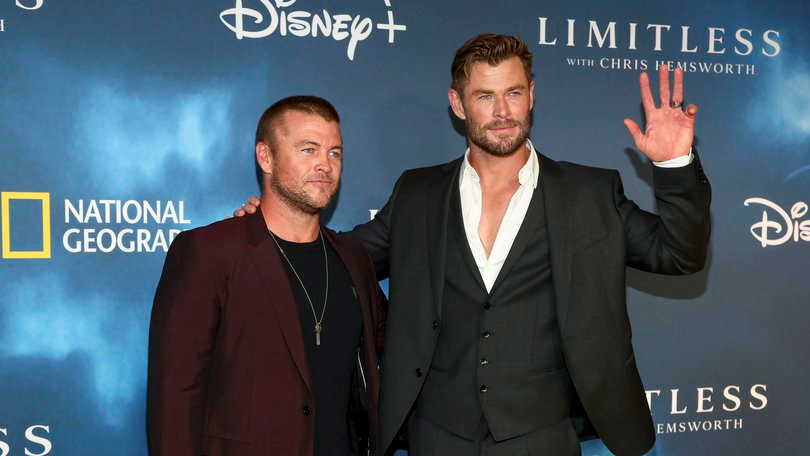
- Luke Hemsworth as a croc wrangler
- Steve Bisley
- Shari Sebbens
- Jean Tong (in an acting debut)
The expanded ensemble reflects the shift from a small-town mystery to a regionally complex investigation involving tourism, local economies, and Indigenous land management.
Themes Beneath the Comedy
Despite its irreverent tone, Deadloch continues to engage with serious subject matter.
Season 1 explored:
- Misogyny
- Homophobia
- Small-town politics
Season 2 builds on this foundation with new thematic layers:
- Race and cultural identity
- Kinship care systems
- Crime in remote communities
The writing by Kate McLennan and Kate McCartney maintains a dual approach—combining explicit, often crude humor with underlying social commentary.
As Madeleine Sami explains:
“They have an amazing, crass, comedic voice, but then there is that beautiful political undercurrent as well.”
Production, Community, and Cultural Engagement
The move to the Northern Territory also required deeper engagement with local communities.
Filmmaker Cian McCue joined the production as Indigenous community engagement officer and associate producer, ensuring:
- Appropriate permissions for filming
- Cultural sensitivity in storytelling
- Opportunities for local involvement
This includes outreach initiatives, such as inviting youth from at-risk programs to visit the set—an effort to integrate production into the community rather than operate independently of it.
A Tonal Evolution That Retains Identity
While Season 2 differs significantly in tone and setting, it preserves the core identity of Deadloch:
- Sharp, character-driven humor
- A layered, slow-burn mystery
- A willingness to balance absurdity with emotional depth
Kate Box describes the transition as moving from a “noir” framework to something closer to a “western,” emphasizing the shift in genre influences.
At the same time, the show’s signature elements remain intact—eccentric characters, sharp dialogue, and a narrative that oscillates between comedy and critique.
Release and Audience Expectations
Season 2 premiered globally on Prime Video on March 20, 2026, with an initial two-episode release followed by weekly installments leading to the finale on April 17.
The first season achieved international success, topping streaming charts and building a substantial audience. Expectations for Season 2 are correspondingly high.
Early indications suggest a deliberate effort to exceed those expectations by:
- Increasing narrative complexity
- Expanding thematic scope
- Intensifying both comedic and dramatic elements
Conclusion: A Series That Evolves Without Losing Its Core
Deadloch Season 2 represents a calculated evolution rather than a repetition of past success. By relocating the story, expanding the cast, and deepening its thematic concerns, the series positions itself as more ambitious and structurally complex.
At the same time, it retains the defining qualities that made it successful—its sharp writing, distinctive tone, and ability to blend humor with meaningful commentary.
The result is a season that feels both familiar and fundamentally different—a rare balance in serialized television.