



Deadloch Season 2: A Sharper, Wilder Return for TV’s Most Unconventional Crime Comedy
A Crime Story That Refuses to Behave
When Deadloch first arrived in 2023, it did not simply enter the crowded crime-drama space—it disrupted it. Built by creators Kate McCartney and Kate McLennan, the series fused murder mystery with biting satire, feminist storytelling, and distinctly Australian humor. The result was a show that critics described as a hybrid few knew they needed: a “buddy-comedy-murder-noir” with its own unmistakable voice.
- A Crime Story That Refuses to Behave
- From Tasmania to the Top End: A Shift in Terrain and Tone
- Barra Creek: A Town of Secrets, Rivalries, and Crocodiles
- The Core Dynamic: Dulcie vs. Eddie, Reversed
- Expanding the Ensemble: New Faces, Stronger Texture
- Comedy as a Structural Tool, Not a Distraction
- A Deeply Australian Identity—Without Apology
- Themes Beneath the Surface
- Why Season 2 Works
- Conclusion: A Rare Balance of Comedy and Crime
Now, with Season 2 streaming on Prime Video as of March 20, the series returns with renewed confidence. It retains its sharp comedic edge while expanding its narrative scope, shifting geography, and deepening character arcs. The outcome is a second installment that not only sustains the show’s reputation but arguably strengthens it.
From Tasmania to the Top End: A Shift in Terrain and Tone
Season 1 was anchored in the fictional Tasmanian town of Deadloch. Season 2 relocates the story to Australia’s Northern Territory—specifically Garramilla (Darwin) and the fictional Barra Creek. This transition is more than visual; it recalibrates the narrative environment entirely.
In Barra Creek, the stakes are immediate and visceral. The inciting mystery is as grotesque as it is intriguing: a dead crocodile discovered with a human body part in its mouth. This single image sets the tone for a season that leans into both absurdity and tension.



The new setting introduces:
-
A tourism economy built around crocodiles
-
A community shaped by isolation and local power dynamics
-
A climate that intensifies both physical discomfort and narrative pressure
At the center of it all are detectives Dulcie Collins and Eddie Redcliffe, once again tasked with untangling overlapping cases, including the unresolved death of Eddie’s former partner, Bushy.



Barra Creek: A Town of Secrets, Rivalries, and Crocodiles
The investigation unfolds in a town defined by scarcity—limited resources, competing interests, and deeply entrenched local hierarchies.
Several forces complicate the detectives’ work:
-
The Darrell family, led by Amber Darrell, exerts significant influence over local affairs
-
Crocodile tourism rivalries, including the operation “Land of Crocs,” introduce economic motives
-
External investigators, described as “sexist and showy,” run parallel, questionable inquiries
The environment itself becomes a character. The oppressive heat, described as “thicker than Clag,” mirrors the density of secrets and tensions simmering beneath the surface.
The Core Dynamic: Dulcie vs. Eddie, Reversed
At the heart of Deadloch remains its central pairing: Dulcie Collins (Kate Box) and Eddie Redcliffe (Madeleine Sami). Their relationship continues to drive both the narrative and comedic rhythm of the show.



Season 2 flips their dynamic:
-
In Season 1, Eddie was the outsider
-
In Season 2, Dulcie becomes the “fish out of water”
Dulcie struggles to adapt to Barra Creek’s chaotic environment—its informal systems, casual sexism, and Eddie’s unconventional methods. Meanwhile, Eddie returns to her hometown, confronting personal history, unresolved relationships, and a family dynamic described as a “profanity-charged reunion.”
This inversion allows the show to explore both characters with greater nuance. Dulcie’s controlled professionalism clashes with Eddie’s abrasive candor, producing a tension that is both comedic and emotionally grounded.
Expanding the Ensemble: New Faces, Stronger Texture
Season 2 broadens its cast while maintaining coherence. Several new and returning characters enhance the narrative:
-
Leo Lee, a local journalist “dangerously bored” with his job, becomes an unexpected ally
-
Abby Matsuda, now part of the forensic team, reconnects the story to Season 1
-
Miki Evans, a no-nonsense ranger, adds authority and local insight
-
Jason Wade, a flamboyant wildlife presenter, introduces satirical commentary on media personalities
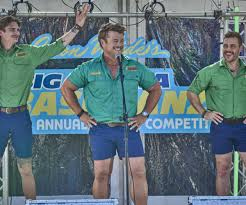
Jason Wade, portrayed by Luke Hemsworth, stands out as a caricature of celebrity adventurism—part Steve Irwin homage, part Bear Grylls parody. His exaggerated persona provides both comic relief and a critique of performative masculinity.
Comedy as a Structural Tool, Not a Distraction
What distinguishes Deadloch from conventional crime series is not just its humor, but how that humor functions structurally.
The writing integrates:
-
Rapid-fire insults and dialogue that reward attentive viewing
-
Cultural references specific to Australia, from music to slang
-
Absurd scenarios that coexist with genuine investigative stakes
Eddie’s dialogue exemplifies this balance. Lines such as “he’s not my boss and neither are you so stiff clitties” are not merely comedic—they reinforce character identity and thematic tone.
At the same time, the show does not abandon emotional depth. Eddie’s search for truth regarding Bushy’s death adds a layer of vulnerability beneath her abrasive exterior.
A Deeply Australian Identity—Without Apology
Deadloch remains unapologetically Australian in its sensibility. This is evident in:
-
Language and slang
-
Cultural references, including music like “Agadoo”
-
Environmental specificity, from eucalyptus landscapes to red earth
The cinematography, led by Rob Marsh alongside Katie Milwright and Simon Ozlins, captures the Northern Territory’s stark beauty. These visuals contrast sharply with the darker elements of the narrative, reinforcing the show’s tonal complexity.
Production design also plays a critical role. The Barra Creek Tavern, meticulously crafted, anchors much of the social interaction, functioning as both a narrative hub and a symbol of small-town life.
Themes Beneath the Surface
Beyond its comedic and procedural elements, Season 2 engages with broader themes:
-
Gender dynamics in law enforcement, highlighted through interactions with dismissive male counterparts
-
Community power structures, particularly in isolated regions
-
Media influence and performance, embodied by characters like Jason Wade
-
Personal identity and belonging, explored through Eddie’s return home
These themes are not presented didactically. Instead, they emerge organically through character interactions and plot developments.
Why Season 2 Works
Several factors contribute to the season’s success:
-
Consistency in tone – The show maintains its balance between humor and mystery
-
Narrative expansion – New settings and characters enrich the story without diluting its core
-
Character evolution – Both leads are given space to grow and confront personal challenges
-
Cultural specificity – The show’s authenticity strengthens its global appeal rather than limiting it
The result is a series that feels both familiar and refreshed.
Conclusion: A Rare Balance of Comedy and Crime
Deadloch Season 2 demonstrates that the series was not a one-season anomaly. It continues to refine its identity, delivering a narrative that is structurally sound, culturally grounded, and consistently engaging.
By embracing its uniqueness—its humor, its setting, its characters—the show avoids the pitfalls of formulaic crime television. Instead, it offers something distinct: a crime-comedy that is as sharp in its writing as it is confident in its voice.
As the story moves forward, the foundation laid in Season 2 suggests further potential for expansion—both in narrative complexity and cultural impact.