

Daredevil Finale: How Born Again Season 2 Turns a Brutal Ending Into a Bigger Marvel Future
The Daredevil: Born Again Season 2 finale does more than close another bloody chapter in Matt Murdock’s war for New York. It reshapes the series into something larger: a street-level Marvel reunion, a political thriller, and a launchpad for a more connected future across the MCU.
The finale, titled “The Southern Cross,” arrives after an eight-episode season built around moral pressure, political violence, broken loyalties, and the question that has always haunted Daredevil: where does justice end and vengeance begin? By the final moments, Matt Murdock is no longer simply fighting Wilson Fisk’s power from the shadows. He is exposed, wounded, arrested, and strangely calm about what comes next.
At the same time, the episode delivers the kind of surprise reveal Marvel fans had been waiting for: Mike Colter returns as Luke Cage, the bulletproof Hero of Harlem. His brief appearance confirms that Daredevil: Born Again is not only continuing Matt’s story but also pulling the old Netflix-era Defenders back into the center of Marvel’s live-action universe.
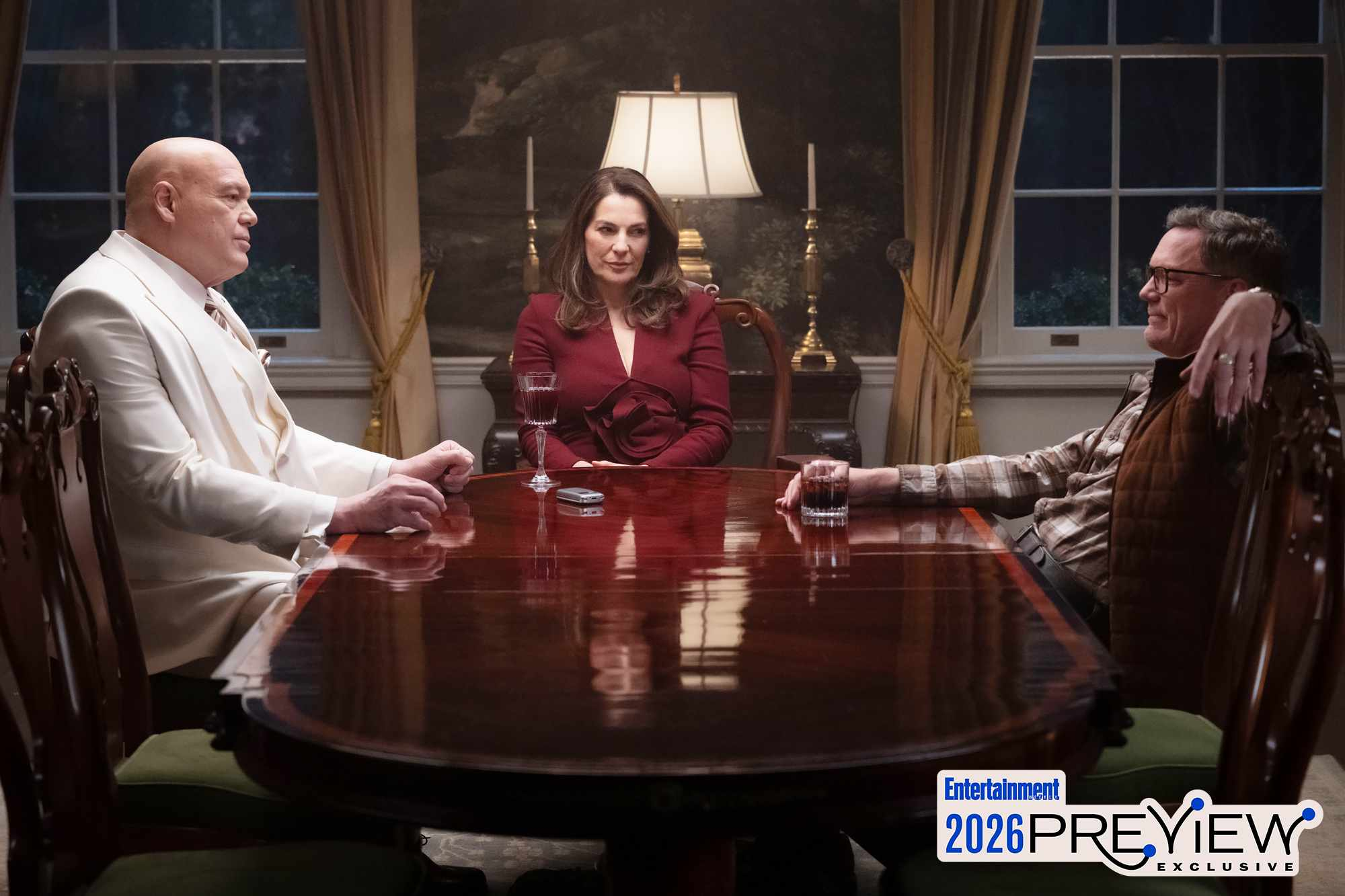
A Finale Built on Personal Stakes
The exclusive clip promoted ahead of the finale carried a telling message: “Things Get Personal In New Daredevil S2 Finale Clip.” That framing fits the episode’s emotional core. Season 2 has not treated the fight for New York as a distant superhero conflict. It has made the battle personal for Matt, Karen Page, Jessica Jones, Wilson Fisk, Dex, and nearly every major figure caught inside Fisk’s tightening grip.
By the time the finale begins, Matt is physically compromised, nursing a gunshot wound in his leg. Karen is entangled in her trial. Jessica wants to help. Fisk is more desperate than ever. The season has pushed its characters into corners where every choice carries moral cost.
That personal pressure matters because Daredevil has always worked best when the violence is not spectacle for its own sake. The fights are extensions of conscience. Matt does not merely ask whether he can win. He asks whether winning will destroy the part of him that still believes in law, mercy, and redemption.
Luke Cage Returns — And Changes the Meaning of the Ending
The finale’s biggest reveal is Luke Cage’s return. Mike Colter appears in a brief but significant scene, marking another major comeback from Marvel Television’s Netflix era. His return follows Charlie Cox’s Matt Murdock/Daredevil, Jon Bernthal’s Frank Castle/Punisher, and Krysten Ritter’s Jessica Jones.
Luke’s reappearance is especially important because Season 2 had already laid the groundwork for him. The show introduced Danielle Cage, Jessica and Luke’s daughter, and explored a storyline involving Mr. Charles, played by Matthew Lillard, using superpowered individuals for off-the-books missions.
The final moments bring that family thread together. Jessica, Luke, and Danielle are reunited, while Jessica also reopens Alias Investigations. That detail is not just nostalgia. It suggests that the private-investigator corner of Marvel’s street-level world may become active again.
Luke’s return also reframes Jessica’s role in the season. Her presence always hinted that she might not be alone. In the earlier Marvel shows, Jessica Jones and Luke Cage had a complicated, heated relationship, and Luke first appeared in Jessica Jones before headlining his own two-season series, Luke Cage, from 2016 to 2018. His arrival in the finale confirms that Born Again is intentionally reconnecting those character histories.
The Defenders Reunion Is No Longer Just Fan Speculation
For years, the Netflix Marvel shows felt like a closed chapter. Marvel Studios shifted its television strategy toward Disney+, and the earlier series seemed uncertain in their relationship to the larger MCU. Daredevil: Born Again has changed that.
The Season 2 finale now feels like a bridge between eras. Matt Murdock, Frank Castle, Jessica Jones, and Luke Cage have all returned. That leaves Finn Jones’ Danny Rand/Iron Fist as the last major Defender from that original group yet to be fully reintroduced onscreen in this revived continuity.
Reports of set activity around Season 3 have already intensified fan discussion, especially with the show currently filming in New York City. The finale makes that conversation feel less like wishful thinking and more like a deliberate direction. Born Again is becoming a gathering point for Marvel’s grounded heroes — characters whose stories are defined less by cosmic threats and more by corruption, trauma, crime, and survival at street level.
Fisk Falls, But His Damage Remains
Wilson Fisk’s arc in the finale is just as consequential as Luke Cage’s return. Season 2 pushed Fisk into increasingly brutal territory, and the finale presents the fallout from his public violence, crimes, and eventual exile.
Fisk may be removed from power, but the political machine around him does not simply vanish. Sheila is now in charge, a development that raises immediate questions about the future of New York’s leadership. Her record is complicated. She has at times compromised her integrity and aligned herself with Fisk’s interests in order to survive.
That makes her new role unstable and dramatically useful. She is not presented as a clean moral reset. Instead, her rise suggests that the city may have escaped Fisk personally while remaining trapped inside the political system he helped corrupt.
The finale also carries wider MCU implications because Sheila has been connected to Spider-Man: Brand New Day, where she is seen handing Spider-Man a key to the city. That detail turns the Daredevil finale into more than a television endpoint. It becomes connective tissue for Marvel’s street-level New York stories.
Dex, Mr. Charles, and the Shadow of the CIA
One of the finale’s most intriguing threads involves Dex, also known as Bullseye. A brief shot places Charles on an airplane with Dex sitting next to him, strongly suggesting that Dex’s next chapter may involve covert work.
The season had already linked Charles to off-the-books missions involving superpowered individuals. It also established a connection to Valentina Allegra de Fontaine, the CIA director in the MCU and covert leader of the Thunderbolts. That connection matters because it positions Dex not simply as a recurring Daredevil villain, but as a potential asset in a wider network of morally compromised operatives.
Dex appeared to be moving toward some form of redemption as the season closed, but the finale complicates that idea. If he has been recruited by Charles and the CIA, his violent skill set may be redirected rather than healed. That is a classic Marvel ambiguity: the system does not redeem dangerous people; it often repurposes them.
Matt Murdock’s Arrest Is a Beginning, Not an Ending
The finale’s closing image of Matt Murdock in custody is one of its most effective choices. After revealing himself as the Red Devil in court, Matt’s actions catch up with him. He is arrested and placed in a jail cell.
Yet the striking detail is his reaction. Matt smiles.
That smile is not triumph in the ordinary sense. It suggests acceptance. Matt understands that accountability is part of the moral code he claims to defend. He has spent the season questioning his conscience through conversations with Karen, Jessica, and Dex. His arrest forces that internal debate into public view.
For Season 3, this creates a powerful setup. Daredevil may become the defendant. Matt may have to fight not only criminals in alleys but also the legal and political consequences of vigilantism. That is fertile ground for a series about a lawyer who becomes a masked fighter because the system fails — and then must face that same system when it turns its attention toward him.
Why the Finale Matters for Marvel’s Street-Level Future
The Daredevil: Born Again Season 2 finale matters because it shows Marvel leaning into one of its strongest storytelling lanes: urban crime drama with superhero consequences.
The episode does not rely only on cameos. Luke Cage’s return is exciting, but it works because the season prepared for it through Danielle Cage, Jessica Jones, Mr. Charles, and the broader theme of weaponized superpowered people. Fisk’s downfall matters because his political influence leaves scars behind. Dex’s possible CIA recruitment matters because it connects street violence to institutional power.
The result is a finale that feels both closed and open. It resolves enough to satisfy the season’s immediate arc, but it also plants major questions:
What happened to Luke Cage overseas?
Can Jessica Jones rebuild Alias Investigations?
Will Dex become a CIA-controlled weapon?
Can Sheila lead New York without repeating Fisk’s compromises?
And what happens when Matt Murdock must defend Daredevil in the court of law and public opinion?
A Finale About Consequences
The most compelling thing about the Daredevil finale is that it understands consequence. Fisk’s reign has consequences. Matt’s choices have consequences. Jessica’s past has consequences. Luke’s absence has consequences. Even the return of familiar heroes is not treated as a simple victory lap; it comes with family tension, political danger, and unanswered history.
That is why “The Southern Cross” works as more than a season closer. It is a turning point. Daredevil: Born Again has moved from revival to expansion, from one man’s crusade to a larger network of damaged heroes and compromised institutions.
Season 3 now has the opportunity to become the most ambitious chapter of the series yet — not because it can add more Marvel names, but because it can test what those names mean when the law, the streets, and the state all collide.


