

Daredevil: Born Again Sets the Stage for a More Dangerous Season 3
Marvel’s Daredevil: Born Again has pushed Matt Murdock into one of the most consequential turning points of his screen life. What began as another brutal struggle between Daredevil and Wilson Fisk has now become something bigger: a story about public identity, political power, vigilante justice, and the dangerous vacuum left when Hell’s Kitchen loses its protector.
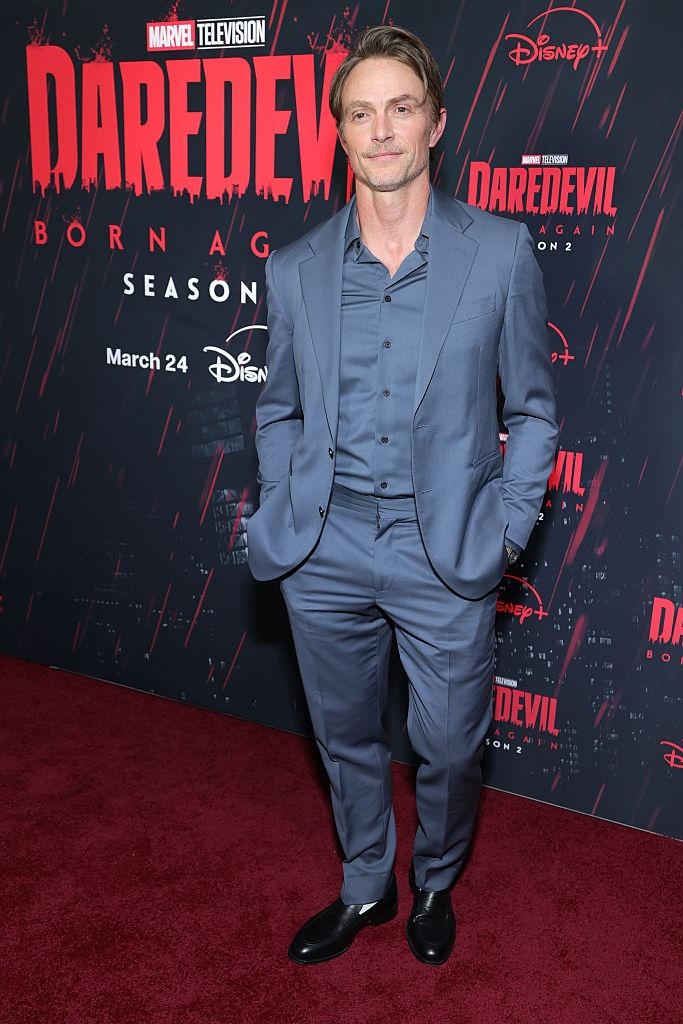
The latest wave of attention around the Disney+ series centers on Wilson Bethel’s confirmation that Benjamin Poindexter, better known as Bullseye, will return in Daredevil: Born Again Season 3. His comeback matters because the Season 2 finale did more than close a chapter. It rearranged the entire street-level Marvel landscape.
Matt Murdock is exposed. Wilson Fisk is exiled. Bullseye has a new purpose. Frank Castle’s story is moving into its own Disney+ special. And New York may be entering a period where heroes, assassins, and political survivors all compete to define what justice looks like after Fisk’s fall.
A Finale Built Around Sacrifice, Not Victory
The Season 2 finale placed Matt Murdock in the one arena where he can be just as dangerous as Daredevil: the courtroom. After Karen Page’s arrest, Matt returned to public view to challenge the legal machinery built around Wilson Fisk’s “Safer Streets” agenda.
Fisk, now operating with the authority of the mayor’s office, had turned New York into a political theater where vigilantes could be crushed under the language of public safety. Karen’s case became a way to pressure Matt without fighting him directly. Instead of answering with fists, Matt attacked the system behind the case.
His argument was direct: the tribunal being used against Karen had “neither the ability nor the mandate to decide justice.” That line cut to the heart of the finale’s conflict. Fisk was not simply a criminal hiding in government; he was using government procedure to make his criminal agenda look legitimate.
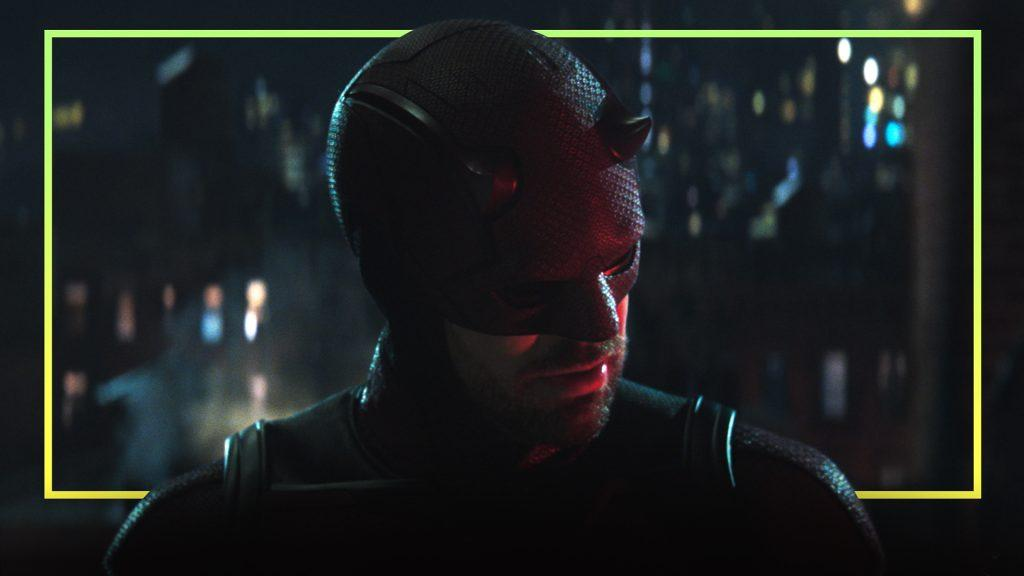
The case collapsed after Matt revealed that he had personally witnessed Fisk’s illegal weapons smuggling as Daredevil. To make that testimony count, he did the one thing he had avoided for years. He revealed his secret publicly and declared: “I am Daredevil.”
For Matt, that confession was not a triumphant superhero moment. It was a legal and personal detonation. He saved Karen, exposed Fisk, and removed Fisk’s ability to use his identity as blackmail. But the price was devastating: Matt was disbarred and sent to prison for his actions as Daredevil.
Matt Murdock’s Public Identity Changes Everything
Superhero stories often treat secret identities as tactical tools. For Matt Murdock, the mask has always carried a deeper burden. It allowed him to serve two versions of justice: one through law, the other through violence restrained by conscience.
By saying “I am Daredevil,” Matt destroyed the wall between those two lives.
That revelation places Season 3 in unfamiliar territory. Matt can no longer move quietly as an attorney by day and a masked guardian by night. His legal career is damaged, his freedom is gone, and Hell’s Kitchen now knows exactly who has been bleeding for it in the dark.
The prison ending gives the series a sharp new direction. Instead of opening Season 3 with Matt patrolling rooftops, the show can begin with him inside a cage, surrounded by enemies and watched by people who now know exactly what he represents. Connor Powell’s potential revenge, Cole North’s quiet respect, and Fisk’s exile all create pressure points for the next chapter.
The central question is no longer whether Matt can defeat Fisk. It is whether Daredevil can still exist when Matt Murdock has been publicly consumed by the identity.
Wilson Fisk Is Beaten, But Not Finished
The finale appears to remove Fisk from New York, but it does not neutralize him as a threat. Once his crimes were exposed, Governor Marge McCaffrey pushed him to resign. Fisk then barricaded himself inside the courthouse with his Anti-Vigilante Task Force before Matt offered him a stark deal: resign, give up his U.S. citizenship, and leave New York.
That ending gives Fisk a rare kind of defeat. He loses his office, his city, and his immediate control over the machinery he built. Yet the image of Fisk in exile does not feel like closure. It feels like a pause before reinvention.
Fisk has always been most dangerous when cornered. His power is not limited to a title or a physical location. He understands institutions, fear, loyalty, and public perception. Exile may remove him from City Hall, but it could also give him time to rebuild without the immediate scrutiny of New York’s streets.
For Season 3, that means Fisk does not need to return immediately to remain influential. His policies, task forces, loyalists, enemies, and unfinished schemes can continue to shape the city even while he is physically absent.
Bullseye’s Return Gives Season 3 Its Wild Card
The biggest confirmed development for the next season is Wilson Bethel’s return as Bullseye. Speaking about Season 3, Bethel said: “I can confirm that I’m in Season 3.” He added, “So, that’s great. I would obviously love to be used in some additional Marvel projects down the road, or my own Marvel project; that’s a dream. I have my fingers crossed for that, and the fan response to the character, hopefully, will warrant that.”
That confirmation resolves one of the finale’s most intriguing cliffhangers. Bullseye was last seen leaving New York on a plane with CIA operative Mr. Charles. The moment initially appeared to mark a departure from the central story, especially because Poindexter seemed to take the place of Luke Cage, who was released from service and reunited with Jessica Jones and their daughter.
Instead, Bethel’s comments make the scene look like the beginning of a deliberate new arc.
Bullseye is no longer simply the psychologically unstable weapon once defined by his dependence on Wilson Fisk. Bethel described the finale as “a really exciting point of departure for the next stage of things because where he ends up is essentially with a clean slate. He doesn’t owe anything to anyone, and he is a phenomenally talented killer who is now working for the CIA or some kind of Black Ops situation, which frees him up in all kinds of ways.”
That is a major shift. Earlier versions of Poindexter were shaped by manipulation, instability, and Fisk’s control. Now he appears to be entering a darker, more independent phase. A Bullseye with government backing, operational freedom, and no personal debt to Fisk could become far more dangerous than the version who served as Kingpin’s weapon.
Bethel also suggested that this direction could bring the character closer to the comics. “In some ways, it feels like it potentially is setting him up to be a version of Bullseye that I think a lot of people will recognize from the comics,” he said.
That matters because Bullseye is not merely a physical threat. He is a psychological one. His talent is precision, but his real danger lies in how easily he turns violence into identity. If Season 3 positions him as a black-ops killer who believes he has purpose, Daredevil may face an enemy who is both liberated and more delusional than ever.
The Missing Post-Credits Scene May Point to The Punisher
Marvel fans have been trained to wait after the credits. That expectation made the absence of a post-credits or end-credits scene in the Daredevil: Born Again Season 2 finale feel surprising.
The likely reason is timing. The Punisher: One Last Kill, a new one-hour Disney+ special starring Jon Bernthal as Frank Castle, is scheduled to arrive on Tuesday, May 13. The special is expected to function as an epilogue of sorts to Daredevil: Born Again Season 2, following Frank as he searches for meaning beyond revenge while an unexpected force pulls him back into the fight.
Because the next Marvel entry is arriving so soon after the finale, a traditional post-credits teaser may have been unnecessary. Instead of using a short bonus scene to bridge the story, Marvel appears to be letting the Punisher special perform that function in full.
That choice keeps the connection between Born Again and The Punisher: One Last Kill deliberately unclear for now. It also raises a new question: will Frank Castle’s special set up his own next move, connect back to Daredevil, or help bridge the street-level MCU toward Spider-Man: Brand New Day?
The Defenders Question Becomes Harder to Ignore
With Matt behind bars and Hell’s Kitchen exposed, Season 3 has a natural opening for other street-level Marvel figures. Season 2 already brought back Jessica Jones and Luke Cage, and the finale’s setup makes the city feel vulnerable enough for more familiar names to return.
Danny Rand, also known as Iron Fist, is one of the most obvious possibilities. In Marvel Comics, Danny has impersonated Daredevil to help protect Matt Murdock when Matt’s identity became public. That idea now fits the show’s situation almost perfectly. If Matt is in prison and the city still needs Daredevil, someone else may have to wear the horns.
Elektra Natchios is another major possibility. In the comics, she too has taken on the Daredevil mantle. Her return would carry a different emotional weight because of her complicated history with Matt and her connection to the darker corners of his world.
Other characters also make sense in this new landscape: Claire Temple as a grounding figure for the Defenders-era heroes, Misty Knight and Colleen Wing as street-level allies, Maya Lopez as someone with unfinished business tied to Kingpin, and even Spider-Man as a fellow New York hero whose own identity crisis once brought Matt Murdock into his orbit.
Not every character needs to appear, and the show would risk overcrowding itself if it tried to become a full Defenders revival. But the premise now demands a wider question: who protects the city when Daredevil cannot?
Why Season 3 Could Be the Show’s Most Comic-Book Chapter Yet
The Season 2 finale leaves the series in a position that feels more directly connected to major Daredevil comic arcs than ever before. Matt’s public confession echoes stories where his identity becomes a weapon used against him, while the prison ending points toward famous arcs built around Matt being trapped among criminals, enemies, and compromised institutions.
That setup could allow Season 3 to explore several conflicts at once. Inside prison, Matt must survive without the freedom that made Daredevil effective. Outside prison, Hell’s Kitchen must decide whether it still believes in the symbol. Fisk’s exile creates a power vacuum. Bullseye’s CIA-linked reinvention introduces a threat beyond the usual criminal underworld. And the possible return of other heroes could turn the season into a broader examination of Marvel’s street-level ecosystem.
The most compelling part is that the show does not need to escalate into world-ending stakes. Its power comes from the opposite direction. Daredevil: Born Again is strongest when it treats one city, one courtroom, one prison block, or one wounded friendship as enough to carry moral weight.
A Darker Future for Hell’s Kitchen
The future of Daredevil: Born Again now rests on a bold reversal. Matt Murdock won by telling the truth, but that truth cost him almost everything. Wilson Fisk lost power, but remains dangerous. Bullseye has escaped the old rules of his life and entered a new world where his violence may be sanctioned rather than restrained. Frank Castle is preparing for another chapter. And Hell’s Kitchen may be left searching for a protector at the exact moment its enemies are evolving.
That is why Season 3 feels so promising. The show has not merely teased another villain or another fight. It has created a moral crisis around the identity of Daredevil itself.
Matt Murdock can be imprisoned. His law license can be stripped away. His secret can be exposed. But the symbol he built now belongs to a city that has seen what Fisk tried to become. Season 3’s most important question may not be whether Matt can escape prison. It may be whether Daredevil can survive in public, in exile, in imitation, or in the hands of those brave enough to carry the burden while Matt cannot.


