




Daredevil: Born Again Season 2 — A New York Resistance Story Reaches Its Breaking Point
Introduction: Marvel’s Darkest Street-Level Saga Enters a New Phase
With its second season arriving on March 24, 2026, Daredevil: Born Again moves beyond revival territory into something more deliberate: a fully serialized, politically charged continuation of one of Marvel’s most grounded narratives.
- Daredevil: Born Again Season 2 — A New York Resistance Story Reaches Its Breaking Point
- From Vigilante Justice to Political Resistance
- A City Under Control: Fisk’s Expanding Power
- The Resistance: Allies, Antiheroes, and Divided Loyalties
- The Villains Beyond Fisk: Expanding Threat Landscape
- Production Reset: Why Season 2 Feels Different
- Episode Structure and Release Strategy
- Visual Identity: A New Suit, A New Symbol
- Themes: Power, Legitimacy, and Moral Boundaries
- The MCU Context: Expanding Street-Level Continuity
- What Comes Next: A Confirmed Future
- Conclusion: A Series That Redefines Its Own Boundaries
Positioned within Phase Six of the Marvel Cinematic Universe (MCU), the season reframes the conflict between Matt Murdock and Wilson Fisk as a city-wide power struggle—one that blends crime drama, political intrigue, and ideological warfare. What began as a personal rivalry now unfolds as a resistance movement inside a city under authoritarian pressure.
This is not simply a continuation of the story; it is an escalation.



From Vigilante Justice to Political Resistance
The second season builds directly on the aftermath of Fisk’s rise to power. Now serving as mayor of New York City, Wilson Fisk has consolidated authority through his Anti-Vigilante Task Force (AVTF), effectively criminalizing masked justice.
At its core, the season explores a clear narrative transformation:


- From individual heroism → to organized resistance
- From crime boss vs vigilante → to state power vs rebellion
- From street conflict → to political warfare
Matt Murdock, played again by Charlie Cox, is no longer operating as a lone vigilante. Instead, he becomes the architect of a resistance network opposing Fisk’s regime.
A City Under Control: Fisk’s Expanding Power
Vincent D’Onofrio’s Wilson Fisk evolves significantly in this season. No longer confined to the criminal underworld, he now operates as a legitimate authority figure—while retaining his underlying ruthlessness.
Key developments shaping Fisk’s arc include:
- His “Safer Streets Initiative”, which formalizes anti-vigilante policies
- The use of martial law tactics to suppress opposition
- Expansion of influence beyond New York into broader geopolitical dynamics
Thematically, Fisk represents institutionalized power. The series positions him not just as a villain, but as a system—one that redefines legality to eliminate dissent.
The Resistance: Allies, Antiheroes, and Divided Loyalties
One of the defining features of Season 2 is its ensemble-driven resistance structure.
Key Figures in Murdock’s Alliance
- Karen Page (Deborah Ann Woll)
No longer confined to a supporting role, Karen becomes a strategic partner. Her dynamic with Murdock reflects both emotional history and ideological tension. - Jessica Jones (Krysten Ritter)
Her return marks a major crossover moment. As a reluctant ally with PTSD and a distaste for teamwork, Jones introduces unpredictability and a sharper edge to the resistance. - Angela del Toro / White Tiger
A younger vigilante stepping into a legacy role, representing the next generation of resistance. - Cherry (Clark Johnson)
A former NYPD officer who bridges institutional knowledge with underground operations.
This coalition reflects a broader narrative device: resistance is fragmented, personal, and often reluctant.
The Villains Beyond Fisk: Expanding Threat Landscape
While Fisk remains the central antagonist, the season deliberately broadens its opposition forces.
Notable Threats
- Benjamin “Dex” Poindexter / Bullseye
A psychologically unstable assassin exploring what he perceives as redemption—though his methods remain violent and unpredictable. - Muse (Serial Killer)
A lingering threat from Season 1 whose actions continue to ripple into the present storyline. - Mr. Charles (Matthew Lillard)
A new addition operating at an international level, described as a “power player” influencing global politics behind the scenes.
The layered antagonist structure shifts the narrative from a binary conflict into a multi-front struggle.
Production Reset: Why Season 2 Feels Different
Season 2 is the direct result of a significant creative overhaul within Marvel Studios.
Originally planned as part of an 18-episode first season, the project was restructured into two separate seasons after Marvel reassessed its tone and direction in late 2023.
Key Creative Changes
- Dario Scardapane took over as showrunner
- Justin Benson & Aaron Moorhead led direction
- Greater emphasis on serialized storytelling
- Stronger alignment with the tone of the original Netflix series
This restructuring has measurable effects:
- More cohesive narrative flow
- Stronger character continuity
- Increased narrative stakes
The second season is described internally as a “better-oiled machine,” reflecting improved production coordination and storytelling clarity.
Episode Structure and Release Strategy
The season consists of eight episodes, released weekly on Disney+ from March 24 to May 12, 2026.
Release Timeline (What It Achieves)
The weekly rollout strategy serves two purposes:
- Sustained audience engagement over two months
- Narrative pacing that supports suspense and episodic analysis
Episode Schedule
- Episode 1: March 24
- Episode 2: March 31
- Episode 3: April 7
- Episode 4: April 14
- Episode 5: April 21
- Episode 6: April 28
- Episode 7: May 5
- Episode 8: May 12
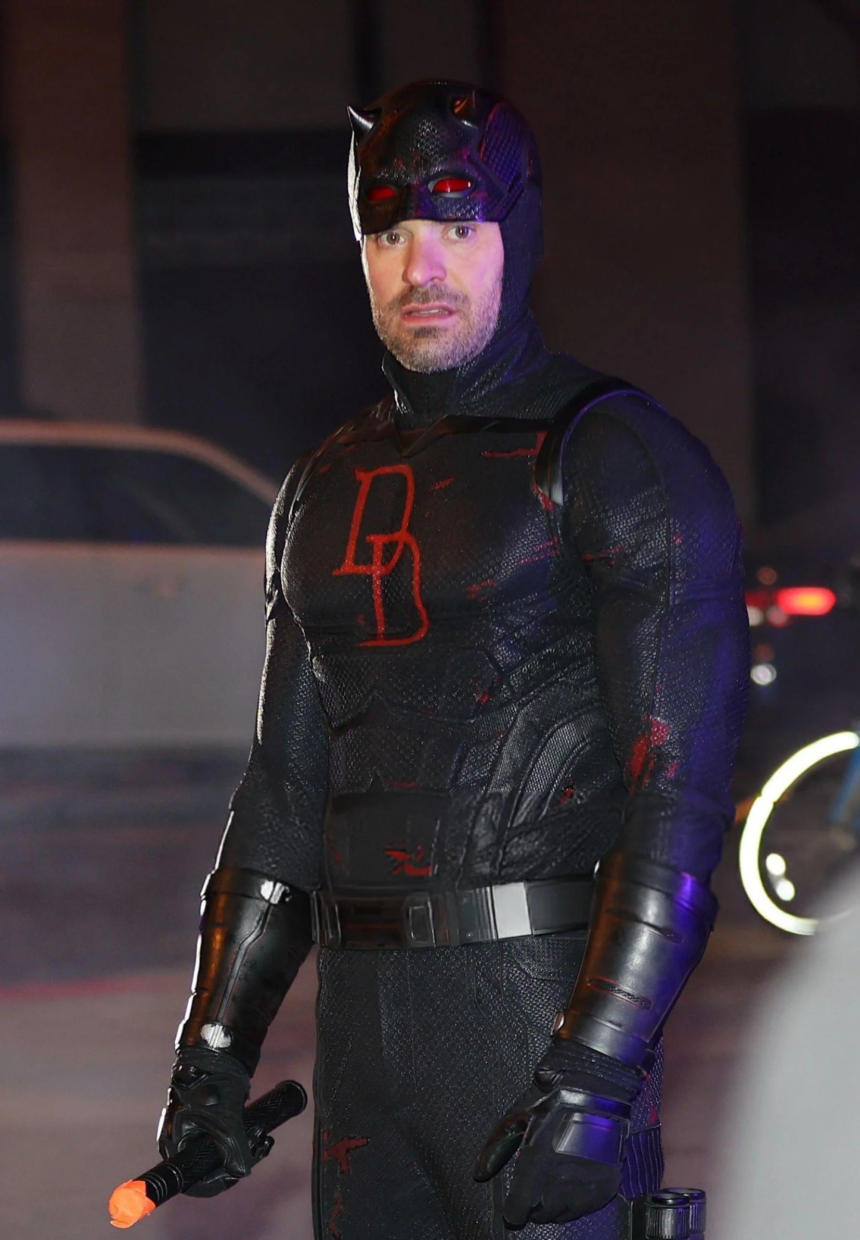
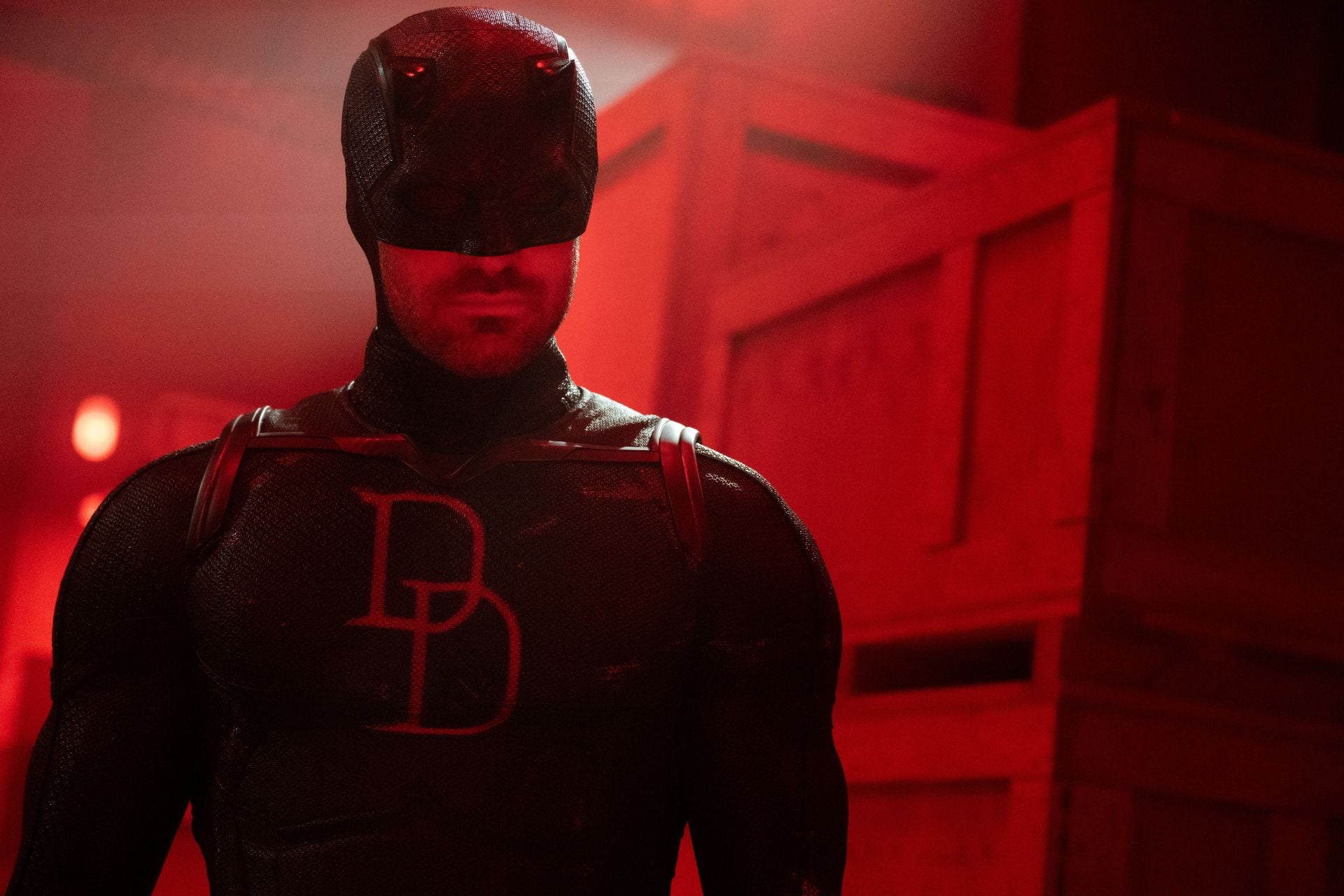
Visual Identity: A New Suit, A New Symbol
One of the most visible changes is Daredevil’s updated suit:
- Black base with a red “double D” chest emblem
- Inspired by the Shadowland comic storyline
- Represents earned identity rather than inherited symbolism
This design marks the first time the emblem appears in the MCU, signaling a transition in Murdock’s character—from reactive vigilante to symbolic leader.
Themes: Power, Legitimacy, and Moral Boundaries
Season 2 operates on several overlapping thematic layers:
1. Legitimacy vs Justice
Fisk represents legal authority, while Murdock represents moral authority. The conflict questions whether legality equates to justice.
2. Resistance and Revolution
The narrative draws parallels to historical uprisings, framing Murdock’s movement as a long-term rebellion rather than a quick victory.
3. Identity and Duality
Both Fisk and Murdock are forced to redefine themselves under new conditions—one as a ruler, the other as a revolutionary.
The MCU Context: Expanding Street-Level Continuity
Season 2 does not exist in isolation. It connects to broader MCU developments:
- Runs concurrently with an untitled Punisher special
- Ties into Spider-Man: Brand New Day (2026) through shared narrative elements
- Reinforces Marvel’s renewed focus on grounded, street-level storytelling
This interconnectivity signals a strategic shift—integrating smaller-scale stories into the larger cinematic universe without losing their tonal identity.
What Comes Next: A Confirmed Future
Marvel has already confirmed a third season, scheduled for March 2027, indicating long-term confidence in the series.
The decision suggests:
- Strong audience engagement with Season 1
- Narrative arcs designed for multi-season payoff
- Continued investment in Daredevil as a central MCU figure
Conclusion: A Series That Redefines Its Own Boundaries
Daredevil: Born Again Season 2 represents a decisive evolution in Marvel’s television strategy. It moves away from episodic experimentation and toward tightly structured, character-driven storytelling with political undertones.
By reframing Daredevil not just as a hero but as a leader of resistance, the series expands its narrative scope while maintaining its grounded identity.
The result is a season that operates simultaneously as:
- A continuation of a beloved franchise
- A political crime drama
- A character study of power and opposition
It is less about saving the city—and more about who gets to define it.