


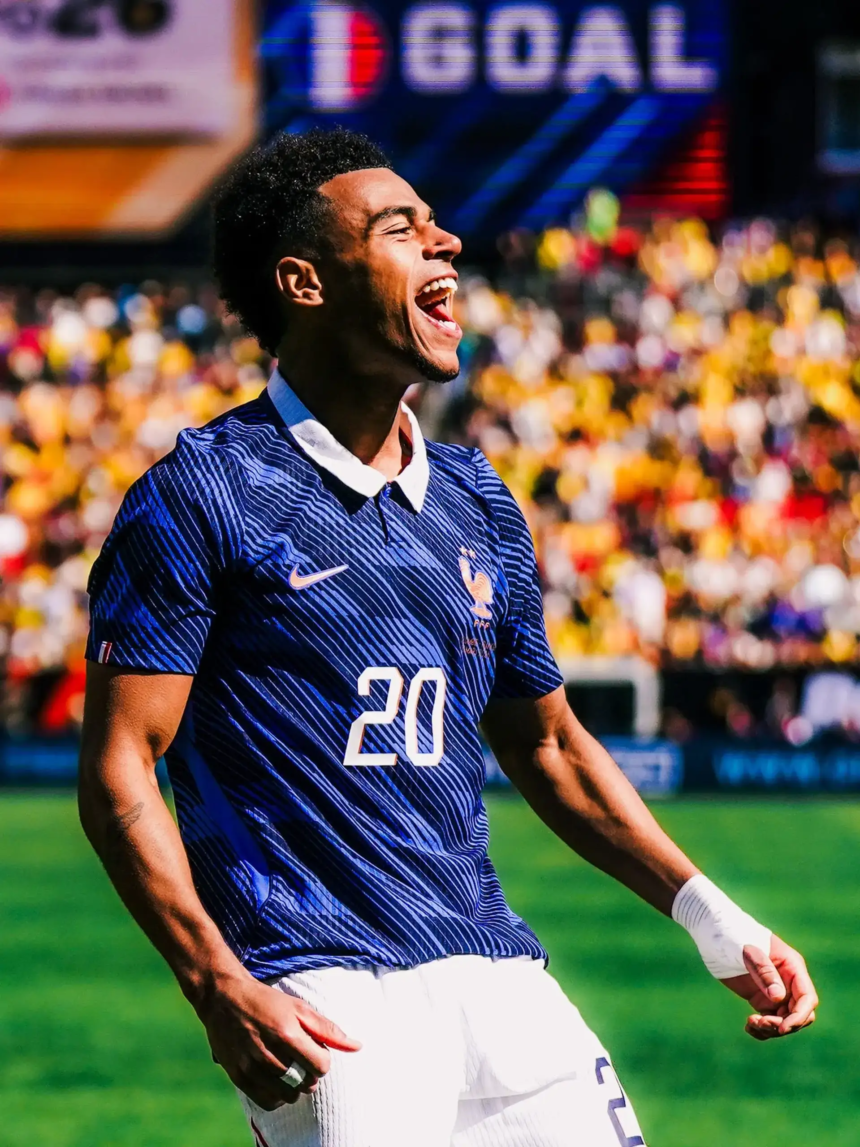
France vs Colombia: A Night of Emerging Stars and Tactical Authority
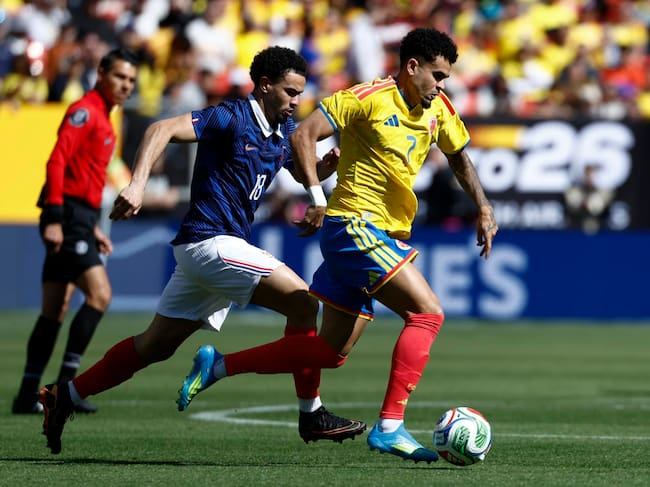
The international friendly between France national football team and Colombia national football team on March 29, 2026, was more than just a routine exhibition match. Played at Northwest Stadium, the encounter delivered a clear message about France’s depth, tactical precision, and emerging talent.
- First-Half Control: France Sets the Tone Early
- Colombia’s Struggles and Tactical Adjustments
- Doué’s Defining Moment: A Star Emerges
- Colombia’s Response: Campaz Pulls One Back
- Tactical Breakdown: Efficiency vs Volume
- Key Performers and Turning Points
- Substitutions and Squad Depth
- Broader Implications: What This Result Signals
- Looking Ahead: Building Toward Competitive Tournaments
- Conclusion
By the final whistle, France had secured a convincing 3-1 victory. But beyond the scoreline, the match revealed a developing narrative—one where youthful energy and structured execution intersected to reshape expectations ahead of major international competitions.
First-Half Control: France Sets the Tone Early
From kickoff, France demonstrated a composed and methodical approach. Operating in a 4-2-3-1 system under Didier Deschamps, they controlled possession (54.7%) and dictated the tempo.

The breakthrough came in the 29th minute, when Désiré Doué opened the scoring. It was a landmark moment—his first senior international goal—marking the arrival of a new attacking option for France.
Twelve minutes later, France doubled their advantage. Marcus Thuram found the net in the 41st minute, capitalizing on an assist from Maghnes Akliouche. The move highlighted France’s ability to transition quickly and exploit defensive gaps.

By halftime, France led 2-0, having executed their game plan with precision and efficiency.
Colombia’s Struggles and Tactical Adjustments
Colombia, managed by Néstor Lorenzo, entered the match ranked 14th globally, facing a formidable opponent ranked 3rd.
Deploying a similar 4-2-3-1 formation, Colombia attempted to build through midfield, relying on experienced figures like James Rodríguez and Luis Díaz. However, France’s defensive structure limited their effectiveness.
Despite registering 13 shot attempts and earning 9 corner kicks, Colombia struggled to convert opportunities into goals during the first half. Their attacking sequences often broke down in the final third due to France’s disciplined positioning.


Doué’s Defining Moment: A Star Emerges
The second half began with Colombia making multiple substitutions in an attempt to regain control. However, France struck again in the 56th minute.
Once more, Désiré Doué delivered. Assisted by Marcus Thuram, he scored his second goal of the match, extending France’s lead to 3-0.
This moment was decisive—not only in terms of the scoreline but also in signaling the emergence of a new attacking talent within the French setup. Doué’s performance combined composure, positioning, and clinical finishing, attributes typically associated with seasoned internationals.
Colombia’s Response: Campaz Pulls One Back
Colombia refused to collapse entirely. In the 77th minute, Jáminton Campaz scored a well-worked goal, assisted by Jefferson Lerma.
The goal offered a glimpse of Colombia’s attacking potential when execution aligned with intent. It also prevented a clean sheet for France, adding a degree of balance to the final scoreline.
However, the late effort was insufficient to alter the outcome.
Tactical Breakdown: Efficiency vs Volume
A closer look at the match statistics reinforces the narrative:
- Possession: France 54.7% – Colombia 45.3%
- Shots on Goal: 5 – 5
- Total Attempts: France 14 – Colombia 13
- Corner Kicks: Colombia 9 – France 5
While Colombia generated a higher number of set-piece opportunities, France proved significantly more efficient in front of goal. Their conversion rate and decision-making in key moments ultimately defined the match.
Key Performers and Turning Points
Désiré Doué (France)
Two goals on his senior debut performance positioned him as the standout player. His movement and finishing were decisive.
Marcus Thuram (France)
A goal and an assist underscored his influence in linking play and creating opportunities.
Jáminton Campaz (Colombia)
Provided Colombia’s only goal and was one of their most active attacking threats after coming on.
Substitutions and Squad Depth
France demonstrated notable squad depth with late substitutions, including appearances from Kylian Mbappé and Michael Olise. The ability to introduce high-caliber players without disrupting structure is a critical advantage at the international level.
Colombia also rotated extensively, introducing players such as Andrés Gómez and Jhon Córdoba, but struggled to shift the match’s momentum.
Broader Implications: What This Result Signals
For France
This performance reinforces France’s status as one of the most complete teams in international football. Beyond established stars, the emergence of players like Doué suggests a sustainable pipeline of talent.
The tactical clarity under Didier Deschamps remains evident—structured defense, efficient transitions, and clinical finishing.
For Colombia
Despite the loss, Colombia showed moments of promise, particularly in their ability to create chances. However, their inability to convert opportunities highlights an area requiring immediate improvement.
Facing top-tier teams exposes these gaps, offering valuable lessons ahead of competitive fixtures.
Looking Ahead: Building Toward Competitive Tournaments
International friendlies serve as testing grounds, and this match fulfilled that role effectively. France will take confidence from both the result and individual performances, while Colombia gains insight into the adjustments needed to compete at the highest level.
The emergence of new talents, tactical refinements, and squad rotations observed in this match are likely to influence both teams’ strategies moving forward.
Conclusion
France’s 3-1 victory over Colombia was not merely a friendly win—it was a controlled, structured performance that highlighted both present strength and future potential. Désiré Doué’s breakout display, combined with Marcus Thuram’s influence, provided a glimpse into France’s evolving attacking identity.
For Colombia, the match underscored both resilience and areas for growth. Their late goal demonstrated capability, but consistency remains the key challenge.
As international football continues to evolve, matches like this offer a clear view of where teams stand—and where they are heading.