





Coco Jones: From Disney Breakout to R&B Powerhouse in a New Era of Confidence
A New Chapter Defined by “Luvagirl”
In March 2026, Coco Jones signaled a decisive shift in her artistic identity with the release of her single “Luvagirl.” The track, released on March 20, 2026, marks what many observers describe as her most confident and expressive musical phase yet.
- A New Chapter Defined by “Luvagirl”
- Visual Identity and Cultural Impact
- Career Foundations: A Long Road to Recognition
- Reinvention and Industry Recognition
- Expanding Beyond Music
- Personal Life and Authentic Storytelling
- Industry Position: A Strategic Shift in R&B
- What Comes Next
- Conclusion: A Career Reclaimed and Reimagined
Built on a horn-driven, uptempo arrangement crafted by producer Shae Jacobs, the song runs for 2 minutes and 41 seconds and blends emotional vulnerability with a bold, self-assured tone. Thematically, it explores devotion, desire, and the transformative nature of love—elements that align closely with Jones’ current personal and professional trajectory.
The track opens with a lyrical declaration that encapsulates its tone:
“Before me and you, no stress, no mess, no fuss. Just us in love and in desire. Boy, you know what you do to me. You turned me to a lover, lover, lover, luvagirl.”
This release is not an isolated moment but part of a broader repositioning—one that moves away from introspection toward celebration, intimacy, and artistic freedom.
Visual Identity and Cultural Impact
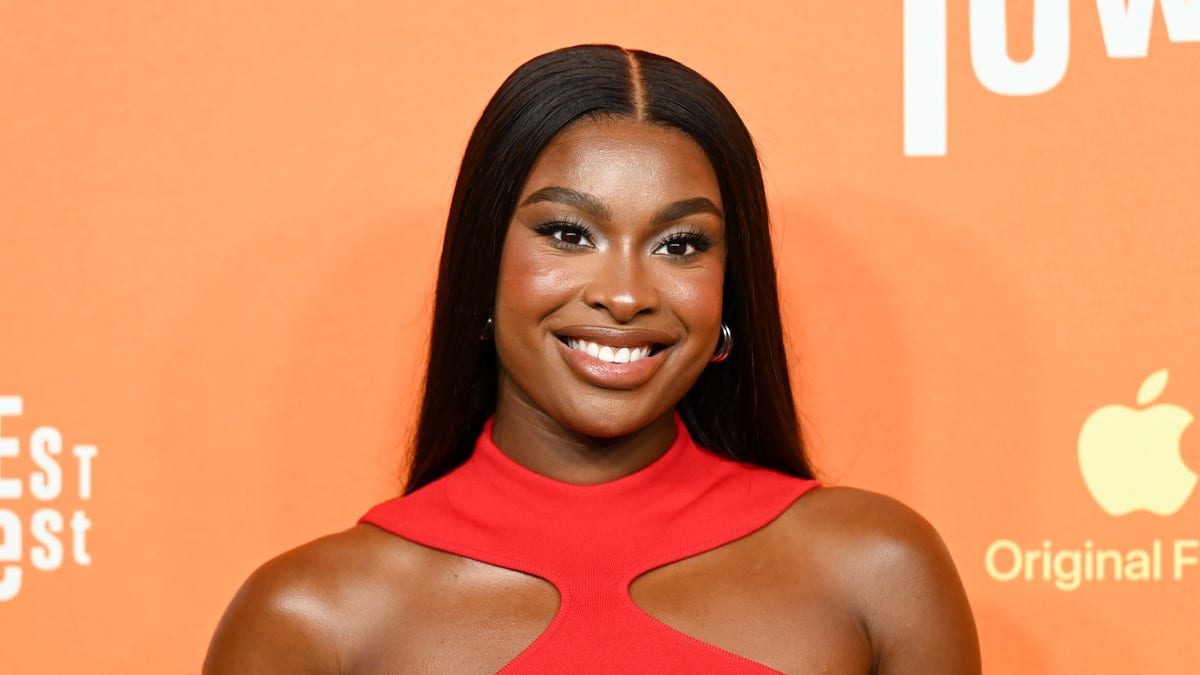
The accompanying music video reinforces this transition. Coco Jones leans heavily into visual storytelling, using fashion as a primary expressive tool. A standout element is a sculpted, body-hugging bodysuit that accentuates movement while maintaining structural precision.



The design—featuring a high-cut leg, structured bust, and reflective fabric—transforms choreography into a visual statement. Lighting interacts with the material to emphasize texture, while her makeup remains deliberately restrained: luminous skin, defined contouring, and neutral tones that balance the intensity of the styling.
This approach positions Jones not just as a vocalist, but as a multidimensional performer whose aesthetic choices contribute to her artistic narrative. In an industry where visual identity increasingly shapes audience perception, this moment carries strategic significance.
Career Foundations: A Long Road to Recognition
Born Courtney Michaela Ann Jones on January 4, 1998, in Columbia, South Carolina, she was raised in Tennessee in a family that combined athletic and musical discipline. Her father, Mike Jones, played in the NFL, while her mother was a session vocalist.
Her entry into entertainment came early. At just nine years old, she began recording music, eventually gaining national attention through Radio Disney’s Next Big Thing competition.



Her breakthrough arrived in 2012 with the Disney Channel film Let It Shine, where she played Roxanne “Roxy” Andrews. The film became one of the most-watched Disney Channel Original Movies of the year, establishing her as both a singer and actress.
However, her trajectory was not linear. After early success, she experienced industry setbacks, including being dropped from a record label. This period forced her to rebuild independently—releasing music, acting in smaller roles, and refining her artistic direction.
Reinvention and Industry Recognition
The turning point came in 2022 when Coco Jones signed with High Standardz and Def Jam Recordings. This partnership led to the release of her EP What I Didn’t Tell You, anchored by the single “ICU.”
The song achieved several milestones:
- Platinum certification
- Entry on the Billboard Hot 100
- Peak at No. 1 on the Billboard R&B Airplay chart
- Grammy Award for Best R&B Performance
This period also saw her earn multiple nominations, including for Best New Artist at the Grammy Awards, alongside wins at the BET Awards, Soul Train Awards, and NAACP Image Awards.
Her debut studio album, Why Not More? (2025), further solidified her standing, debuting in the Billboard 200 and receiving critical acclaim.
Expanding Beyond Music
Parallel to her recording career, Jones has maintained a consistent presence in television and film. She currently stars as Hilary Banks in the Peacock series Bel-Air, a dramatic reinterpretation of The Fresh Prince of Bel-Air.
Her dual success in music and acting positions her within a rare category of contemporary performers who can sustain relevance across multiple entertainment sectors.
Upcoming projects—including a romantic comedy currently in development—suggest that her screen presence will continue to evolve alongside her musical output.
Personal Life and Authentic Storytelling
Jones’ recent engagement to NBA star Donovan Mitchell adds another layer of authenticity to her current artistic direction.
“Luvagirl” reflects this personal milestone, translating real-life emotion into musical expression. The alignment between her personal experiences and artistic themes strengthens audience connection—an increasingly valuable asset in a saturated digital music landscape.
Industry Position: A Strategic Shift in R&B
Coco Jones’ evolution reflects broader changes within contemporary R&B. The genre has increasingly favored artists who combine technical vocal ability with narrative authenticity and visual branding.
Her current positioning includes:
- A blend of classic R&B influences (Whitney Houston, Brandy, Mary J. Blige) with modern production
- A focus on emotionally direct songwriting
- Strategic visual storytelling through music videos and performances
- Cross-platform visibility through acting and live performances
This multidimensional approach aligns with how modern audiences consume music—not just as audio, but as a complete cultural experience.
What Comes Next
The release of “Luvagirl” raises a critical question: is this the beginning of a new album cycle?
Jones has hinted at exploring new creative boundaries and addressing one of the industry’s most persistent challenges—maintaining audience attention while delivering originality.
Given her trajectory, several developments appear likely:
- A full-length project expanding on the themes introduced in “Luvagirl”
- Continued integration of personal narrative into her music
- Expansion of her acting portfolio
- Increased global touring and brand collaborations
Her current momentum suggests that the next phase of her career will be defined not just by success, but by sustained influence.
Conclusion: A Career Reclaimed and Reimagined
Coco Jones’ journey—from early Disney recognition through industry setbacks to Grammy-winning success—illustrates a rare combination of resilience and reinvention.
With “Luvagirl,” she is no longer positioned as an emerging artist proving her worth. Instead, she stands as a fully realized performer shaping her own narrative—one that merges personal authenticity with strategic artistry.
At 28, she enters a phase where experience, recognition, and creative control converge. If her current trajectory holds, this new era may not just define her career—it could redefine her place within modern R&B.