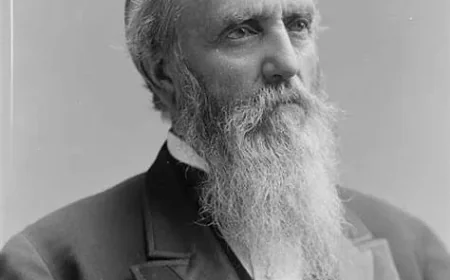
Clive Calder Net Worth, Relationships, Age/Birthdate & Birthday
Overview of Clive Calder — net worth, relationships, age/birthdate, and birthday.
 loveness92
The Quiet Architect Behind Pop’s Biggest Boom
In the mid-1970s, a young entrepreneur from Johannesburg quietly began assembling what would become one of the most influential music empires of the late 20th century — a legacy built not on fame, but on acumen, structure, and an uncanny ability to spot talent. That entrepreneur was Clive Calder, and his journey from modest beginnings to billionaire record-mogul is one of the most compelling success stories in modern entertainment history.
Calder was born on December 13, 1946 in Johannesburg, Transvaal, in what was then the Union of South Africa. His birthday marks the start of a life that would quietly reshape global pop and hip-hop music.
From Johannesburg to Global Ambitions
Raised in Johannesburg, Calder’s earliest ventures into music were humble — he played in a local band as a young man, a responsibility he took on to support his mother and sister after his father’s death.
In 1971, he co-founded a record company in South Africa with fellow entrepreneur Ralph Simon. That modest label laid the groundwork for what would come next. By 1975, Calder and Simon had relocated to London and founded Zomba Group as an artist- and producer-management company. As the global music scene evolved, so did Zomba: by 1978, the company expanded into music publishing and had opened offices in New York.
Then came a defining move: in 1981, Calder and Simon launched Jive Records — a label that would prove prescient in recognizing and amplifying burgeoning musical movements.
The Rise of a Music Empire — and Pop Culture Revolution
Under Calder’s leadership, Jive Records became one of the leading labels for hip-hop and rap music in the 1980s and early 1990s. Artists like Whodini, DJ Jazzy Jeff & The Fresh Prince, and A Tribe Called Quest helped define the genre’s mainstream breakthrough under Calder’s careful stewardship.
But Calder didn’t stop with rap — he had a vision for pop. In the late 1990s and early 2000s, Jive Records under Calder signed and nurtured teen-pop phenomenons such as Backstreet Boys, NSYNC (and eventually Justin Timberlake), and Britney Spears. Their albums sold millions of copies worldwide, reshaping global pop culture and defining the sound of a generation.
By combining global ambition, keen business instincts, and an ability to read cultural shifts, Calder turned Jive into a powerhouse — all while remaining personally behind the scenes. As one early 2000s profile noted, he was “the wizard of Jive,” content to let his artists shine while he orchestrated success from the background.
The Moment of Exit — And a Multi-Billion-Dollar Windfall
In 2002, after decades of cultivating a music empire, Calder made a landmark decision: he sold Zomba Group (including Jive Records) to German media giant Bertelsmann for US$2.74 billion.
That decision transformed Calder into a billionaire. Though he was offered a role within the restructured company, he opted for temporary advisory involvement — ultimately stepping away from the music business in 2003.
This marked not just the end of an era for Calder, but a broader turning point for the music industry: one of the largest acquisitions of an independent label at the time, reshaping how labels, publishing, and global media conglomerates would interact going forward.
Wealth, Investments — and a Life Beyond Music
According to Forbes, Calder’s net worth currently hovers around US$6.9 billion. Other sources have placed earlier estimates at US$5.5 billion.
Far from resting on his laurels, Calder continued to invest wisely. In 2018, he and his son acquired a 10% stake in the video-game studio behind the highly ambitious game Star Citizen — marking a return to the entertainment world, albeit in a very different medium.
Meanwhile, Calder directs a portion of his resources toward philanthropy. Through the foundation he established, ELMA Group of Foundations, he has supported childhood health and education initiatives across Africa. In May 2020, ELMA pledged US$107 million to help combat the COVID-19 pandemic on the continent — including significant support to his native South Africa.
A Private Life Behind Public Impact
Despite his outsized influence on the music industry, Calder has long shunned the spotlight. He resides in the Cayman Islands with his wife, Patricia Calder, and their two children.
Details about his family are deliberately kept private; the names and public exposure of his children are seldom disclosed — a reflection, perhaps, of Calder’s desire to separate his public achievements from his personal life.
That discretion has not diminished his legacy. Through strategic investments, philanthropy, and a career that reshaped the global music landscape, Calder has crafted a life that blends creative vision, business acumen, and quiet influence — all anchored by his founding birthday of December 13, 1946.
Why Clive Calder’s Story Still Matters
Clive Calder’s journey offers a powerful lesson: immense cultural and financial impact doesn’t always come from being center-stage. Sometimes, it comes from the boardroom, from spotting talent before anyone else does, and from building systems that outlast trends.
He helped evolve the global music business — transforming genres, launching careers, and reshaping pop culture — without ever dominating headlines. His life underscores a rare breed of entrepreneur: one whose ambition never required public adoration, but whose results changed the world.
For any aspiring creative business leader — or anyone curious about the hidden infrastructures behind fame — Calder’s story remains a masterclass in vision, patience, and conviction.