



Clippers vs Spurs Player Props: A Data-Driven Betting Breakdown
As the Los Angeles Clippers vs San Antonio Spurs matchup approaches, the conversation has shifted beyond the final scoreline and into the granular world of player performance markets. Player props—bets tied to individual statistical outcomes—have become central to how analysts and fans interpret NBA games.
- The Tactical Context: Why Player Props Matter in This Matchup
- Victor Wembanyama: Scoring vs Rebounding Value Split
- Darius Garland: Trend vs Defensive Resistance
- Kawhi Leonard: Rebounding Ceiling Under Pressure
- De’Aaron Fox: Playmaking Opportunity Against Defensive Constraints
- Julian Champagnie: Perimeter Weakness Exploitation
- Supporting Trends from Betting Markets
- Game Environment and Its Impact on Props
- Emerging Patterns: What This Matchup Reveals
- Conclusion: A Matchup Defined by Micro-Edges
This matchup presents a particularly interesting case study. It is not defined by explosive offense alone, but by contrasting defensive efficiencies, recent player trends, and historical matchup data. When these variables intersect, they reshape expectations around scoring, rebounding, and playmaking.
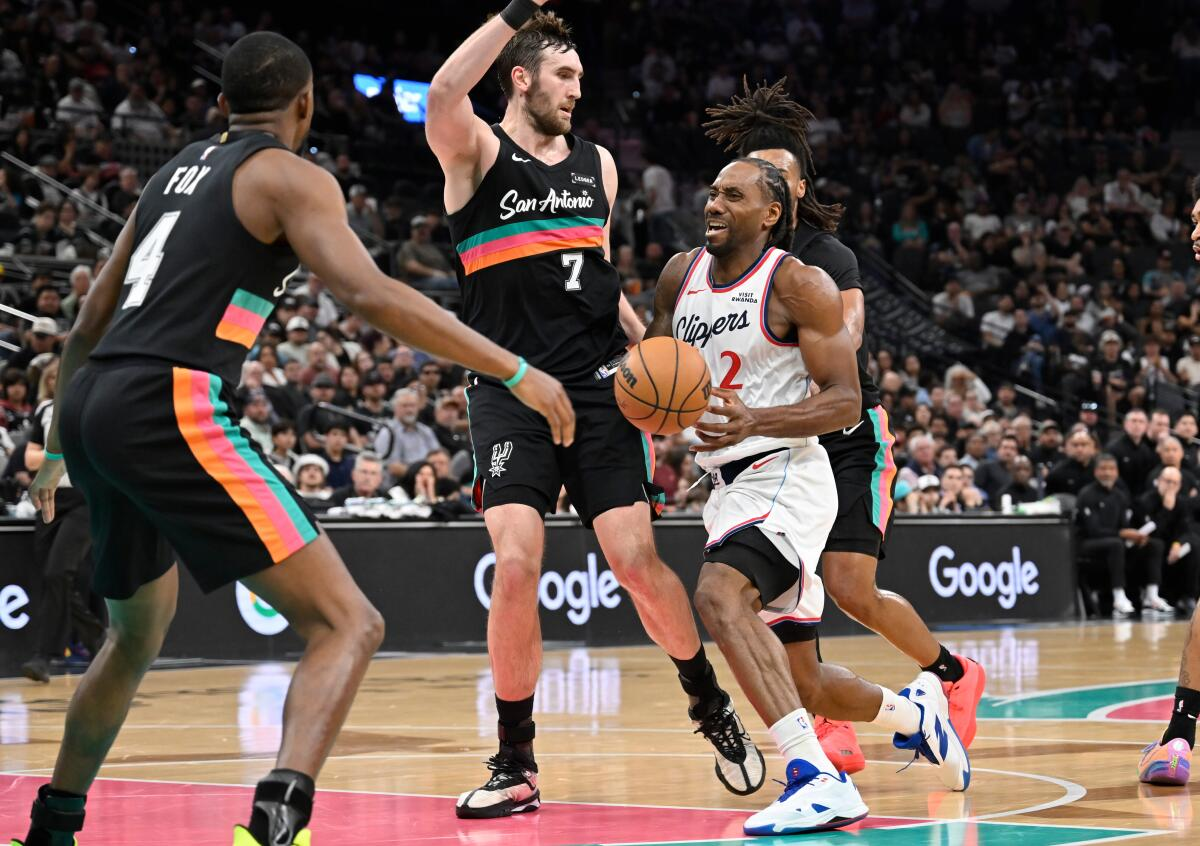
The Tactical Context: Why Player Props Matter in This Matchup
The Spurs enter the game in elite form, riding a 10-game winning streak while averaging 124.3 points per game and allowing just 107.1 points in that stretch . Meanwhile, the Clippers sit closer to equilibrium, splitting their last 10 games while conceding 112.7 points per game .
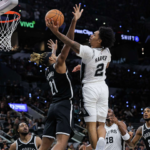


At a glance, this might suggest a high-scoring contest. However, player prop analysis reveals something more nuanced:
- Both teams rank among the better defensive units
- Historical head-to-head performances show inconsistent scoring spikes for key players
- Specific defensive tendencies (rebounds, assists, perimeter defense) create targeted prop opportunities
This is where player props diverge from traditional betting—they isolate individual performance within team context.


Victor Wembanyama: Scoring vs Rebounding Value Split
Scoring Caution Despite Recent Explosions
Victor Wembanyama enters the matchup after back-to-back 41-point performances, signaling elite scoring form . However, the matchup data suggests restraint is warranted:
- Clippers allow 112.5 points per game
- Wembanyama has exceeded 25+ points only once in his last three games vs Clippers
This creates a classic disconnect between recent form and matchup reality.
Rebounding: The Stronger Angle
While scoring props carry uncertainty, rebounding tells a different story:
- Wembanyama has gone over 11.5 rebounds in five straight games
This consistency, combined with his role as a primary interior presence, makes rebounding props statistically more stable than scoring in this matchup.



Darius Garland: Trend vs Defensive Resistance
Darius Garland’s recent scoring form is solid:
- 20+ points in three of his last four games
However, the Spurs’ defensive metrics significantly alter expectations:
- Spurs allow just 111.5 points per game
- Garland has scored 20+ only once in his last seven matchups vs Spurs
This is a textbook example of a “fade the trend” scenario, where historical matchup data outweighs short-term form.
Kawhi Leonard: Rebounding Ceiling Under Pressure
Kawhi Leonard has quietly been productive on the boards:
- 7+ rebounds in three consecutive games
But the Spurs present structural resistance:
- Allow just 51.5 rebounds per game (top 10 fewest)
- Leonard has reached 7+ rebounds in only one of his last eight vs Spurs
This indicates that Leonard’s rebounding production is situational rather than matchup-proof.
De’Aaron Fox: Playmaking Opportunity Against Defensive Constraints
The Clippers are known for limiting assists:
- Allow 26.2 assists per game
Despite this, De’Aaron Fox has historically performed well:
- Recorded 6 and 9 assists in two previous meetings this season
This suggests a role-driven advantage. Fox’s usage as a primary ball handler enables him to overcome defensive constraints that might limit secondary playmakers.
Julian Champagnie: Perimeter Weakness Exploitation
One of the clearest prop angles in this matchup comes from three-point shooting:
- Champagnie has made 3+ threes in 4 of his last 5 games
- Clippers allow 17 made three-pointers per game, among the worst in the league
This is a direct alignment between player trend and opponent weakness, making it one of the most statistically supported props in the game.
Supporting Trends from Betting Markets
Additional prop insights reinforce the broader analysis:
- Wembanyama: strong ROI in first basket and rebounds markets
- Brook Lopez: blocks over in 9 of last 11 games
- Stephon Castle: assists over trend in 4 of last 5 games
These secondary trends highlight how role specialization and recent usage patterns influence prop viability.
Game Environment and Its Impact on Props
Several macro-level factors shape the prop landscape:
1. Pace and Total Points
- Game total projected around 231.5 points
- Spurs averaging 119.6 PPG, Clippers 113.7 PPG
2. Head-to-Head Dynamics
- Clippers have won 7 of last 10 matchups
- Spurs have won the last two meetings
3. Form Differential
- Spurs: 10 consecutive wins
- Clippers: inconsistent (5–5 in last 10)
These conditions reinforce a key theme: player props are heavily influenced by game flow expectations, not just individual talent.
Emerging Patterns: What This Matchup Reveals
Across all props, three analytical patterns emerge:
Defensive Efficiency Overrides Hot Streaks
Players like Wembanyama and Garland show that recent scoring form does not always translate against structured defenses.
Role Stability Beats Volatility
Fox’s assist production and Wembanyama’s rebounding highlight how consistent roles create more reliable prop outcomes.
Matchup-Specific Weaknesses Create Value
Champagnie’s three-point outlook is driven almost entirely by Clippers’ perimeter defensive struggles.
Conclusion: A Matchup Defined by Micro-Edges
The Clippers vs Spurs contest is less about headline scoring battles and more about incremental statistical advantages. Player props in this game are shaped by:
- Defensive matchups
- Historical performance splits
- Role-specific usage patterns
- Team-level tendencies
Rather than chasing high-scoring narratives, the sharper approach lies in identifying where data alignment is strongest—rebounds for Wembanyama, assists for Fox, and perimeter shooting for Champagnie.
In a league increasingly driven by analytics, this matchup illustrates how player props are no longer speculative—they are predictive models grounded in context.