



Clippers vs Mavericks: A High-Stakes Clash Defined by Momentum Swings
A Statement Win in Inglewood
The latest meeting between the Los Angeles Clippers and the Dallas Mavericks on April 7, 2026, delivered a compelling narrative of control, collapse, and recovery. Played at the Intuit Dome in Inglewood, California, the game ended with a 116–103 victory for the Clippers—an outcome that reinforced their late-season push while exposing the Mavericks’ ongoing struggles.
- A Statement Win in Inglewood
- Early Domination: Clippers Set the Tone
- Mavericks Respond: A Comeback Takes Shape
- Kawhi Leonard Takes Control
- Statistical Snapshot: Efficiency vs Effort
- Standings and Playoff Implications
- Tactical Themes: Runs Define the Game
- What Comes Next
- Conclusion: A Game of Margins and Leadership
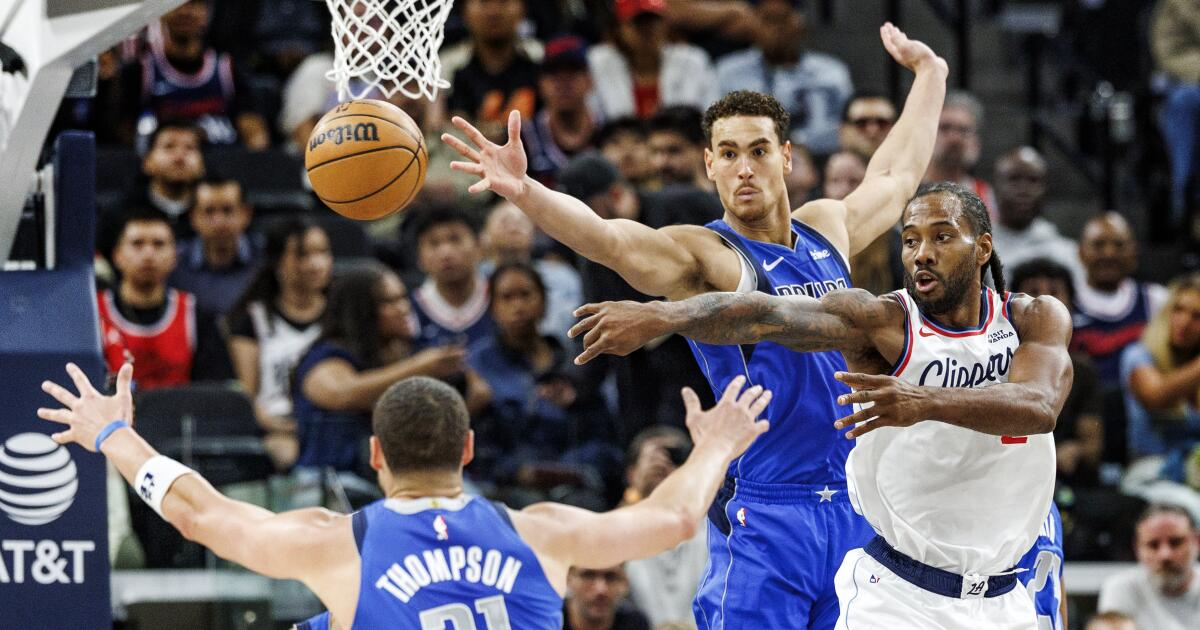
At the center of the contest was Kawhi Leonard, whose 34-point performance proved decisive. His ability to dictate tempo and deliver in critical moments ensured the Clippers regained control after nearly letting a commanding lead slip away.
Early Domination: Clippers Set the Tone
From the opening minutes, the Clippers imposed themselves aggressively. A remarkable 17–0 run in the first quarter established immediate separation, highlighting both offensive efficiency and defensive intensity.

By the end of the opening period, Los Angeles held a 39–26 advantage, shooting at a highly efficient rate and capitalizing on transition opportunities. The lead ballooned to as much as 23 points, signaling what initially appeared to be a one-sided contest.
This early dominance reflected a team aware of its positioning in the Western Conference standings. Entering the game with a 41–38 record, the Clippers were fighting to secure a stronger play-in tournament seed—a context that added urgency to every possession.


Mavericks Respond: A Comeback Takes Shape
Despite the early deficit, the Mavericks gradually stabilized. Led by rookie standout Cooper Flagg, Dallas began chipping away at the lead with improved shot selection and defensive adjustments.
A 21–8 run brought the Mavericks back into contention, tying the game at 47–47. The comeback effort intensified in the third quarter, where Dallas briefly took the lead—its second of the game—at 80–77.
Flagg’s performance remained notable. After explosive scoring outings in previous games, he contributed 25 points and nine rebounds, marking his 21st 25-point game of the season. Support came from Marvin Bagley III, who added 21 points and nine rebounds off the bench, while Max Christie and Ryan Nembhard each contributed 12 points.
However, inefficiency from beyond the arc—just 18.2% shooting from three-point range—limited the Mavericks’ ability to sustain momentum.

Kawhi Leonard Takes Control
As the game tightened, Leonard’s influence became increasingly pronounced. He scored seven of the Clippers’ final 11 points in the third quarter, restoring a 89–84 lead heading into the final period.
In the fourth quarter, Los Angeles delivered a decisive blow. A 13–3 run extended the lead to 112–96 with just over three minutes remaining, effectively ending the contest.
Leonard finished with 34 points on 11-of-19 shooting, including six three-pointers. His performance also marked his 55th consecutive game scoring at least 20 points—a streak underscoring both consistency and elite production.
Support from Darius Garland (22 points), Derrick Jones Jr. (11 points, 10 rebounds), and Brook Lopez (11 rebounds) provided the balance needed to secure the win.
Statistical Snapshot: Efficiency vs Effort
The statistical contrast between the two teams reveals the underlying dynamics:
- Clippers shooting: 44.6% from the field
- Mavericks shooting: 35% from the field
- Three-point shooting (Dallas): 18.2%
- Free throws (Dallas): 25-of-26
While Dallas excelled at the free-throw line, their struggles in perimeter shooting and overall efficiency proved costly. Meanwhile, the Clippers leveraged balanced scoring and timely runs to maintain control.
Standings and Playoff Implications
The victory carried tangible implications in the Western Conference standings. The Clippers strengthened their position in eighth place, moving a full game ahead of the ninth-place Portland Trail Blazers.
This positioning is critical in the play-in tournament structure, where even a single-place difference can significantly impact postseason pathways. With a 7–2 record since March 21, the Clippers are peaking at a crucial juncture.
For the Mavericks, the loss added to a difficult stretch. Now 25–54, Dallas has gone 2–9 since mid-March, signaling a season defined more by development—particularly of young talent—than immediate contention.
Tactical Themes: Runs Define the Game
The game’s structure was shaped by momentum swings:
- Clippers’ opening 17–0 run
- Mavericks’ 21–8 comeback stretch
- Clippers’ closing runs in the third and fourth quarters
These sequences illustrate a broader tactical reality: while Dallas showed resilience, Los Angeles demonstrated superior control in high-leverage moments. Leonard’s late-game scoring exemplified the difference between a team pushing for playoff positioning and one navigating a rebuilding phase.
What Comes Next
The scheduling context added another layer of intensity. Both teams were on back-to-back scenarios:
- Mavericks: Traveling to face the Phoenix Suns
- Clippers: Hosting the conference-leading Oklahoma City Thunder
For the Clippers, the challenge is sustaining momentum against elite competition. For the Mavericks, the focus shifts toward consistency and continued development of their young core.
Conclusion: A Game of Margins and Leadership
The Clippers’ 116–103 victory over the Mavericks was not merely a routine win—it was a case study in resilience, execution, and leadership under pressure.
Despite surrendering a 23-point lead, Los Angeles recalibrated and closed the game decisively. At the center of that recovery was Kawhi Leonard, whose performance reinforced his role as both a scorer and stabilizing force.
For Dallas, the game highlighted both promise and limitation. The emergence of Cooper Flagg continues to provide optimism, but structural inconsistencies remain evident.
As the regular season approaches its conclusion, this matchup serves as a clear indicator: teams with composure and star leadership are separating themselves, while others are still searching for cohesion.