
Ciputra Net Worth, Relationships, Age/Birthdate & Birthday
Overview of Ciputra — net worth, relationships, age/birthdate, and birthday.
 loveness92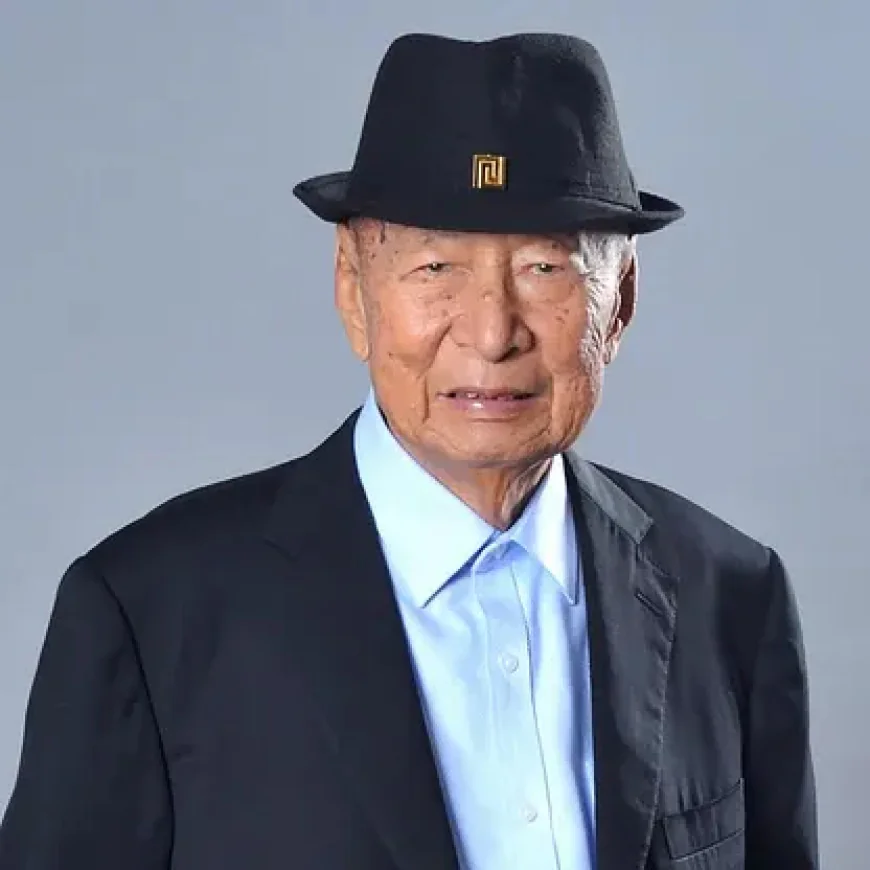
The Legacy of Ciputra: From Humble Origins to Property Empire
A Childhood Marked by Loss and Determination
Born Tjie Tjin Hoan on August 24, 1931 in Parigi, Central Sulawesi—then Dutch East Indies—Ciputra’s early years were shaped by hardship. His parents, Tjie Siem Poe and Lie Eng Nio, ran a modest grocery shop in their village. When he was just 12 years old, his father was arrested by Japanese occupation forces during World War II under false accusations of espionage—and never returned.
Despite these traumatic beginnings, Ciputra returned to schooling after the war. He entered the prestigious Bandung Institute of Technology (ITB), where he studied architecture and graduated in 1960. The loss of his father and the struggles of his youth left him with a fierce drive—and a vision that went far beyond his modest roots.
Building Foundations: From Architect to Visionary Developer
After graduating, Ciputra chose a path few expected: instead of a quiet career as an architect, he co-founded a consulting firm with two friends.
By 1961 he had founded the Jaya Group, marking his entry into the property development business. A decade later, in 1971, he co-founded the Metropolitan Group, expanding his footprint in real estate and urban development.
Finally, in 1981, he established the Ciputra Group — the vehicle that would transform him into one of Indonesia’s most influential property magnates. At its founding, the company started with just five employees.
Under his guidance, Ciputra Group morphed from a small startup into a sprawling property conglomerate, responsible for mixed-use developments, residential estates, malls, and urban-scale projects across Indonesia — and beyond.
Confronting Crisis — and Emerging Stronger
The 1997 Asian financial crisis hit hard. With the rupiah collapsing and many debts denominated in foreign currency, the Ciputra Group faced severe financial stress. At the same time, anti-Chinese riots in Indonesia dampened consumer demand and forced many projects to be abandoned.
Yet Ciputra’s resilience and leadership steered the group through restructuring and recovery. By 2005, the company had returned to profitability.
In the years after, Ciputra expanded the group’s horizons — investing not only across Indonesia but also in projects abroad, including in China, Vietnam, and Cambodia.
The Value of a Name — and a Legacy
Though Ciputra has passed away, his name continues to carry weight. In 2019, he was listed among the world’s billionaires with a net worth of US$ 1.1 billion.
Since his passing, his family — children and heirs — have maintained the business empire. As of 2024, the Ciputra family is ranked among the wealthiest in Indonesia, with a combined net worth of US$ 1.7 billion.
Their fortune, and ongoing success, underscore the durability of the foundation he built.
More Than Bricks: Entrepreneurship, Art, and Giving Back
Ciputra didn’t merely build houses or malls. He believed in shaping communities, nurturing talent, and giving opportunities. His philanthropic vision took concrete form in several institutions:
-
He founded ten schools across Indonesia to boost education access.
-
He established the Ciputra University of Entrepreneurship in Surabaya — a testament to his belief that business acumen and creativity can transform lives.
-
He launched the Ciputra Artpreneur Museum in Jakarta, sharing his passion for arts and culture. The museum remains a vibrant hub of contemporary Indonesian art and a showcase for his personal collection.
Through these efforts, Ciputra’s legacy extended far beyond real estate — shaping education, art, entrepreneurship, and urban culture in modern Indonesia.
Family, Relationships, and the Continuation of a Dream
Ciputra married Dian Sumeler when he was 24 years old. The couple had four children — Rina, Junita, Cakra, and Candra — all of whom later took roles within the Ciputra Group and its subsidiaries.
After his passing on November 27, 2019, in Singapore, his family continued to preserve and grow the empire he built.
His birthday — August 24 — remains a symbolic date for many in Indonesia’s business and philanthropic circles, a reminder of humble beginnings and extraordinary ambition.
Why Ciputra’s Story Still Resonates
Ciputra’s journey — from a small-town boy in post-colonial Sulawesi, losing his father, to leading one of Southeast Asia’s largest property empires — is a testament to perseverance, vision, and purpose.
In an age marked by fast wealth accumulation, Ciputra’s story stands out for its long arc: education → hardship → hard work → risk-taking → community building → legacy.
Today, the value of the Ciputra Group, the continuing influence of his family, and the schools and institutions bearing his name all speak to a legacy designed not just for profit, but for societal impact.
His is not just a story of real estate — it is a blueprint for aspirations, intergenerational empowerment, and building lasting institutions.