Charles Cawley Net Worth, Relationships, Age/Birthdate & Birthday
Overview of Charles Cawley — net worth, relationships, age/birthdate, and birthday.
 loveness92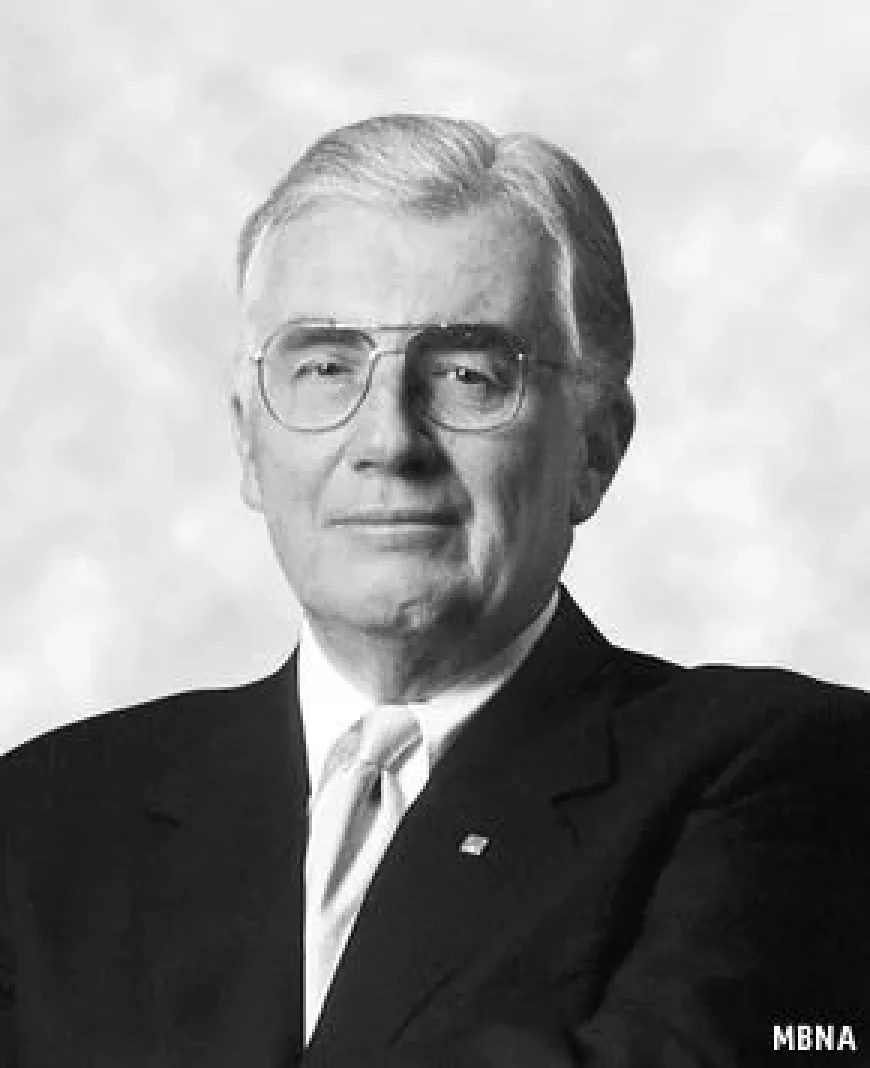
The Rise and Legacy of Charles Cawley — From Credit-Card Visionary to Philanthropic Pioneer
When Charles M. Cawley walked into the otherwise overlooked world of consumer finance in the early 1980s, few could have predicted that he would help build one of America’s most powerful credit-card empires — a legacy felt far beyond Wall Street, all the way to small towns in Maine. Born August 15, 1940, Cawley’s journey from modest beginnings to founder of MBNA is a story of ambition, innovation, controversy, and, ultimately, transformation.
A Spark of Innovation: Reinventing Credit Cards with MBNA
Cawley’s path to prominence began in 1982, when he and a small team created MBNA as a spin-off from Maryland National Bank. What made MBNA different wasn’t just its willingness to issue cards, but the way Cawley reimagined credit-card marketing. He pioneered the concept of “affinity cards,” persuading institutions such as his alma mater to offer branded credit cards to members — a move that turned credit cards into identity badges, and dramatically expanded demand.
Under his operational leadership, MBNA’s customer-acquisition strategy focused on personalized service rather than impersonal computer screening. That human-centric approach, combined with clever affinity partnerships, fueled rapid growth in the 1980s and 1990s. By 1991, MBNA had gone public.
In 1998, for instance, MBNA — with Cawley at the operational helm — posted an estimated net income of about $620 million.
Empire and Influence: From Wilmington to Camden and Beyond
As MBNA grew, so too did its footprint. In the early 1990s, Cawley spearheaded the opening of a regional marketing center in Camden, Maine — near where his grandfather once ran dress factories and where his family spent summers.
Over the next decade, MBNA became a major employer. At its peak, the company employed roughly 28,000 people globally — including nearly 5,000 in Maine — and controlled assets nearing $53 billion.
For many Mainers, MBNA didn’t just bring jobs: it reshaped local economies. Call centers sprung up across several towns, along with corporate retreats, recreational facilities, and community investments. As one local developer recalled, the transformation “fundamentally changed the workforce and the culture” in the region.
Wealth Accumulated — and Measured
Given MBNA’s size and profitability, it’s no surprise that Cawley accumulated substantial personal wealth. Several sources estimate that at the time of his death his net worth stood around $500 million, a reflection of his founding role and share in MBNA’s success.
While private and public records vary — as is common with wealth estimates — that $500 million figure remains widely cited. It underscores the extent to which Cawley’s vision translated into material success, enabling his later philanthropic efforts.
Vision Beyond Business: Philanthropy, Art, and Community
Though often associated with the cut-throat world of finance, Cawley devoted much of his later life to philanthropy and cultural patronage. He and his wife, Julie Murphy Cawley, contributed generously to education, healthcare, and the arts.
Cawley served on the boards of institutions ranging from his high school alma mater to universities and cultural organizations. Among his many roles: trustee at his undergraduate institution and board member of regional arts centers and museums.
In Maine, MBNA under Cawley funded projects like waterfront offices, community ballfields, retreats, and even leased educational facilities to institutions for nominal rents — moves that many believe laid the foundation for sustained local economic growth.
Personal Life: Roots, Family, and Identity
Cawley was born in Beverly, Massachusetts, on August 15, 1940. He attended high school at Saint Benedict's Preparatory School and later graduated from Georgetown University.
He married Julie Murphy, and together they had a family that included two children.
For Cawley, wealth and power never eclipsed a sense of personal identity rooted in community — whether it was his New Jersey upbringing, college ties, or summers spent by the Maine coast. That personal grounding perhaps helps explain his later interest in giving back to institutions and places that shaped him.
The Final Chapter and Lasting Impact
On November 18, 2015, Cawley passed away at his home in Camden, Maine. Though his passing closed a chapter, his impact continues — in how credit cards are marketed, in the lives of thousands who worked at MBNA call centers, and in the community institutions that benefited from his philanthropy.
In many respects, Charles Cawley was more than a corporate titan: he was a visionary who saw credit not just as debt or profit, but as a tool for connection — among alumni, communities, and institutions. His story remains a testament to ambition, transformation, and legacy.