


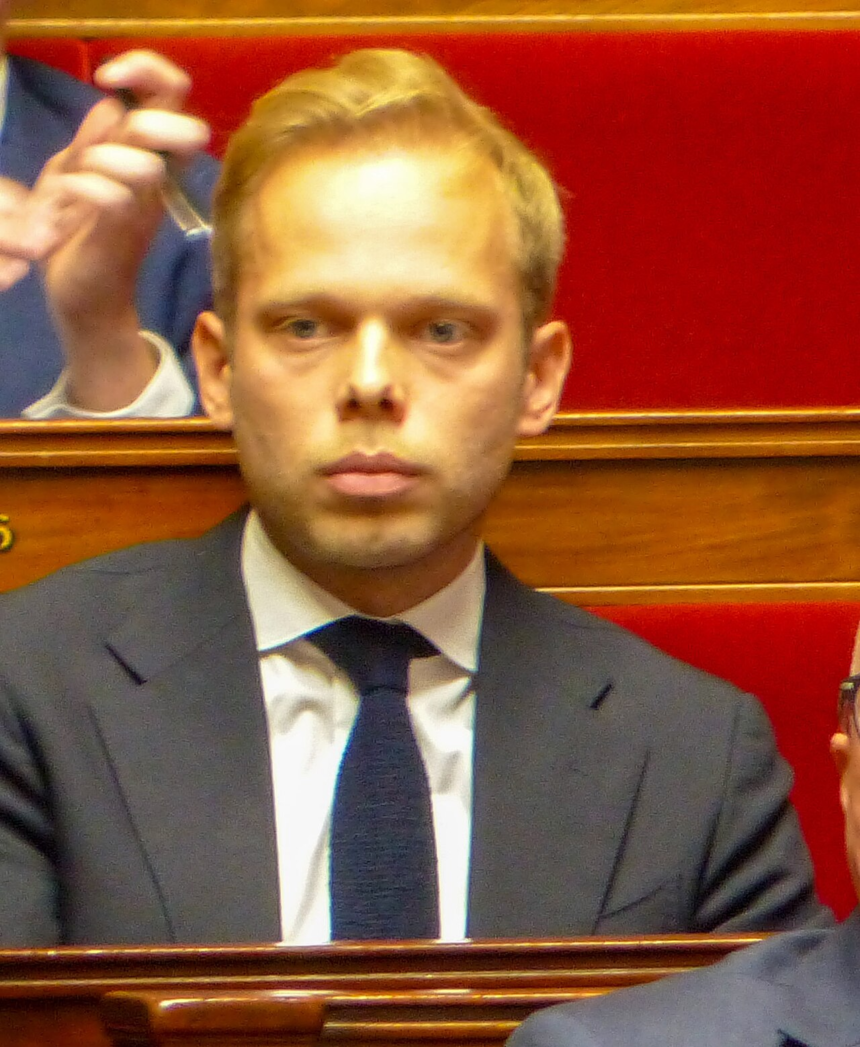
Charles Alloncle: A Rising Figure in France’s Shifting Political Landscape
In recent years, French politics has seen the emergence of a new generation of figures navigating a rapidly evolving ideological terrain. Among them is Charles Alloncle—a young deputy whose ascent reflects broader transformations on the French right, as well as growing tensions within the country’s political and media institutions.
- Early Foundations: From Nancy to Elite Institutions
- Early Political Engagement: Youth Movements and Internal Party Battles
- Strategic Shift: Business Career and Political Realignment
- 2024 Breakthrough: Election to the National Assembly
- Parliamentary Role: Inquiry into Public Broadcasting
- Media, Influence, and Criticism
- Ideological Positioning: Liberal Economics, Conservative Alliances
- Personal Profile and Professional Background
- Broader Implications: A Symbol of Political Realignment
- Conclusion: A Career Still in Formation
This article examines Alloncle’s trajectory through a timeline of developments, tracing his evolution from a politically engaged student to a controversial parliamentary voice at the center of national debates.
Early Foundations: From Nancy to Elite Institutions
Born on October 21, 1993, in Nancy, Charles-Henri Alloncle grew up in a politically connected environment. His father, Philip Alloncle, held roles within ministerial offices linked to figures such as Jean-François Copé and Brice Hortefeux—an early exposure that likely shaped his political orientation.
His upbringing in Versailles, combined with education at the private Catholic lycée Saint-Jean-Hulst, placed him within a traditional conservative social milieu. From there, he followed a classic pathway into France’s elite institutions:
- Sciences Po
- HEC Paris
Graduating from HEC Paris in 2017, Alloncle combined academic rigor with early political engagement—an intersection typical of emerging political elites in France.


Early Political Engagement: Youth Movements and Internal Party Battles
Alloncle’s political involvement began unusually early. During the 2007 presidential election, he developed an interest in politics while still in middle school. By 2008, he had already co-founded a student initiative aligned with the Union for a Popular Movement (UMP).
His rise within youth political structures was rapid:
- President of the UMP section at Sciences Po (2014–2015)
- Leader of “Young People with Sarkozy” circles tied to Nicolas Sarkozy
- Candidate for president of Les Jeunes Républicains in 2018
However, his 2018 bid marked a turning point. After losing to Aurane Reihanian, Alloncle challenged the election results, alleging fraud. This dispute signaled both his ambition and willingness to confront party structures.
Following the defeat, he exited The Republicans—a decision that foreshadowed his later ideological repositioning.

Strategic Shift: Business Career and Political Realignment
After distancing himself from traditional party structures, Alloncle entered the private sector, becoming Chief Operating Officer of Blank, a fintech subsidiary of Crédit Agricole. The company targeted small businesses, freelancers, and artisans across multiple European markets.
This period is critical for understanding his profile:
- Developed managerial and entrepreneurial credentials
- Built connections within business networks
- Positioned himself as a pro-market, liberal economic voice
Simultaneously, his political alignment began shifting. By 2023, he established ties with Jordan Bardella, leader of the National Rally. This relationship marked his move toward a broader right-wing coalition strategy.
2024 Breakthrough: Election to the National Assembly
The decisive moment in Alloncle’s career came during the 2024 legislative elections, triggered by the dissolution of the French National Assembly.
Running under a joint LR–RN alignment backed by Éric Ciotti, Alloncle contested the 9th constituency of Hérault. On July 7, 2024, he secured victory with 51.90% of the vote, defeating a candidate from the left-wing coalition.
He officially assumed office on July 8, 2024, succeeding Patrick Vignal.
Within parliament, he joined the Union of the Right for the Republic (UDR) and quickly rose to become one of its visible spokespersons.
Parliamentary Role: Inquiry into Public Broadcasting
Alloncle’s national prominence intensified during his role as rapporteur for a high-profile parliamentary inquiry into:
“the neutrality, operation and financing of public broadcasting”
This inquiry placed him at the center of France’s ongoing debate over media independence and public funding.
What the Inquiry Aims to Achieve
The commission seeks to examine:
- Editorial neutrality within public media institutions
- Funding structures and allocation of public resources
- Governance and accountability mechanisms
By design, such inquiries are intended to strengthen transparency and institutional oversight.
Escalation into Public Controversy
However, Alloncle’s conduct during hearings became a subject of widespread scrutiny. His questioning of major figures from Radio France and France Télévisions was described by critics as:
- Partisan
- Aggressive
- Imbalanced
A notable flashpoint occurred during a confrontation with Nagui, one of France’s most recognized media personalities. Nagui accused him of having:
“thrown him to the wolves”
and endangered his family through insinuations about his income.
This exchange exemplified the increasingly adversarial tone of the inquiry.
Media, Influence, and Criticism
Alloncle’s approach has drawn polarized reactions across the French media landscape:
Supportive Coverage
Media outlets associated with the Bolloré group have amplified his role, presenting him as a reform-driven figure challenging public media institutions.
Critical Response
Conversely, other outlets and political figures have raised concerns:
- Accusations of acting as a relay for private media interests
- Allegations of access to selective documents unavailable to other commission members
- Criticism from institutional leadership, including the President of the National Assembly
These criticisms culminated in formal rebukes during late 2025 and early 2026, highlighting tensions between parliamentary oversight and perceived political bias.
Ideological Positioning: Liberal Economics, Conservative Alliances
Alloncle’s political identity is defined by a combination of:
- Economic liberalism: opposition to heavy state regulation
- Right-wing coalition strategy: bridging traditional conservatives and far-right actors
- Institutional critique: particularly of public broadcasting
This positioning reflects a broader trend within European politics, where traditional party boundaries are increasingly fluid.
Personal Profile and Professional Background
Beyond politics, Alloncle’s profile includes:
- Age: 32 (as of 2026)
- Education: Sciences Po, HEC Paris
- Professional experience: Entrepreneur and COO in fintech
- Family background: Son of a senior civil servant with political ties
No publicly confirmed information is available regarding spouse or children.
Broader Implications: A Symbol of Political Realignment
Charles Alloncle’s trajectory illustrates several structural shifts in contemporary French politics:
- Generational change – younger politicians gaining rapid prominence
- Ideological convergence on the right – alliances between traditional conservatives and far-right factions
- Media-politics tensions – increasing scrutiny of public broadcasting institutions
His role in the public broadcasting inquiry, in particular, underscores a deeper conflict over the future of media governance in France.
Conclusion: A Career Still in Formation
At just 32, Charles Alloncle occupies a significant yet contested space within France’s political ecosystem. His rapid ascent—from student activist to national legislator—has been marked by strategic repositioning, institutional engagement, and public controversy.
Whether he consolidates his influence or remains a polarizing figure will depend on how he navigates the intersection of politics, media scrutiny, and evolving public expectations.
What is clear is that Alloncle represents more than an individual political career. He is a case study in how ambition, ideology, and institutional conflict are reshaping modern European politics.