



Charl Schwartzel at the Masters: A Story of Fine Margins and Enduring Legacy
When Augusta Tests Even Its Champions
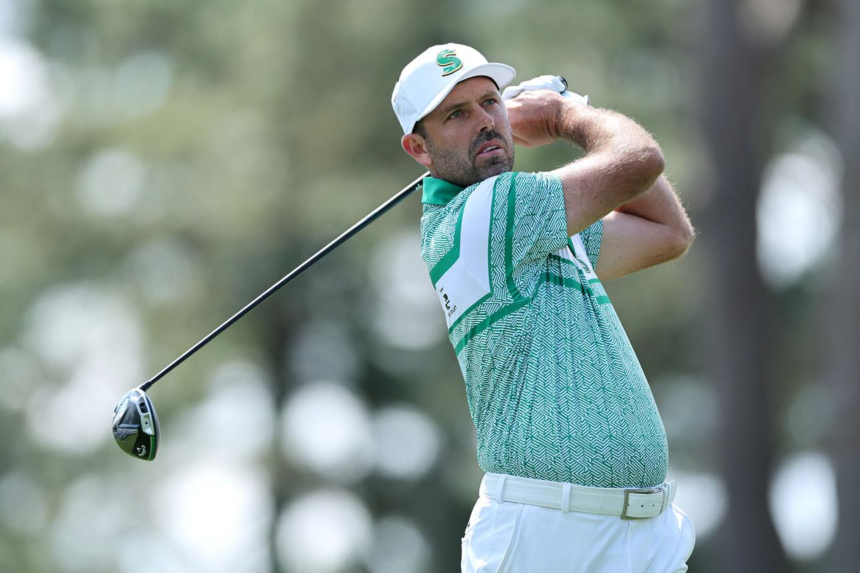
Few venues in professional golf expose the fine margins between brilliance and frustration quite like Augusta National Golf Club. For Charl Schwartzel, the 2026 edition of The Masters Tournament served as a vivid reminder of that reality.
- When Augusta Tests Even Its Champions
- Round-by-Round: A Tournament Defined by Momentum Swings
- Statistical Snapshot: What the Numbers Reveal
- The Psychological Dimension: Competing Without Contention
- Legacy Context: A Champion Still Returning
- Broader Implications: Experience vs. Precision in Modern Golf
- Conclusion: A Week That Captures the Nature of Augusta
A former champion and one of the most technically refined golfers of his generation, Schwartzel entered the tournament with both pedigree and perspective. Yet across four rounds, his performance illustrated the unforgiving nature of elite golf—where a matter of centimeters can define an entire week.
This was not a collapse, nor a resurgence. Instead, it was something more nuanced: a case study in consistency, resilience, and the psychological demands of competing at the highest level.



Round-by-Round: A Tournament Defined by Momentum Swings
Understanding Schwartzel’s 2026 Masters requires a structured look at how each round unfolded. The progression reveals a pattern of intermittent excellence offset by costly errors.
Opening Round: A Steady Start Undone by Missed Opportunities
Schwartzel began his campaign with a bogey on the opening hole, followed by a controlled stretch that included four consecutive pars. A birdie on the par-3 sixth suggested early rhythm, but back-to-back bogeys on the ninth and 10th holes shifted the trajectory.



He closed with a 3-over 75—respectable on a demanding course, but lacking the momentum required to contend.
Reflecting on his opening round, he noted:
“Yeah, course is tough. It’s firm. There was a few tough pin placements. Didn’t really feel like I played that badly… didn’t make enough key 12-footers.”
The assessment was telling. Execution was not fundamentally flawed—conversion was.
Round Two: Volatility Defines the Cut Line Battle
The second round encapsulated Schwartzel’s week: flashes of quality undermined by inconsistency. He recorded five birdies but also accumulated one double bogey and four bogeys, finishing with a 1-over 73.



At 4-over for the tournament, he narrowly made the cut.
“A lot of up and down… made five birdies today… but gave away too many shots.”
This pattern—offensive capability paired with defensive lapses—would persist.
Round Three: Margins Turn Against Him
The third round proved decisive in removing any realistic chance of contention. A 5-over 77, compounded by a costly double bogey on the 10th, dropped him to 9-over overall.
Yet the defining moment of his tournament came not from a mistake, but from near-perfection.
On a par-3, Schwartzel struck a tee shot that flew directly at the flag, hit the pin, and bounced out—denying what would have been a historic hole-in-one.
“It pitched in the hole… that sort of sums up my week… there are small margins.”
Instead of a moment of history, it became a metaphor for his tournament.
Final Round: Recovery After a Difficult Start
The closing round began poorly, with Schwartzel slipping to 4-over through just four holes. However, his response demonstrated composure and experience. He stabilized his play, collected three birdies, and limited the damage to a 3-over 75.
He finished the tournament at 12-over, tied for 54th place.
“I actually played much better today, but that start… doesn’t really set the tone very well for the day.”
The comment highlights a recurring theme: performance quality was often better than the scoreboard suggested.
Statistical Snapshot: What the Numbers Reveal
A closer look at Schwartzel’s performance metrics reinforces the narrative of inconsistency:
- Total Score: 12-over (300 strokes)
- Birdies: 13 across four rounds
- Bogeys: 22
- Greens in Regulation: 52.78%
- Fairways Hit: 58.93%
These figures suggest a player capable of generating scoring opportunities but unable to consistently avoid mistakes—particularly costly double bogeys.
The Psychological Dimension: Competing Without Contention
One of the more revealing aspects of Schwartzel’s week was his candid reflection on motivation.
“It’s hard to play when you’re not in contention… it’s not the best feeling.”
For elite athletes, especially former champions, competing outside the leaderboard spotlight presents a distinct challenge. The internal drive shifts from winning to maintaining professional standards—a fundamentally different psychological task.
Schwartzel also acknowledged the role of variance:
“One metre this way or that way… ends up being a good tournament versus a very average one.”
At Augusta, this observation is less philosophical than empirical.
Legacy Context: A Champion Still Returning
Despite the outcome, Schwartzel’s relationship with the Masters remains unique. As the 2011 champion, he holds a lifetime invitation—an institutional recognition of his place in the tournament’s history.
That victory, defined by a remarkable closing stretch of four consecutive birdies, continues to frame expectations. Each return is measured against that benchmark, even as the competitive landscape evolves.
In 2026, his performance reinforced two parallel truths:
- He remains capable of high-level execution.
- Sustained contention requires minimizing errors, not just producing highlights.
Broader Implications: Experience vs. Precision in Modern Golf
Schwartzel’s tournament reflects a broader dynamic in professional golf. Experience provides strategic clarity, but modern competition increasingly rewards precision and consistency over episodic brilliance.
At Augusta, where course conditions amplify small errors, this balance becomes critical. The difference between a top-10 finish and a mid-pack result often lies in a handful of shots.
For Schwartzel, the challenge is not reinvention but refinement—reducing volatility while preserving scoring ability.
Conclusion: A Week That Captures the Nature of Augusta
Charl Schwartzel’s 2026 Masters was not defined by a single moment, but by accumulation—of near-misses, recoveries, and marginal losses.
It was a tournament that demonstrated:
- The enduring difficulty of Augusta National
- The psychological demands of competing outside contention
- The fine margins separating success from mediocrity
Most importantly, it reaffirmed why the Masters remains one of sport’s most compelling stages. Even for a former champion, it offers no guarantees—only opportunity, risk, and the constant negotiation between skill and circumstance.