Bootsy Collins Net Worth, Relationships, Age/Birthdate & Birthday
Overview of Bootsy Collins — net worth, relationships, age/birthdate, and birthday.
 loveness92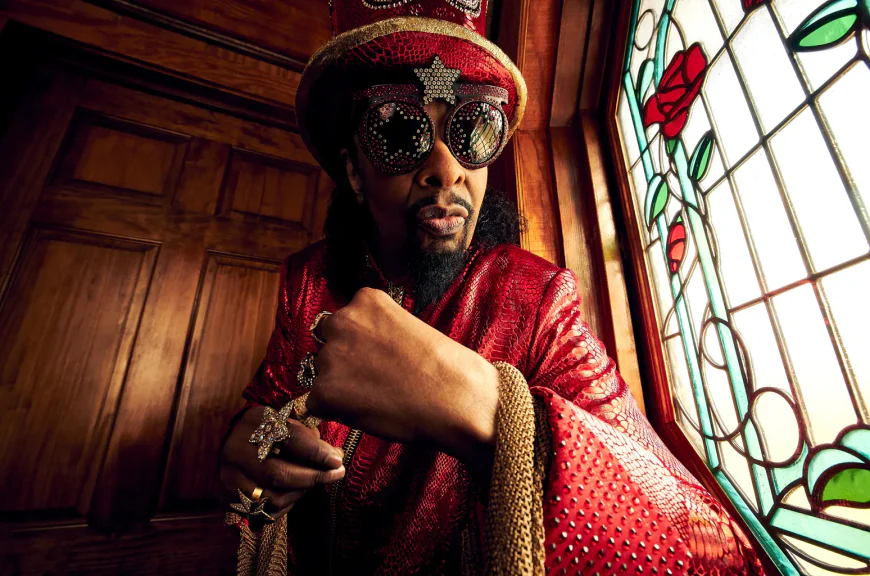
The Funk Ambassador: How Bootsy Collins Built a Legacy
Few musicians have defined a genre the way Bootsy Collins has — not just with his basslines, but with a character, a vibe, and a whole funk ethos. From the clubs of Cincinnati to global stages, his journey reads like a masterclass in reinvention, rhythm, and rock-and-roll showmanship.
From Humble Cincinnati Roots to the Birth of a Funk Icon
Bootsy was born October 26, 1951 in Cincinnati, Ohio, under the name William Earl Collins. Raised alongside his older brother Phelps “Catfish” Collins — a guitarist — he was drawn early to music. As Bootsy himself once recalled, he’d sneak into his brother’s practice sessions, fixated on the electric energy and the way music could transform the room.
By 1968, the brothers had formed a group named The Pacemakers. Two years later, in a twist of fate that would change musical history, The Pacemakers were recruited to back James Brown — becoming part of the original lineup of the legendary backing band known as The J.B.'s.
Though Bootsy’s time with James Brown was relatively brief (about a year), it came at a pivotal moment: funk was coalescing, and Bootsy’s basslines — heavy, rhythmic, and full of attitude — helped lay down the bedrock for what funk would become.
Reinventing Funk, One Bassline at a Time
After parting ways with James Brown, Bootsy followed his brother into the orbit of George Clinton — and thus joined the pioneering collective Parliament-Funkadelic.
Under that banner, Bootsy didn’t just play bass; he helped reshaped the sonic and aesthetic identity of funk. He co-wrote and co-produced some of the era’s defining songs. Then in 1976, Clinton and Bootsy carved out a new path: Bootsy formed his own group, Bootsy's Rubber Band, giving him a vehicle to fully express his playful, flamboyant, and deeply groovy vision.
With Bootsy’s Rubber Band, and later as a solo artist, Bootsy released a string of influential albums. Highlights included Stretchin’ Out in Bootsy’s Rubber Band, Ahh… The Name Is Bootsy, Baby!, and Bootsy? Player of the Year — the last yielding the #1 R&B single “Bootzilla.”
His signature “Space Bass,” his cosmic stage outfits, his larger-than-life alter-egos (Bootzilla, Casper the Funky Ghost, etc.) — all of these became as iconic as the music itself.
Staying Relevant Across Eras — Collaborations & Comebacks
Bootsy’s genius wasn’t stuck in the 1970s or 1980s. He kept evolving. In the late 1980s, after a brief hiatus, he returned with renewed creative energy. The 1988 album What’s Bootsy Doin’? marked his reentry, embracing new production styles and collaboration.
Over the decades, he worked across genres — funk, hip hop, electronic. That includes collaborating with artists from across the musical spectrum, keeping the funk alive and relevant for new generations.
His influence is widely acknowledged — as one of the great architects of funk, and beyond. In 1997, he was inducted into the Rock and Roll Hall of Fame as a member of Parliament-Funkadelic. AND reputable music publications rank him among the greatest bassists of all time.
Private Rhythms: Relationships, Home, and Life Behind the Scenes
Amidst the glitter and funk, Bootsy’s personal life remained relatively stable. He has been married to Patti Collins since December 24, 1996. Their partnership has stood the test of time, alongside his prolonged career in music.
While Bootsy has always been first and foremost defined by his art, his relationship with Patti has helped anchor him through industry highs and lows — a quiet counterpoint to the loud, flamboyant persona he presents on stage.
What He’s Worth — The Business of Funk
Estimating net worth for legendary musicians can be tricky: decades-long royalties, licensing, touring, collaborations, and more. Various sources suggest a net worth of around US $3 million.
That number may seem modest compared to pop megastars — but for a musician whose prime spanned from the late 1960s into the 21st century, it reflects the often-complicated economics of legacy, longevity, and genre-defining artistry.
Legacy in Motion: Why Bootsy Still Matters
Bootsy Collins didn’t just play bass — he redefined what bass could do. His grooves have echoed through generations. His style, persona, and commitment to funk continue to inspire musicians across genres.
Today, as new artists sample, reinterpret, and celebrate funk’s roots, Bootsy’s name remains central — not as a relic, but as a living, breathing foundation. His birthdate (October 26, 1951) and his decades of output stand as testimony: funk isn’t just history. It’s ongoing.