




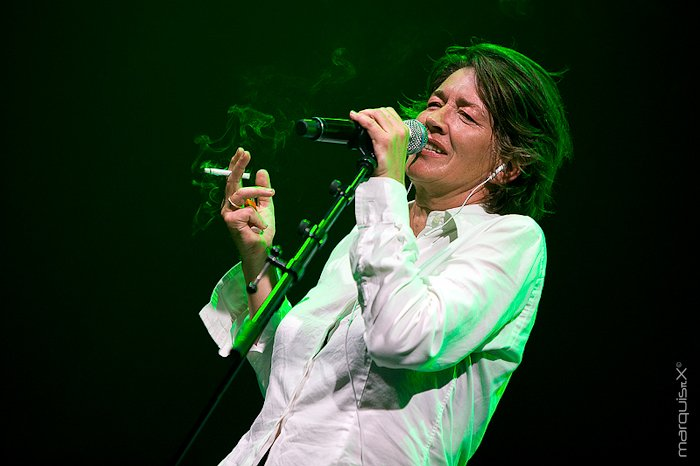
Bettina Köster: The Voice That Defined Berlin’s Avant-Garde Era
A Cultural Icon Falls Silent
The death of Bettina Köster at the age of 66 marks the end of a defining chapter in European underground music. Confirmed by close friends, her passing in Italy closes a career that shaped not only the sound of Berlin’s post-punk scene but also its cultural identity.
- A Cultural Icon Falls Silent
- The Berlin Underground: Where It All Began
- “Kaltes klares Wasser”: A Sound That Traveled the World
- Touring the World: From Berlin to Global Stages
- Beyond Music: Film, Writing, and Reinvention
- Identity, Representation, and Cultural Impact
- The Lasting Legacy of Bettina Köster
- Conclusion: A Voice That Shaped an Era
For decades, Köster stood at the intersection of music, art, and activism—her work resonating far beyond Germany. Known as the unmistakable voice of the band Malaria!, she helped redefine what music could sound like in a divided city charged with creative tension.
No cause of death has been disclosed.
The Berlin Underground: Where It All Began
To understand Köster’s significance, one must revisit West Berlin in the late 1970s and early 1980s—a city isolated geographically yet explosively creative. It was here that she emerged as a central figure in the avant-garde and underground scene.
Her early breakthrough came with the band Mania D, an experimental collective that blurred the boundaries between art performance and music. This project later evolved into Malaria!, marking a turning point in her career.
In 1981, Köster co-founded Malaria! alongside Gudrun Gut. The group stood out immediately: an all-female band operating in a male-dominated scene, combining stark minimalism with raw, confrontational energy.


“Kaltes klares Wasser”: A Sound That Traveled the World
Malaria!’s most enduring contribution remains the track “Kaltes klares Wasser” (“Cold Clear Water”), a song that transcended its underground origins to achieve international recognition.
What made the track distinctive was not just its sound but Köster’s delivery. Her voice—often described as spoken-word-like—eschewed traditional melody in favor of rhythm, tone, and emotional precision. This approach became her signature and influenced a generation of artists across the post-punk and new wave spectrum.
Rather than conforming to commercial expectations, Malaria! built a sonic identity rooted in experimentation. Their work resonated globally, positioning Berlin as a key node in the international post-punk movement.
Touring the World: From Berlin to Global Stages
During the 1980s, Köster and Malaria! extended their influence through international tours, sharing stages with some of the era’s most influential acts.



Among the artists and bands they performed alongside were:
-
New Order
-
The Birthday Party
-
Nina Hagen
-
John Cale
-
Siouxsie and the Banshees
These collaborations placed Köster firmly within a transnational network of avant-garde musicians. Her work was not confined to Berlin; it became part of a broader cultural movement redefining alternative music worldwide.
Beyond Music: Film, Writing, and Reinvention
After the eventual dissolution of Malaria!, Köster did not retreat from creative life. Instead, she expanded her artistic scope.
Relocating to New York, she built a second career as a screenwriter and film composer. This transition reflected a consistent theme in her life: reinvention without compromise.
Her multidisciplinary approach underscored her ability to move between mediums while maintaining a distinct artistic voice. Whether through sound or narrative, Köster remained committed to exploring unconventional forms of expression.
Identity, Representation, and Cultural Impact
Köster’s legacy extends beyond music into the realm of identity and representation.
She identified as non-binary—an aspect of her identity that, during her early career, placed her ahead of broader societal recognition. In this sense, she became an early icon within the queer movement, not through explicit activism alone but through presence and artistic expression.
At a time when both gender norms and the music industry were far less inclusive, Köster’s visibility carried weight. She contributed to reshaping perceptions of identity within creative spaces, particularly in Berlin’s experimental arts community.
Her influence also intersected with the women’s movement. As a founding member of an all-female band that achieved international success, she challenged entrenched gender dynamics in music.
The Lasting Legacy of Bettina Köster
Bettina Köster’s death invites reflection on a career that defied categorization. She was not simply a musician; she was a cultural architect of a specific moment in history.
Her contributions can be understood across several dimensions:
-
Musical Innovation: Redefining vocal delivery and post-punk aesthetics
-
Cultural Influence: Establishing Berlin as a hub of avant-garde creativity
-
Gender and Identity: Advancing visibility for women and non-binary artists
-
Interdisciplinary Work: Bridging music, film, and writing
Even decades after its release, “Kaltes klares Wasser” continues to resonate—evidence of a body of work that has not faded with time.
Conclusion: A Voice That Shaped an Era
The passing of Bettina Köster represents more than the loss of a musician; it marks the departure of a figure who helped define an entire cultural movement.
From the underground clubs of West Berlin to international stages and later into film, her trajectory reflects the evolution of modern artistic expression. Her voice—measured, unconventional, and unmistakable—remains embedded in the history of post-punk and beyond.
While her death closes a chapter, her influence persists in the artists, movements, and ideas she helped shape.