

Daniel Craig Movies: A Defining Era in Modern Cinema
The Actor Who Reframed a Franchise
Few actors reshape a global film franchise while maintaining a diverse and evolving career beyond it. Daniel Craig achieved precisely that. His filmography reflects two parallel trajectories: a reinvention of the James Bond archetype and a deliberate expansion into character-driven cinema that extends far beyond espionage.
From gritty crime dramas to high-concept blockbusters and modern mystery thrillers, Craig’s body of work demonstrates range, discipline, and a consistent preference for roles with psychological weight.

From Stage Roots to Screen Breakthrough
Craig’s career began with a foundation in theatre and television before transitioning to film in the early 1990s. His debut in The Power of One (1992) marked the start of a gradual rise built on supporting roles and television appearances.
His breakthrough came with the television drama Our Friends in the North (1996), a role widely regarded as the turning point in his early career. From there, he moved into increasingly visible film roles, including:
- Elizabeth (1998)
- Lara Croft: Tomb Raider (2001)
- Road to Perdition (2002)
- Layer Cake (2004)
These performances established Craig as a compelling screen presence—often portraying morally complex or intense characters.
The Bond Transformation: Reinventing 007
A New Direction Begins
In 2006, Craig took on the role that would define a generation of cinema: James Bond. His debut in Casino Royale marked a full reboot of the franchise, shifting tone from stylized spectacle to grounded realism.
His Bond films include:
- Casino Royale (2006)
- Quantum of Solace (2008)
- Skyfall (2012)
- Spectre (2015)
- No Time to Die (2021)
This five-film arc generated global success and critical recognition, with Casino Royale alone earning over $594 million worldwide.
What Changed Under Craig
Craig’s portrayal introduced:
- Emotional vulnerability rarely seen in earlier Bond iterations
- A physically demanding, grounded fighting style
- Narrative continuity across films
The result was a Bond defined less by invincibility and more by consequence. This recalibration elevated the franchise’s dramatic stakes and broadened its appeal.
Beyond Bond: Expanding Range and Genre
Craig avoided being confined to a single identity by pursuing varied roles alongside his Bond commitments.
Key Performances Across Genres
- The Girl with the Dragon Tattoo (2011) – investigative thriller
- Cowboys & Aliens (2011) – sci-fi western
- Logan Lucky (2017) – comedic heist film
- Kings (2017) – historical drama
These films highlight a deliberate strategy: balancing commercial visibility with creative experimentation.
The Benoit Blanc Era: Reinvention After Bond
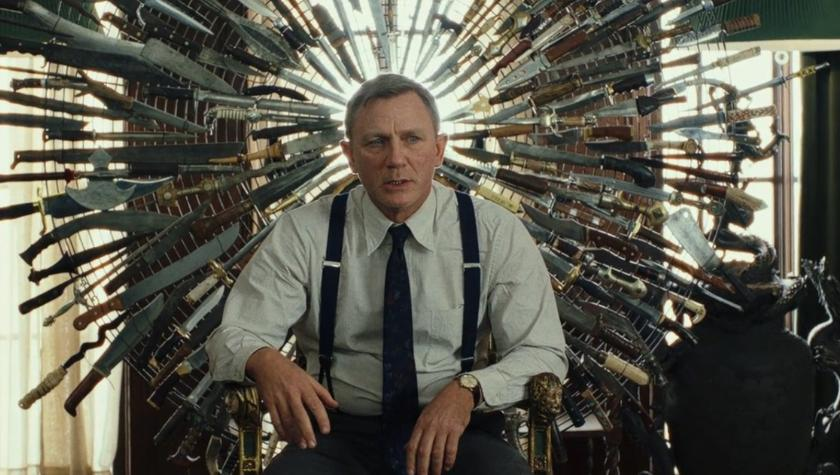
After stepping away from Bond in 2021, Craig pivoted sharply into a new signature role: Benoit Blanc.
The Knives Out Franchise
- Knives Out (2019)
- Glass Onion: A Knives Out Mystery (2022)
- Wake Up Dead Man (2025)
As Blanc, Craig embraces a different cinematic language—one rooted in dialogue, wit, and ensemble storytelling. The character’s eccentric intelligence contrasts sharply with Bond’s stoicism, reinforcing Craig’s versatility.
The success of Knives Out established a new franchise identity centered on modern detective storytelling, with Craig at its core.
Recent Work and Evolving Choices
Craig’s post-Bond filmography signals a shift toward more experimental and character-driven roles.
Notable Recent Films
- Queer (2024) – a romantic drama that earned him major award nominations
- Wake Up Dead Man (2025) – continuation of the Benoit Blanc series
These choices indicate a deliberate move away from blockbuster dependence toward narrative depth and artistic collaboration.
The Bond Legacy and Its Ongoing Evolution
The James Bond franchise continues to evolve following Craig’s departure. A new film reboot is currently in development under Amazon MGM Studios, with direction by Denis Villeneuve and a screenplay by Steven Knight.
No actor has yet been officially cast as the next Bond, marking the first major transition in over two decades. The franchise is also expanding into other media, including the video game 007 First Light, which introduces a younger version of the character and adopts cinematic elements inspired by the films.
This transitional phase underscores the scale of Craig’s influence. His era established a modern template that future adaptations must either build upon or redefine.
Cultural and Industry Impact
Craig’s filmography reflects broader industry trends:
- Franchise Reinvention: His Bond films proved that legacy properties can be modernized without losing identity.
- Actor-Led Franchises: His transition to Knives Out demonstrates how star power can anchor new intellectual properties.
- Genre Fluidity: Moving between action, drama, and mystery has kept his career adaptable and relevant.
His Bond films alone grossed billions globally, reinforcing his role as a central figure in contemporary blockbuster cinema.
Conclusion: A Film Career Defined by Evolution
Daniel Craig’s movies are not defined by a single role, even one as iconic as James Bond. Instead, his career is characterized by continuous reinvention—moving from theatre-trained actor to global franchise lead, then into a mature phase focused on character complexity and narrative experimentation.
His legacy is twofold: he redefined one of cinema’s most enduring characters and demonstrated how to transition beyond it without diminishing relevance. As the Bond franchise enters a new era, Craig’s influence remains embedded in its DNA.


