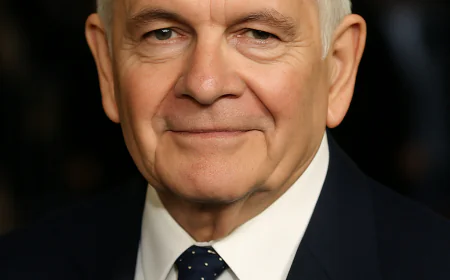
Bernie Casey Net Worth, Relationships, Age/Birthdate & Birthday
Overview of Bernie Casey — net worth, relationships, age/birthdate, and birthday.
 loveness92
A Life Painted in Many Colors: Bernie Casey
Born Bernard Terry Casey on June 8, 1939 — a date that marks his birthday and anchors his journey — Bernie Casey grew up far from the limelight. His birthplace was the small coal-mining community of Wyco, West Virginia. What began in humble roots would evolve into a remarkable odyssey: from elite athlete, to celebrated actor, to creative artist and poet.
From Coal Country to College Star
Casey’s upbringing shifted early: after his parents divorced, he and his mother relocated to Columbus, Ohio. In school, Casey’s interests went beyond athletics — he painted, wrote poetry, and acted in school plays.
That early artistic spark merged with undeniable athletic ability. Casey accepted one of twenty athletic scholarships and enrolled at Bowling Green State University — drawn not just by its football program, but by respect for its arts curriculum.
On the field, he excelled as a hurdler and as a football standout. His speed and agility made him a record-breaking athlete in the hurdles. Simultaneously, he established himself as a wide receiver on the football team — foreshadowing the first major pivot of his life.
Trading Grass for Gridiron Stardom
In 1961, Casey’s talents earned him a first-round selection in the NFL draft — ninth overall — by San Francisco 49ers. He later moved to the Los Angeles Rams, closing out a professional football career that spanned nearly a decade.
On the field, Casey compiled impressive statistics: 359 receptions, 5,444 receiving yards, and 40 touchdowns across 105 games. His performance earned him a selection to the Pro Bowl — a milestone that cemented him as one of his era’s formidable players.
Yet, even as his athletic career thrived, Casey harbored creative ambitions. Long before he ever caught a professional pass, he had been painting, writing poetry, and imagining a different future — a future that would eventually unfold far beyond the gridiron.
When Canvas Meets Camera: The Rise of an Actor and Artist
After retiring from professional sports, Casey didn’t fade into retirement. Instead, he reinvented himself. In 1969, he made his acting debut in Guns of the Magnificent Seven — a bold first move into Hollywood.
Over the next decades, Casey built a filmography that mirrored Hollywood’s evolving landscape and the growing prominence of African American actors. He appeared in socially meaningful films, cult classics, and mainstream hits — from the prison-reform drama Brothers (1977) to the sci-fi classic The Man Who Fell to Earth (1976).
He even joined the spy-film universe with a role as CIA agent Felix Leiter in the non-Eon Never Say Never Again (1983), connecting him to one of cinema’s most iconic franchises.
But Casey's ambition didn’t stop at acting. A published poet and accomplished painter, he held exhibitions of his artwork — with more than one hundred paintings sold to private collectors, including significant names. In 1969, he published his first book of poems, titled Look at the People.
This blending of athleticism, acting, poetry, and painting transformed Casey into a modern Renaissance figure — a rare breed of celebrity gifted in both physical prowess and creative sensitivity.
The Price Tag: Estimating a Legacy
Despite a multifaceted career and cross-industry presence, public records suggest that at the time of his death, Bernie Casey’s net worth was estimated at approximately US$2 million.
That figure reflects the challenge many multi-talented artists face: a legacy rich in influence and respect, but modest in monetary valuation — especially by Hollywood or athletic superstar standards. Even so, the monetary figure only tells a fraction of his story; his true legacy lies in the doors he opened for athletes-turned-artists, and for African American performers navigating Hollywood on their own terms.
On Love, Family, and Private Life
Public information about Casey's personal relationships is scarce. According to available biographies, there is no credible public record of a spouse or children.
That relative privacy may reflect the man himself: Casey seemed more interested in cultivating his craft — whether painting canvases, writing poems, or inhabiting diverse on-screen characters — than courting tabloid attention.
Why His Story Still Resonates
Bernie Casey’s journey resonates because it breaks stereotypes. He defied the simplistic “athlete” label, proving that strength and artistry are not mutually exclusive. He navigated the cutthroat world of professional sports, transitioned to Hollywood, and still found space for introspective art.
In a time when African American performers often found themselves pigeonholed, Casey carved a path across multiple disciplines — often ahead of the curve. His example offered hope that one could be both physically powerful and creatively sensitive; that success in one arena need not preclude another.
His birthday, June 8, 1939, marks more than a birth date: it marks the beginning of a life lived defiantly, passionately, and artfully. His net worth — while modest by some standards — belies a legacy that transcends dollars. And though Casey died on September 19, 2017, his story endures as a blueprint for reinvention, resilience, and the pursuit of multiple callings.