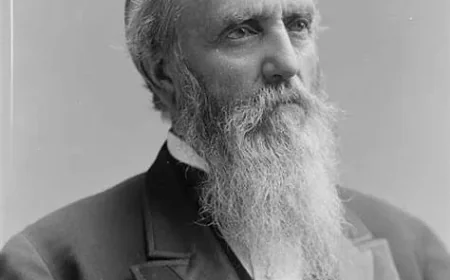
Bernardo Caprotti Net Worth, Relationships, Age/Birthdate & Birthday
Overview of Bernardo Caprotti — net worth, relationships, age/birthdate, and birthday.
 loveness92
The Visionary Who Transformed Italian Retail: Bernardo Caprotti
A Birth in Post-War Italy — and the Seeds of Retail Revolution
Bernardo Caprotti was born on October 7, 1925, into a family rooted in Italy’s textile and retail industries. As a young man, he studied law at the University of Milan and was then sent to the United States, where exposure to American retail and industrial practices would shape his long-term vision — a vision that would eventually revolutionize how Italians shopped.
His birthday, October 7, thus marks not only the arrival of a future titan of commerce but also the inception of what would become Italy’s supermarket culture.
Bringing the “Supermarket” to Italy — Founding Esselunga
Caprotti’s journey into modern retail began in 1957, when he — alongside his brothers (and financial backing from American investors led by Nelson Rockefeller) — co-founded what would become Italy’s first grocery-store chain embracing the “supermarket” concept.
The first store opened in Milan — a modest 480-square-meter setup — but it carried a disruptive idea: fixed prices, self-service shopping, wide product assortment, and American-style convenience.
By 1961, the Caprotti family had bought out the U.S. investors’ stake, gaining full control over the company. Over the decades, under Bernardo’s leadership, Esselunga expanded steadily, becoming synonymous with quality, efficiency, and modern retail in Italy.
Caprotti’s ambition and readiness to embrace innovation — from logistics to store design — earned him recognition as the entrepreneur who “invented supermarkets” in Italy.
Building a Billion-Dollar Empire — Wealth and Influence
By the end of his life, Caprotti had turned Esselunga into a powerhouse of Italian retail. At the time of his death in 2016, his net worth was estimated at around US$ 2.4 billion, according to Forbes.
That fortune was built almost entirely on supermarkets — a self-made legacy rooted in a vision for transforming everyday shopping.
But Caprotti’s influence transcended mere numbers. By normalizing the supermarket model in Italy — offering consistency, variety, efficiency, and modern retail infrastructure — he altered consumer habits, reshaped local economies, and set new industry standards. His blend of pragmatism and passion for quality left a lasting imprint on Italian retail culture.
Family, Relationships and Legacy — The Personal Side Behind the Retail Icon
Bernardo Caprotti married twice over the course of his life. His second wife was Giuliana Albera.
From his first marriage, he had two children: a son, Giuseppe Caprotti, and a daughter, Violetta Caprotti. From his second marriage with Giuliana, he had a daughter, Marina Sylvia Caprotti.
In his will, he allocated the majority of his company — around 66.7% — to Giuliana Albera and Marina Sylvia. The remaining shares were divided equally between Giuseppe and Violetta.
This division triggered legal disputes in the family after his passing, reflecting both the enormous value of Esselunga and the complex dynamics inherent in family-run empires.
A Lasting Mark — Story, Philosophy, and Italian Retail Identity
Bernardo Caprotti was not merely a businessman chasing profits. As he once described in company communications, he was motivated by a passion for quality, aesthetic, and the desire to bring order and elegance to everyday shopping. His upbringing — in a family attentive to freedom, arts, and cultural sophistication — shaped his approach: the supermarket was never just a store, but a modern space for living and commerce.
Under his direction, Esselunga introduced innovations such as private-label products, streamlined logistics, and a retail philosophy that combined convenience with respect for product quality and customer dignity.
When Caprotti died on September 30, 2016, he left behind more than a fortune; he left a redefined Italian retail landscape — one where supermarkets replaced corner shops, large-scale distribution replaced fragmented local markets, and consumer expectations evolved forever.
Why Bernardo Caprotti’s Life Still Matters
Even years after his passing, the influence of Bernardo Caprotti resonates. The company he built, Esselunga, remains a major player in Italy’s grocery sector — a testament to his vision. His life story continues to inspire entrepreneurs and business thinkers who see beyond short-term gains and focus on structural change, innovation, and long-term value creation.
Caprotti’s journey — from a young law graduate to a U.S.-trained visionary, to the founder of Italy’s supermarket revolution, to a billionaire whose wealth and legacy continue to shape retail — offers a powerful model of entrepreneurship grounded in cultural sensitivity, ambition, and unwavering commitment to a vision.