Barbara Bush Net Worth, Relationships, Age/Birthdate & Birthday
Overview of Barbara Bush — net worth, relationships, age/birthdate, and birthday.
 loveness92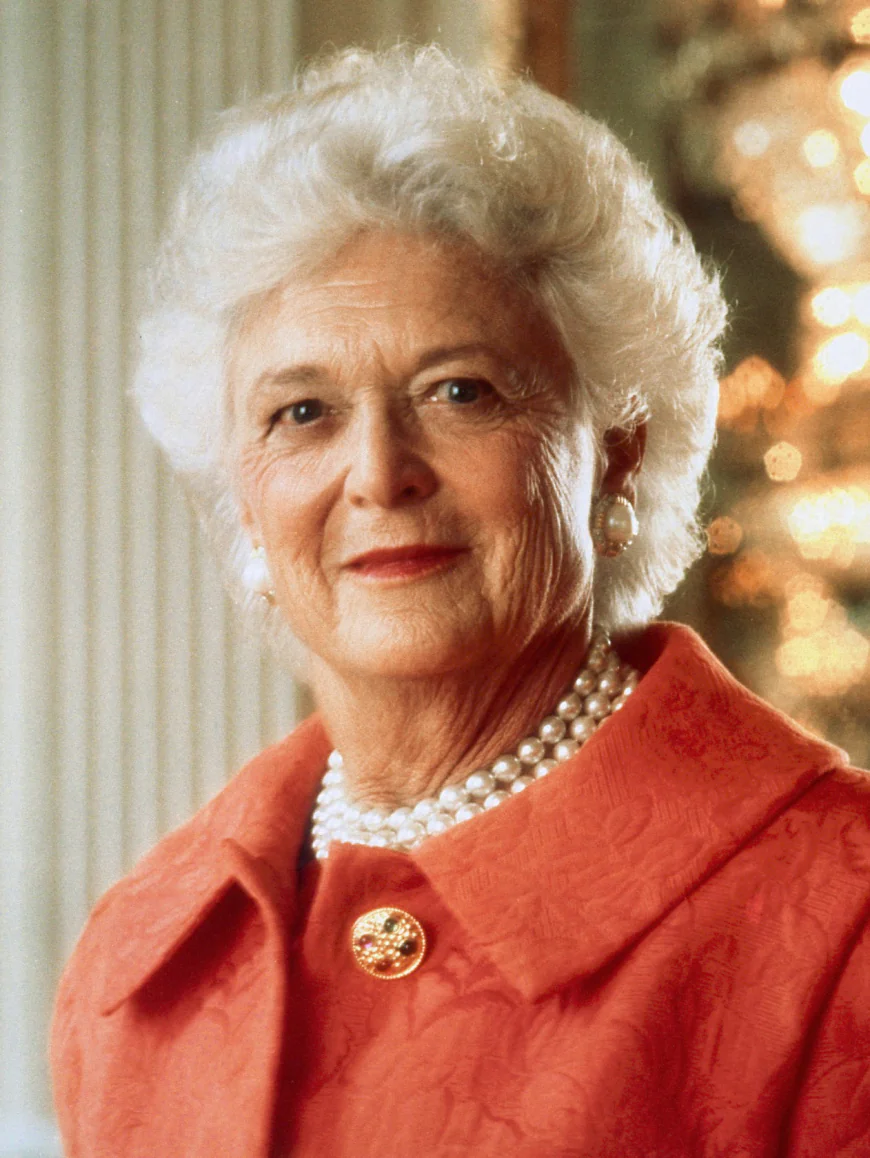
A Quiet Power Beyond the Oval Office
Barbara Pierce Bush — born June 8, 1925 — became one of America’s most enduring symbols of family, faith, and quiet influence. Her “birthday,” June 8, marks the arrival of a woman who would eventually hold dual roles unique in U.S. history: wife to a president and mother to another. She passed away on April 17, 2018, closing a life marked by steadfast loyalty to family and public service.
Barbara’s journey was never about grabbing headlines; it was about serving quietly, consistently — and leaving an imprint much deeper than any political headline could capture.
From East Coast Privilege to White House Responsibility
Barbara Pierce was born into a family of means. Her father, Marvin Pierce, would become president of McCall Corporation, a major publisher, giving Barbara a childhood in the affluent suburb of Rye, New York.
In 1941, during a Christmas vacation dance, she met her future husband, George H. W. Bush (then “Poppy”). Despite wartime separations — he would serve as a naval aviator — their bond held firm. By January 6, 1945, she married him, just shy of her 20th birthday, leaving college to embrace a life of possibility, instability, and service.
What followed was decades of movement: 29 relocations, childhoods raised largely by Barbara while George built businesses and pursued politics. From oilfields in Texas to diplomatic postings abroad, Barbara was the constant.
They raised six children — including a son who would become president, George W. Bush, and another who would govern Florida, Jeb Bush. Their daughter Robin’s tragic death from leukemia in early childhood left Barbara with a lifelong empathy for loss and suffering.
Through it all, Barbara’s grounding was never politics. It was loyalty — to family, to home, to values.
“The Most Important Issue We Have”: Literacy as Legacy
When Barbara stepped into national prominence — first as Second Lady (1981–1989) and then as First Lady (1989–1993) — she transformed what could have been ceremonial roles into genuine platforms for change.
Her concern for literacy was deeply personal. One of her sons, Neil Bush, struggled with dyslexia, and Barbara believed strongly that reading and education could transform lives. That conviction blossomed into the founding of the Barbara Bush Foundation for Family Literacy in 1989. Through this foundation, radio campaigns, public appearances, and children’s books — including a bestseller written from the perspective of the family dog, “Millie’s Book” — she championed reading at home, especially in underprivileged communities.
Her quietly persistent advocacy helped reshape national conversation about education. By the time she stepped back from active involvement around 2012, the foundation had helped raise and allocate over $110 million to support literacy efforts across the U.S.
Barbara’s approach showed that activism need not always be loud — sometimes the most profound legacy is built in libraries, classrooms, and quiet living rooms where books live.
Wealth, Status, and What It Represented
Though born into privilege and married into even greater prominence, Barbara Bush’s wealth was neither ostentatious nor central to her identity. Yet it provides context for the life she led. According to contemporaneous estimates, she and her husband shared a net worth of about US$23–25 million in the years before her death.
That figure reflects decades of their combined endeavors — real estate deals, investments, and the post-White House stature that often comes with lifelong public service.
But Barbara never flaunted wealth. Instead, her modesty — from wearing inexpensive shoes to events to her preference for practical over extravagant — became part of her enduring charm and broad appeal.
Her net worth — modest by the standards of high-net-worth political dynasties — underscores that her influence was never transactional. It was rooted in relationships, meaning, and values.
The Private Woman Behind the Public Legacy
Public memory often remembers Barbara Bush as the matriarch of a political dynasty. But behind that public image was a woman who cherished quiet mornings with a book, valued a well-timed joke more than political polish, and never lost sight of family. She once said she married “the first man I ever kissed” — a remark that reveals the warmth, simplicity, and sincerity with which she lived her life.
She managed the emotional weight of losing a child, the itinerant lifestyle of political service, and public scrutiny — all while keeping her priorities firmly grounded. After leaving the White House, she devoted herself to causes she believed in, maintained family closeness, and resisted the allure of retirement publicity.
On her birthday, and every other day that followed, Barbara Pierce Bush embodied a quiet kind of strength: the kind that doesn’t demand applause, but earns respect.
Why Barbara Bush’s Story Still Matters
In an age often defined by flash and spectacle, Barbara Bush’s legacy reminds us of persistence, values, and discreet influence. She showed that being part of a powerful family doesn’t require embracing the spotlight — sometimes, it means redirecting it toward a cause greater than oneself.
Her net worth, sizeable but not ostentatious, her relationships marked by decades of loyalty, and her lifelong commitment to literacy and family combine into a portrait of integrity. Her birthday — June 8 — remains a symbolic reminder of a life lived with purpose, grounded in love, duty, and service.
For writers, thinkers, and everyday readers, her story isn’t just about political history. It’s about legacy: the kind that survives beyond offices held, titles claimed, or money amassed.