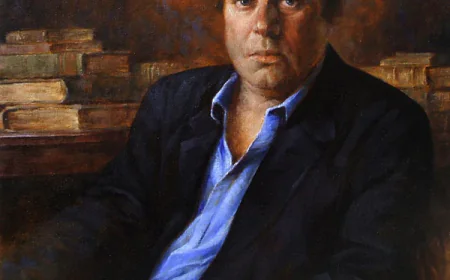
Austen Cargill II Net Worth, Relationships, Age/Birthdate & Birthday
Overview of Austen Cargill II — net worth, relationships, age/birthdate, and birthday.
 loveness92
A Legacy Rooted in Grain — The Heir of Cargill’s Agribusiness Empire
Austen Stowell Cargill II was born on March 9, 1951. As the great-grandson of William Wallace Cargill — who founded Cargill in 1865 — Austen inherited one of the most consequential legacies in global agriculture.
Cargill has grown from a modest grain warehouse on an Iowa railroad siding into the largest privately held agribusiness in the United States, with operations spanning food production, commodity trading, agricultural services, and industrial processing. The vast scale and diversity of Cargill’s business laid the foundation for the fortune that would define Austen’s life.
From Marine Biology to Boardroom: A Unique Career Path
Rather than immediately stepping into a purely finance or management role, Austen took an unexpected — and revealing — route. He earned his bachelor’s and master's degrees at University of Minnesota, then went on to complete a doctorate at Oregon State University.
With a strong academic background in biology, he initially joined Cargill as a marine biologist — a rare specialization for a member of a commodity-trading dynasty. Over time, his involvement deepened: in 1995 he was appointed to Cargill’s board of directors, and later served as a vice president until his retirement in 2001.
Beyond agriculture, he briefly ventured into biotechnology, serving on the board of a publicly traded nutritional-supplement company, GalaGen, from 1999 until the company filed for bankruptcy in 2002.
This blend of science and corporate governance — marine biology, board oversight, ranching — reflects a person shaped by both curiosity and stewardship, a pattern not always visible among heirs to large fortunes.
Wealth and Influence — The Quiet Billionaire Heir
According to the latest reporting by Forbes, Austen Cargill II’s net worth is estimated at US $4.6 billion. As one of about a dozen heirs to the Cargill fortune, he ranks among the wealthiest individuals in the world, in part thanks to the family’s continued ownership of roughly 90% of Cargill.
That wealth — inherited, but maintained with discretion — positions him within a rarefied group: members of a family that has generated prosperity over multiple generations, yet remained notoriously private.
Despite the magnitude of his wealth, Austen has avoided the flashy lifestyle often associated with billionaires. His interests reflect a preference for privacy, nature, and legacy over public spectacle.
A Life Away From the Spotlight: Montana, Ranches, and Family
After stepping back from active corporate management, Austen embraced a quieter life in the American West. He resides in Livingston, Montana.
In 2001, he acquired the North Ranch in Paradise Valley, Montana — a property formerly owned by the Church Universal and Triumphant. His Montana ranch reflects a deep affinity for land stewardship and the outdoors, a far cry from corporate boardrooms.
His leisure interests include ruffed-grouse hunting in South Dakota — a nod to his early scientific work with aquatic ecosystems, and perhaps a continuation of his enduring respect for nature.
On the personal front, Austen is divorced and has two children. Yet like much of the Cargill-MacMillan clan, he values privacy: public details about his family are minimal, and he rarely engages with media or social platforms.
A Quiet Impact: Stewardship of Legacy and Land
Although Austen Cargill II stepped away from the executive spotlight decades ago, his influence endures — quietly, deliberately. Through his inherited stake in Cargill, he remains tied to one of the world’s most important agribusinesses. But his legacy isn’t defined solely by corporate wealth.
By turning toward ranching, land ownership, and scientific interests, Austen embodies a different side of family-wealth stewardship — one that respects heritage, values discretion, and prioritizes environmental and personal equilibrium. His life suggests that immense wealth and quiet purpose can coexist, even when rooted in corporate giants.
In a world where billionaires often seek limelight and influence, Austen stands out for choosing the opposite. His story remains a reminder that legacy — like land — can flourish when tended with care and calm.