




Artemis II: Humanity’s Return to the Moon Begins a New Era
After more than half a century, humanity is preparing to send astronauts back toward the Moon. The upcoming Artemis II mission represents a pivotal moment in space exploration—one that bridges the legacy of the Apollo era with the ambitions of a new, globally connected space age.
- A Mission Decades in the Making
- Inside the Artemis II Mission Plan
- Meet the Artemis II Crew
- Technology at the Core: SLS and Orion
- Risks Beyond Earth: Weather and Space Hazards
- Scientific Debate and Public Perception
- Why Artemis II Matters Now
- The Bigger Picture: A Gateway to Mars
- Conclusion: A Turning Point in Human Spaceflight
Scheduled to launch from Florida’s Kennedy Space Center, Artemis II is not just another mission. It is a carefully orchestrated test of technology, human endurance, and international collaboration, designed to lay the groundwork for future lunar landings and, ultimately, missions to Mars.
A Mission Decades in the Making
Artemis II marks the first crewed mission to the vicinity of the Moon since 1972, signaling a return to deep space exploration that has been decades in the making.
The Artemis program itself evolved from earlier efforts to replace the space shuttle era and establish a sustainable human presence beyond Earth. Its long-term vision extends far beyond a single mission: building infrastructure on and around the Moon and using it as a stepping stone toward Mars.
This mission follows the successful Artemis I test flight in 2022, which sent an uncrewed spacecraft around the Moon to validate core systems. Artemis II now moves into a critical phase—placing humans onboard for the first time.

Inside the Artemis II Mission Plan
Artemis II is designed as a high-precision, 10-day lunar flyby mission. It does not include a landing, but its role is arguably more important: proving that the spacecraft, systems, and crew can safely operate in deep space.
Here is what the mission achieves before detailing the sequence:
The mission tests life-support systems, navigation, manual piloting, and safety protocols under real conditions—ensuring readiness for future lunar landings.
Mission Sequence Overview
- Launch: Scheduled no earlier than 6:24 pm Eastern Time from Kennedy Space Center, with an 80 percent chance of favorable weather conditions.
- Earth Orbit Phase: The crew will spend roughly 25 hours orbiting Earth while conducting system checks and practicing docking maneuvers.
- Trans-Lunar Injection: Orion will fire its main engine to leave Earth’s orbit and head toward the Moon.
- Lunar Flyby: The spacecraft will pass over the Moon’s far side, temporarily losing communication with Earth.
- Deep Space Record: The crew is expected to travel farther from Earth than any humans before, surpassing the Apollo 13 record.
- Return Trajectory: A “free-return” path uses the Moon’s gravity to bring the spacecraft back without additional propulsion.
- Re-entry and Splashdown: The mission concludes with a parachute-assisted landing in the Pacific Ocean.
Meet the Artemis II Crew
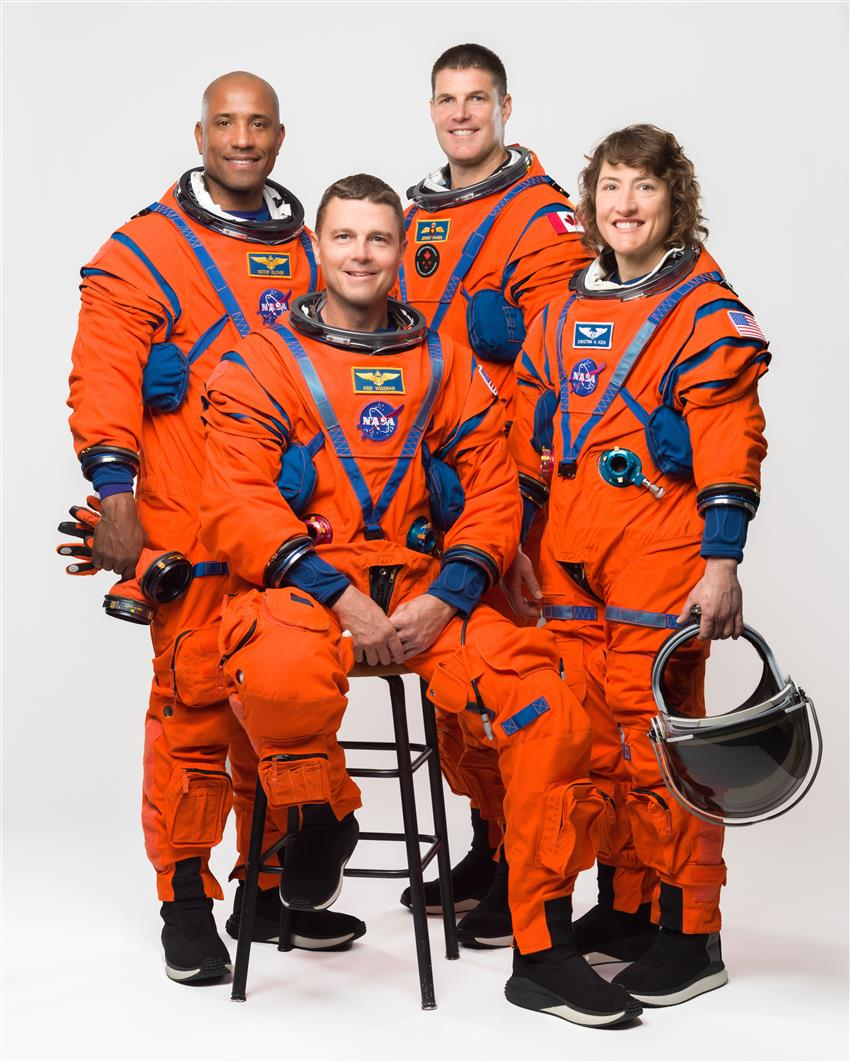
Four astronauts will carry the mission forward—each representing a milestone in space exploration:



- Reid Wiseman (Commander): A former naval aviator and experienced astronaut leading the mission.
- Victor Glover (Pilot): Set to become the first Black astronaut to travel to the Moon.
- Christina Koch (Mission Specialist): The first woman to participate in a lunar mission.
- Jeremy Hansen (Mission Specialist): A Canadian astronaut, becoming the first non-American to fly around the Moon.
Their participation reflects a broader shift in space exploration—toward diversity, inclusivity, and international collaboration.
Technology at the Core: SLS and Orion
At the center of Artemis II is a new generation of spaceflight technology:
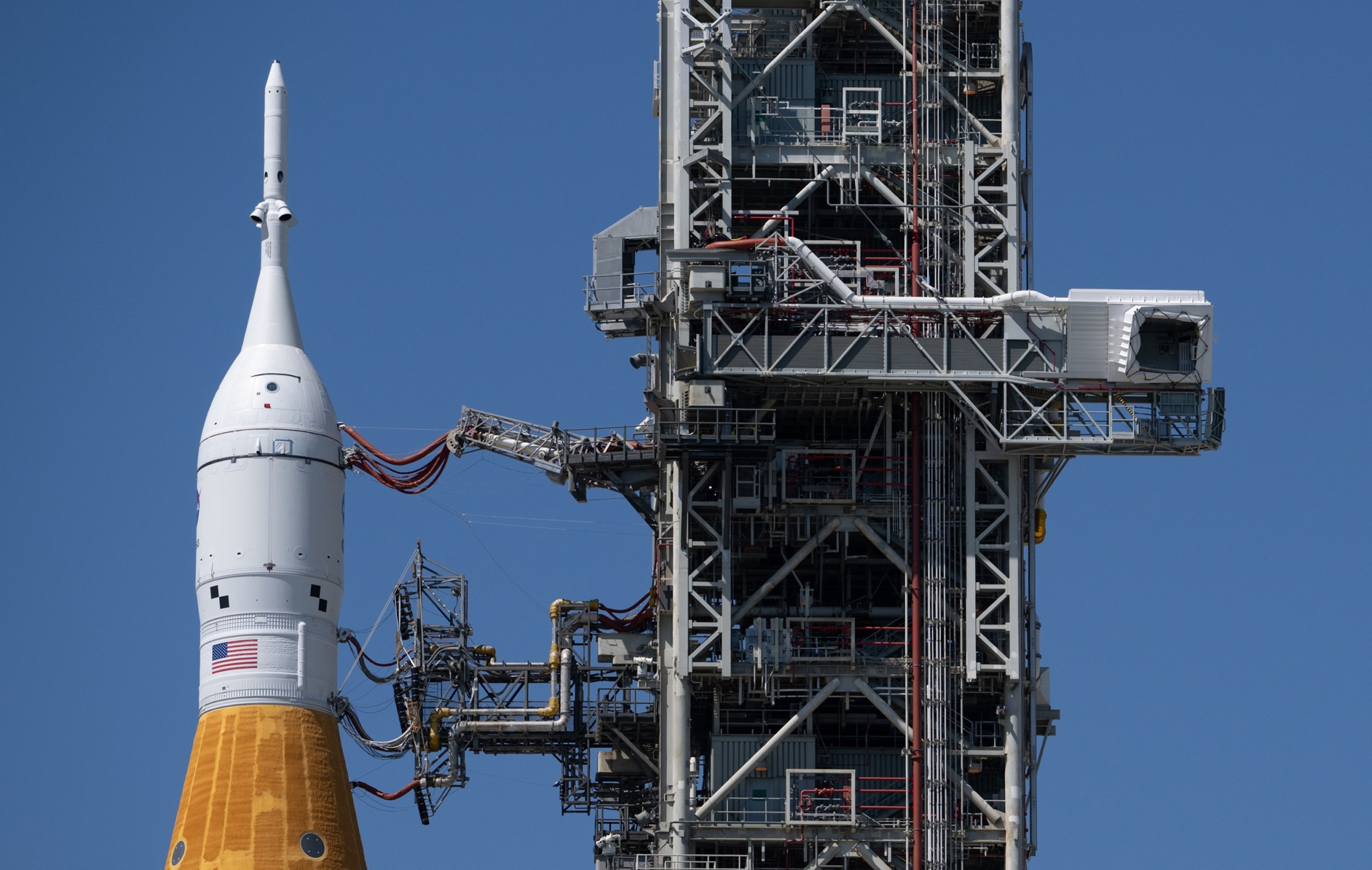
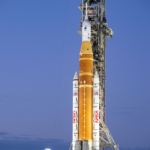
- Space Launch System (SLS): A 98-meter rocket, more powerful at liftoff than its Apollo-era counterpart despite being slightly shorter.
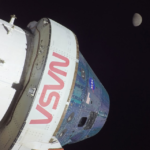
- Orion Spacecraft: Designed for deep-space missions, capable of sustaining astronauts beyond Earth’s orbit.
The mission will test Orion’s systems under real conditions, including life-support, navigation, and manual piloting capabilities—functions that are essential for future lunar landings.
Risks Beyond Earth: Weather and Space Hazards
Artemis II faces two categories of environmental risk: terrestrial weather and space weather.
On Earth, NASA monitors cloud formations, wind conditions, and solar activity ahead of launch. But the more complex challenge lies in space itself.
Just days before launch, an X1.4-class solar flare erupted from the Sun, raising concerns about radiation exposure and spacecraft safety.
NASA officials stated, “We do not anticipate the CME will have any impact,” and confirmed there are “no concerns for the overall mission.”
However, once the spacecraft leaves Earth’s magnetic field, the Orion capsule becomes the crew’s primary shield. To manage this risk:
- Radiation sensors and personal dosimeters will monitor exposure in real time.
- Emergency shelter protocols allow astronauts to build protective shielding within 30 minutes.
- Continuous monitoring will be conducted from Earth and even Mars-based systems.
This layered defense highlights how modern space missions rely on integrated monitoring networks across the solar system.
Scientific Debate and Public Perception
Despite the mission’s significance, reactions from the scientific community are mixed.
Some researchers view Artemis II as a necessary stepping stone, while others question its novelty. One scientist remarked, “It’s just repeating what we already did in 1968,” reflecting skepticism about its scientific value.
Others argue that the mission’s true importance lies not in immediate discoveries but in long-term infrastructure and inspiration. As one astronomer noted, it represents “the first step in a very long-term plan to build a human base on the Moon.”
This divide underscores a broader debate: should space exploration prioritize human missions or robotic science?
Why Artemis II Matters Now
Artemis II is not an isolated mission—it is part of a strategic sequence.
- Artemis III and IV: Planned missions aim to return humans to the lunar surface, including the Moon’s south pole.
- Commercial Partnerships: Companies like SpaceX and Blue Origin are contributing to lander development.
- Global Collaboration: International participation signals a shift from national competition to cooperative exploration.
The mission also has cultural implications. By including a diverse crew, Artemis II aims to redefine who participates in space exploration and who feels represented by it.
The Bigger Picture: A Gateway to Mars
The Artemis program is fundamentally about long-term expansion into deep space.
The Moon serves as a testing ground—both technically and operationally—for future missions to Mars. Systems validated during Artemis II will directly influence spacecraft design, mission planning, and astronaut training for interplanetary travel.
In that sense, Artemis II is less about returning to the Moon and more about preparing to leave it behind.
Conclusion: A Turning Point in Human Spaceflight
Artemis II stands at the intersection of history and ambition. It echoes the Apollo missions while introducing a new framework built on international cooperation, technological innovation, and long-term planning.
The mission will not place boots on lunar soil, but it will do something equally significant: prove that humanity is ready to venture back into deep space—and stay there.
As the countdown approaches, Artemis II is poised to redefine what comes next in the story of human exploration.