



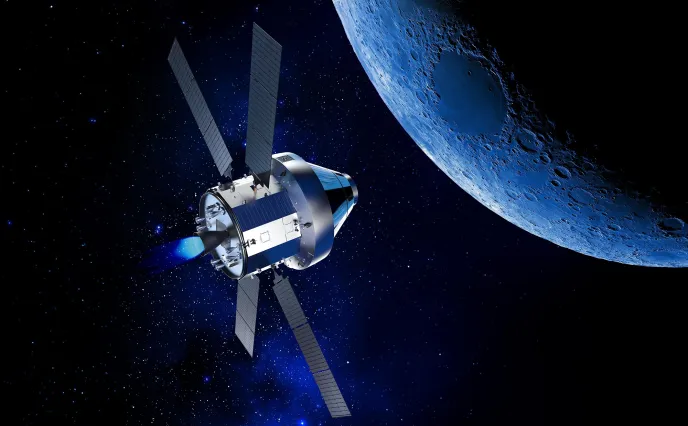
Artemis II Launch Time: When NASA’s Historic Moon Mission Took Off
A Defining Moment for Modern Spaceflight
The NASA Artemis II mission marked a decisive return to human deep-space exploration, reigniting ambitions that have remained dormant since the Apollo era. For millions tracking the mission, one question dominated global search trends: what time was the Artemis II launch?
- A Defining Moment for Modern Spaceflight
- Countdown to Liftoff: Timing the Mission Precisely
- What Happened at Launch?
- A Mission Years in the Making
- What the Launch Set in Motion
- Visibility and Public Interest
- Why Artemis II’s Launch Time Matters
- What Comes Next After Launch?
- Conclusion: A Timed Leap Toward the Future
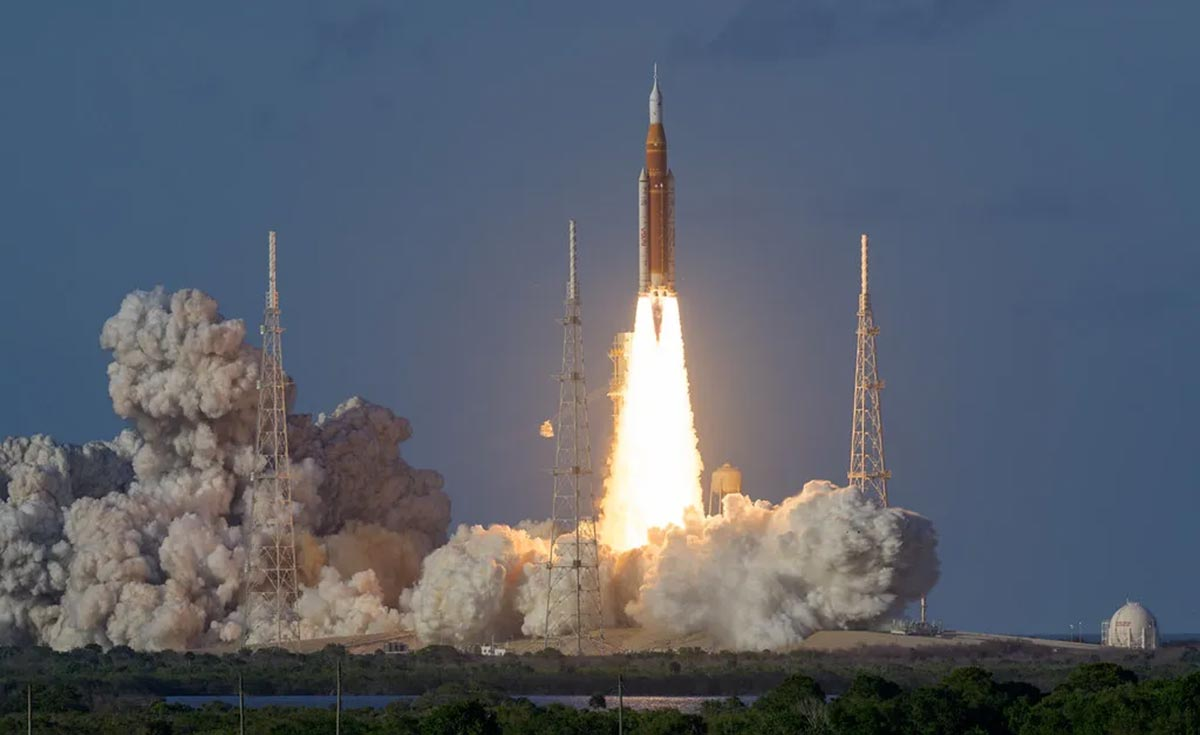
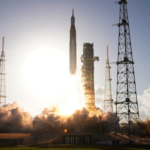
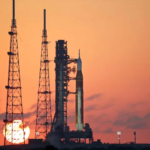
The answer is precise and significant. Artemis II had a targeted launch time of 6:24 p.m. Eastern Time (ET) on April 1, with a two-hour launch window allowing flexibility for technical and weather conditions.
That launch window represented more than scheduling—it was a carefully engineered opportunity to align orbital mechanics, safety systems, and mission trajectory for a journey that would carry humans farther than ever before.
Countdown to Liftoff: Timing the Mission Precisely
Official Launch Time and Window
NASA scheduled Artemis II to launch from the Kennedy Space Center at:
- Target time: 6:24 p.m. ET
- Launch window: 2 hours
- Date: April 1, 2026
This window ensured mission control could adapt to last-minute variables, including weather patterns and technical checks. Ultimately, liftoff occurred within this timeframe as engineers confirmed all systems were “go for launch.”
Why Launch Windows Matter
Launch timing is not arbitrary. It determines:
- The spacecraft’s trajectory toward the Moon
- Fuel efficiency and orbital alignment
- Safe conditions for crew and hardware
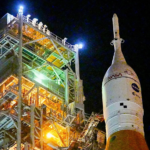
For Artemis II, the timing ensured the Orion spacecraft could enter Earth orbit before performing the critical maneuver that would send it toward the Moon.
What Happened at Launch?
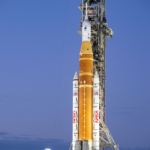
As the countdown reached zero, the Space Launch System (SLS)—NASA’s most powerful rocket—ignited with approximately 8.8 million pounds of thrust, propelling the spacecraft into the evening sky.
Commander Reid Wiseman captured the moment with a statement that quickly became symbolic of the mission:

“We go for all humanity.”
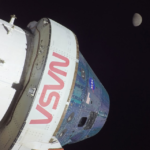
Within minutes, the Orion capsule separated from its launch systems and entered Earth orbit, marking the beginning of a 10-day mission.
A Mission Years in the Making
From Artemis I to Artemis II
The Artemis program builds on earlier milestones:
- Artemis I (2022): Uncrewed test flight
- Artemis II (2026): First crewed mission
- Future missions: Planned lunar landing and long-term Moon presence
Unlike its predecessor, Artemis II carried astronauts aboard the Orion spacecraft, transitioning the program from testing to human exploration.
The Crew on Board
The mission featured an international team:
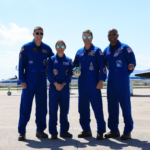
- Reid Wiseman (Commander)
- Victor Glover (Pilot)
- Christina Koch (Mission Specialist)
- Jeremy Hansen (Mission Specialist)
This crew reflects a broader shift toward international collaboration in space exploration.
What the Launch Set in Motion
The 10-Day Mission Profile
Artemis II is not a lunar landing mission. Instead, it is a test flight designed to validate systems for future Moon landings.
The mission follows a structured trajectory:
- Earth orbit (Day 1): Systems checks
- Trans-lunar injection (Day 2): Engine burn toward the Moon
- Deep space travel (Days 3–5)
- Moon flyby (Day 6): Passing thousands of miles beyond the lunar surface
- Return journey (Days 7–9)
- Splashdown (Day 10)
This trajectory allows NASA to test navigation, life-support systems, and human performance in deep space.
Visibility and Public Interest
While the launch was visible across parts of the southeastern United States, visibility depended on geographic position and atmospheric conditions.
For those outside viewing range, NASA ensured accessibility through live coverage:
- NASA+ streaming service
- YouTube broadcasts
- Amazon Prime integration (no subscription required)
This wide accessibility reflects the mission’s global significance and public engagement strategy.
Why Artemis II’s Launch Time Matters
The exact launch time was more than a logistical detail—it represented a convergence of science, engineering, and human ambition.
Strategic Importance
- Aligns spacecraft trajectory with lunar orbit
- Ensures optimal fuel efficiency
- Minimizes mission risk
Symbolic Significance
Artemis II is the first crewed mission to venture toward the Moon in over 50 years, since the Apollo program.
It also sets the stage for:
- Future Moon landings (Artemis III and IV)
- Long-term lunar infrastructure
- Potential missions to Mars
What Comes Next After Launch?
After liftoff, the mission entered a critical verification phase:
- Engineers assessed spacecraft systems
- Astronauts conducted onboard tests
- Mission control evaluated readiness for deep-space travel
Only after confirming system integrity would the spacecraft proceed toward the Moon—a process that underscores the mission’s experimental nature.
Conclusion: A Timed Leap Toward the Future
The Artemis II launch at 6:24 p.m. ET on April 1 was more than a scheduled event—it was a carefully calculated step in humanity’s return to deep space.
Every second of that countdown carried decades of preparation, technological advancement, and renewed global ambition. As the Orion spacecraft continues its journey, the launch time itself becomes part of history—a timestamp marking humanity’s next chapter beyond Earth.