




Artemis II Launch Countdown Clock Live: Inside the Final Hours Before Liftoff
A Real-Time Moment for a New Space Era
The Artemis II launch countdown clock live has become the focal point of global attention as humanity prepares for its first crewed journey beyond low Earth orbit in more than half a century. At the heart of this moment is a simple but powerful visual: a ticking clock at Kennedy Space Center, counting down to a mission that could redefine the future of human space exploration.
- A Real-Time Moment for a New Space Era
- What the Live Countdown Clock Represents
- Timing the Launch: Windows, Conditions, and Flexibility
- Behind the Clock: The Final Countdown Sequence
- Meet the Crew Riding the Countdown
- The Human Side of the Countdown
- Why This Countdown Matters in Space History
- Watching the Countdown Live
- What Comes After Zero
- Conclusion: A Clock That Measures More Than Time
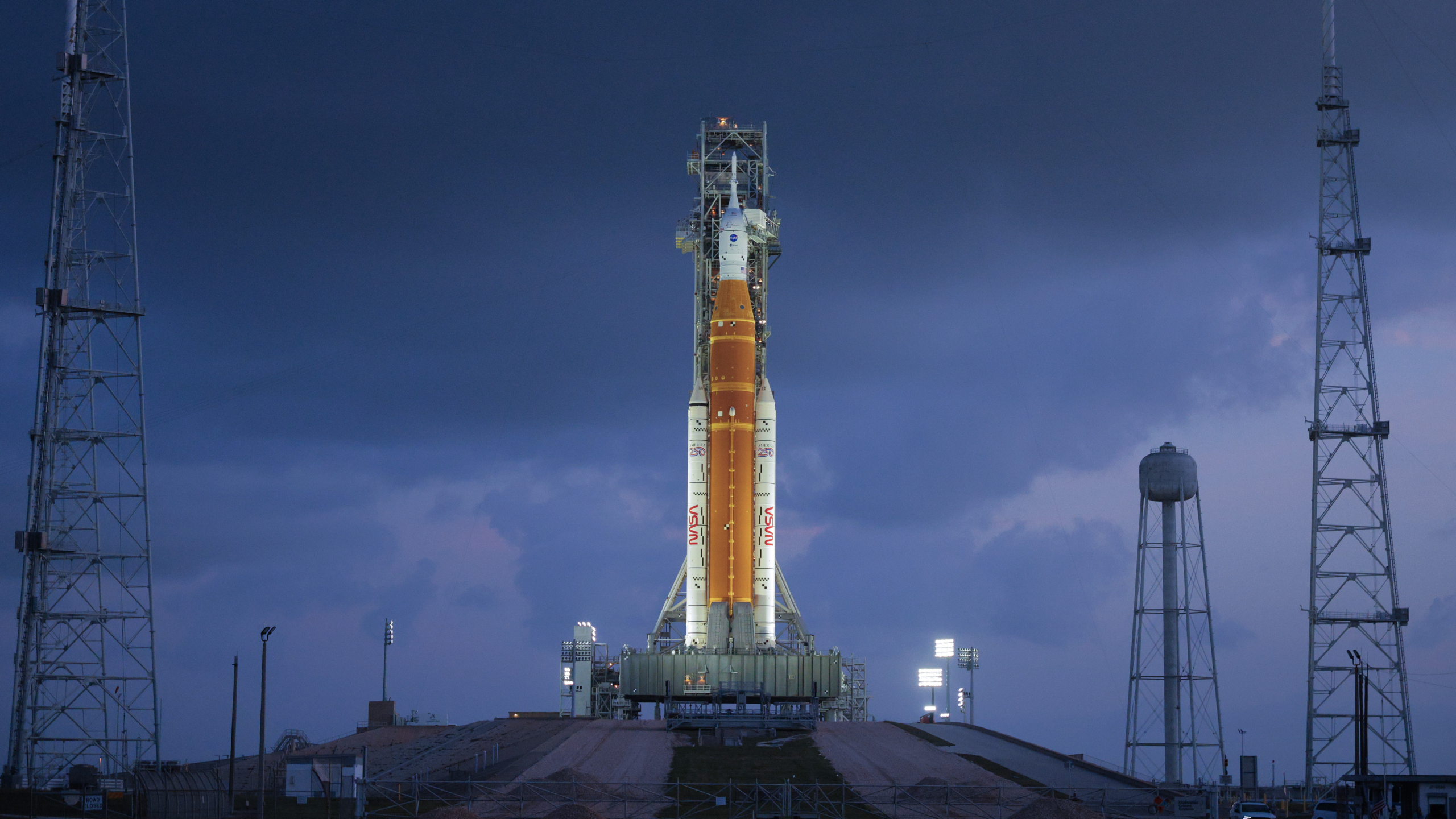
Activated on March 30, the countdown signals that all major systems are aligned for liftoff. NASA is targeting a launch window that opens at 6:24 p.m. EDT on April 1, with a two-hour opportunity to send four astronauts on a historic journey around the moon.
This is not just another launch. It is a transition point—where decades of planning, testing, and ambition converge into a single moment measured in seconds.
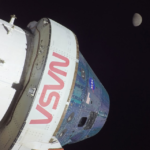
What the Live Countdown Clock Represents
The Artemis II countdown clock is more than a timer—it is the operational backbone of the launch sequence.
Once activated, it tracks a tightly controlled series of procedures:


- Final system checks and verification
- Fuel loading operations (liquid hydrogen and oxygen)
- Astronaut preparation and boarding
- Terminal countdown and ignition sequence
NASA officials confirmed that “all indications are… in excellent shape as we get into the count,” reflecting high confidence in launch readiness.
The live clock also allows the public to follow each stage in real time, turning a highly technical process into a shared global event.
Timing the Launch: Windows, Conditions, and Flexibility
The countdown does not guarantee immediate liftoff. Instead, it aligns with a launch window, which accounts for technical, environmental, and orbital conditions.
Key Timing Details
- Primary launch window: April 1, 6:24 p.m. – 8:24 p.m. EDT
- Backup dates: April 2–6
- Final fallback window: April 30
Weather remains one of the most critical variables. Current forecasts indicate an 80% chance of favorable conditions, making this window the most promising opportunity in the schedule.



NASA is also monitoring:
- Cumulus clouds and lightning risks
- Solar activity, including coronal mass ejections
- Wind patterns at launch altitude
While solar weather is described as a “minor concern,” terrestrial weather remains the dominant factor influencing the final decision.
Behind the Clock: The Final Countdown Sequence
The countdown clock structures the final hours with precision. This process ensures that every system—both human and mechanical—is synchronized.
Below are the steps that define what the countdown achieves: it transitions the mission from preparation to execution, ensuring safety, coordination, and timing accuracy.
Final Countdown Workflow
- Fuel Loading (Early Morning)
Cryogenic propellants are loaded into the rocket over more than five hours. - Astronaut Wake-Up and Preparation
Crew members wake around mid-morning, undergo checks, and suit up. - Transport to Launch Pad
Astronauts depart for the pad shortly after 2:00 p.m. - Boarding Orion Spacecraft
The crew is strapped into their seats and the hatch is sealed. - Terminal Count Initiation
Final automated systems take over, leading to ignition.
Each phase is synchronized with the live countdown clock, ensuring no deviation from the planned sequence.
Meet the Crew Riding the Countdown
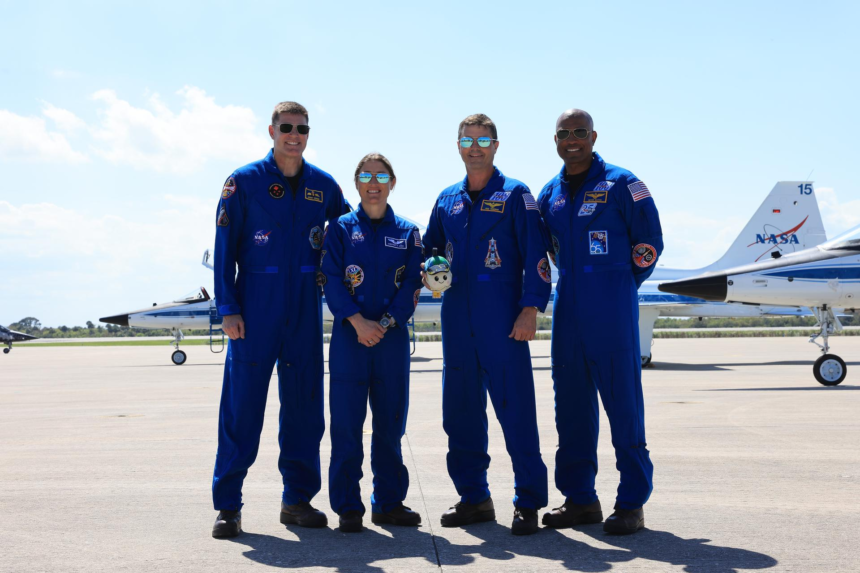
Artemis II carries a four-member crew representing a new generation of space exploration:
- Reid Wiseman – Commander
- Victor Glover – Pilot (first Black astronaut on a lunar mission)
- Christina Koch – Mission specialist (record-setting astronaut)
- Jeremy Hansen – Mission specialist (first Canadian to travel around the moon)
For Hansen in particular, the countdown carries national significance. His participation marks a milestone for Canada’s role in deep space exploration.
The Human Side of the Countdown
While the clock ticks with mechanical precision, the human experience unfolds in parallel.
On the night before launch, astronauts follow long-standing traditions:
- Spending time with family at the Kennedy Space Center beach house
- Conducting final health checks
- Mentally preparing for the mission
Despite the global attention, the final hours are described as calm and focused rather than dramatic.
Families, meanwhile, watch the countdown from a different perspective. For them, each passing second represents both pride and risk, as the mission pushes the limits of human capability.
Why This Countdown Matters in Space History
Artemis II is not just a return to the moon—it is a strategic test of systems that will enable future missions.
Mission Objectives
- Validate the Orion spacecraft in deep space
- Test life-support and navigation systems
- Demonstrate safe crewed lunar travel
- Collect data for future lunar landings
The mission will send astronauts on a 10-day journey covering approximately 685,000 miles, looping around the moon before returning to Earth.
This mirrors the role of Apollo 8 in 1968—laying the groundwork for eventual moon landings.
Watching the Countdown Live
The Artemis II launch countdown clock is accessible globally through live coverage.
Viewing Options
- NASA’s official YouTube livestream
- Continuous prelaunch coverage starting in the morning
- Real-time updates from on-site reporting teams
The broadcast begins hours before liftoff, allowing viewers to follow:
- Fueling operations
- Crew movements
- Final status updates
This transforms the countdown into a shared global experience, bridging technical complexity with public engagement.
What Comes After Zero
When the countdown reaches zero, Artemis II will mark:
- The first crewed mission beyond Earth orbit since 1972
- The beginning of a new lunar exploration program
- A stepping stone toward permanent lunar presence
If successful, it will accelerate plans for future missions, including eventual lunar landings and long-term habitation.
The stakes are high—not only technologically, but geopolitically and scientifically. Establishing a sustained presence on the moon is central to broader ambitions, including missions to Mars and beyond.
Conclusion: A Clock That Measures More Than Time
The Artemis II launch countdown clock live is not merely a timer—it is a symbol of momentum. Every second reflects decades of progress, international collaboration, and renewed ambition.
As the clock approaches zero, it captures a rare convergence: human curiosity, engineering precision, and the collective anticipation of a world watching in real time.
What happens at liftoff will be remembered. But the countdown itself—visible, measurable, and shared—has already become part of the story.