
Anne Hathaway in 2026: Reinvention, Cinema, and Cultural Relevance
A Narrative Feature on Career Evolution and Current Spotlight
Few contemporary actors have managed to sustain both critical credibility and mainstream appeal with the consistency of Anne Hathaway. In 2026, she finds herself at a particularly significant intersection in her career—balancing nostalgia-driven franchise revival with bold, experimental storytelling.
From the red carpets of New York to high-level industry conversations, Hathaway’s recent appearances signal more than just promotional activity. They reflect a deliberate artistic positioning: one that merges legacy, reinvention, and cultural commentary.
A Dual Spotlight: “Mother Mary” and Franchise Revival
Hathaway’s current moment is defined by two parallel projects—each representing a different dimension of her career.
On one side is Mother Mary, an A24 psychological drama directed by David Lowery. On the other is the highly anticipated sequel to The Devil Wears Prada, where she reprises her role as Andy Sachs alongside Meryl Streep.
The contrast between these two projects is instructive:
- Mother Mary explores internal conflict, artistic identity, and psychological tension
- The Devil Wears Prada 2 revisits cultural legacy while adapting to modern realities
This duality underscores Hathaway’s strategic range—balancing prestige cinema with commercially driven storytelling.
Inside “Mother Mary”: A Study in Fame, Pressure, and Identity
At its core, Mother Mary is not a traditional musical drama. Instead, it operates as a psychological exploration of fame and reinvention.
Hathaway plays a pop star attempting to rebuild her career after a mysterious fall from prominence. The narrative centers on her fraught relationship with a fashion designer portrayed by Michaela Coel.
One line from the film captures the tone of this dynamic:
“You are a carcinogen, you are a tumor.”
This confrontation reflects the film’s emphasis on tension, ego, and dependency within creative industries.
The production itself is notable for its scale. With a reported $100 million budget, the film incorporates large arena-style sequences and surreal visual elements, pushing beyond the typical constraints of character-driven drama.
Musically, the project is equally ambitious. Contributions from Charli xcx, Jack Antonoff, and FKA twigs shape its sonic identity, blending contemporary pop with cinematic storytelling.
Preparation and Method: Becoming a Pop Star
Hathaway’s approach to the role extended beyond standard performance preparation. She sought insight directly from Charli xcx, who contributed music to the film.
Reflecting on the experience, Hathaway noted:
“The person that I spoke to was Charli… I also just had a lot of questions for her about what her life was like.”
Her observations evolved into a broader understanding of the profession:
“They’re endurance athletes who can do it all in platform heels.”
This perspective informs her portrayal—shifting the character from a superficial pop icon to a physically and psychologically demanding role.
Fashion as Narrative: The Rise of “Method Dressing”
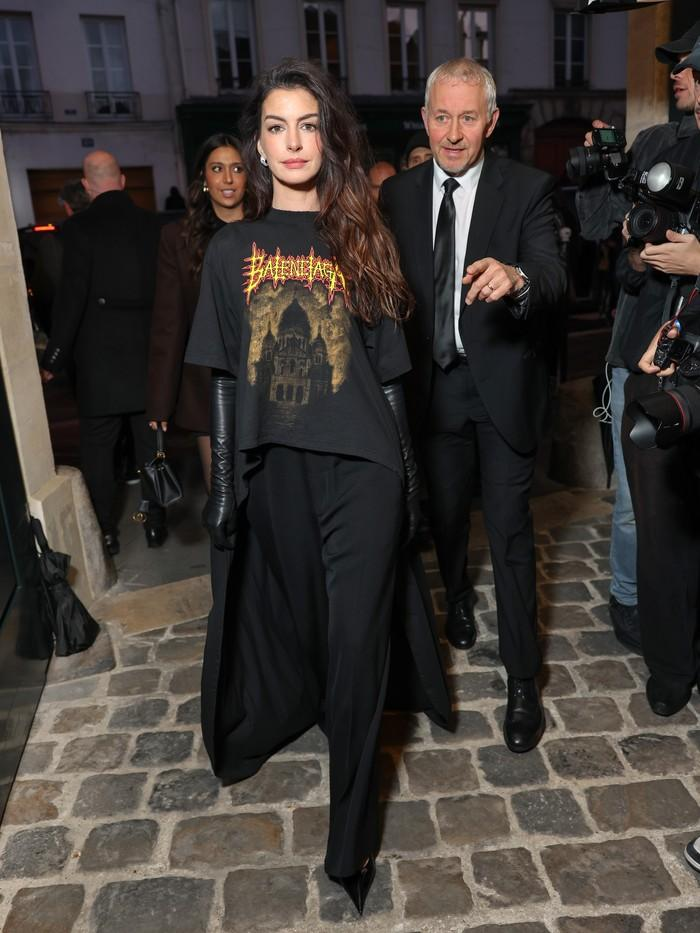
Hathaway’s promotional appearances for Mother Mary have drawn significant attention, not merely for style but for intent.
Her wardrobe—curated by stylist Erin Walsh—has consistently mirrored the themes of her character:
- Sheer couture gowns reflecting vulnerability and exposure
- Structured blazers suggesting control and reinvention
- Bold silhouettes aligning with the theatricality of pop stardom
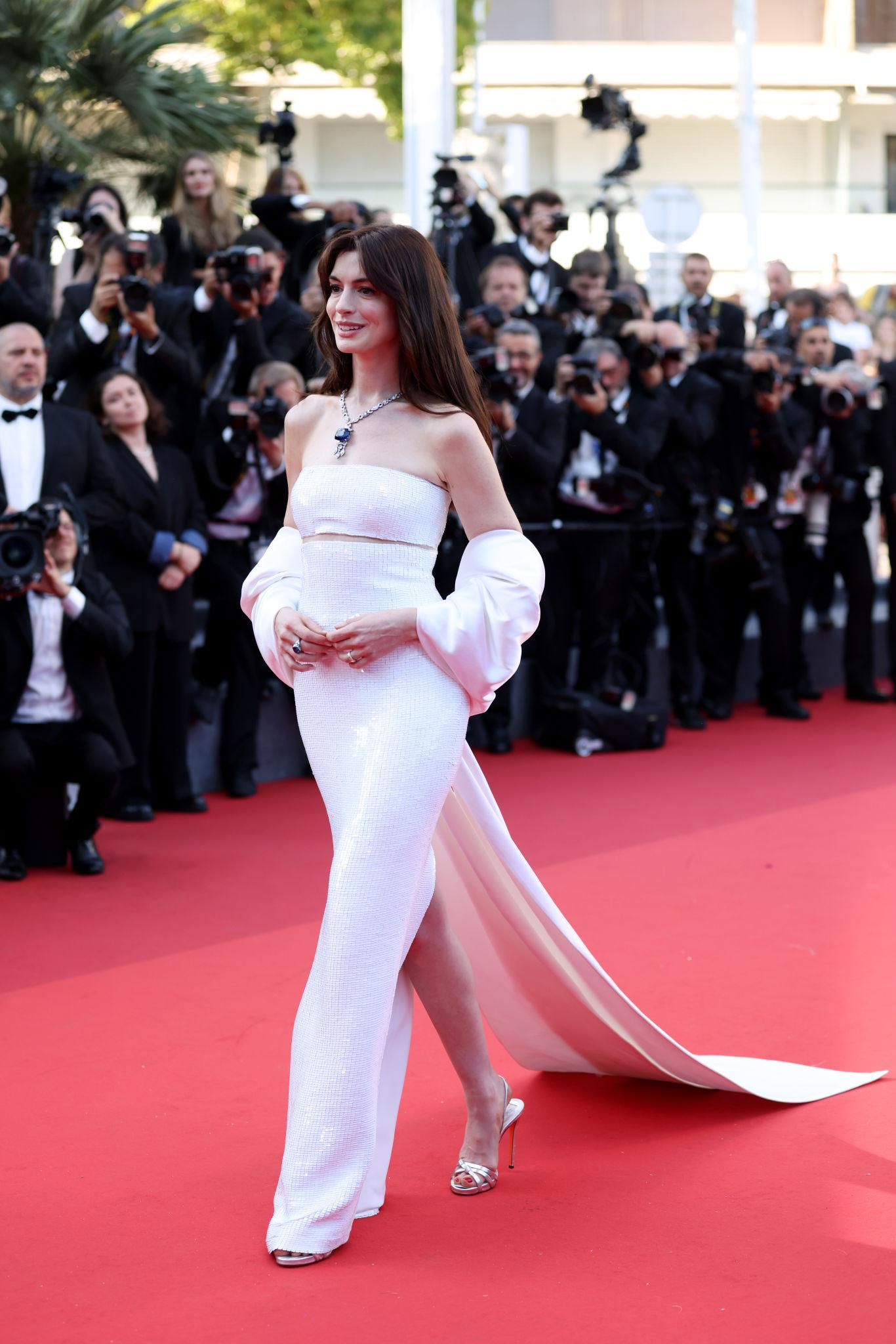
One standout appearance featured a shimmering Lever Couture gown paired with high-value Bulgari jewelry, signaling a fusion of cinematic identity and high fashion.
Another included a Calvin Klein fish-net dress layered with a blazer, reinforcing the aesthetic tension between fragility and authority.
This approach—often referred to as “method dressing”—positions Hathaway not just as an actor, but as a visual storyteller extending her performance beyond the screen.
Revisiting a Cultural Landmark: “The Devil Wears Prada 2”
While Mother Mary pushes boundaries, The Devil Wears Prada 2 capitalizes on cultural continuity.
The original film, released in 2006, became a defining moment in fashion cinema. Its sequel, arriving on May 1, 2026, revisits that universe in a dramatically different media landscape.
In conversation about returning to her role, Hathaway offered a reflective perspective:
“I actually got to do that… go back to that time knowing what I know now.”
The sequel’s narrative reportedly addresses:
- The shift from print to digital media
- The impact of social platforms on publishing
- Career evolution in a rapidly changing industry
This aligns closely with real-world transformations, giving the film contemporary relevance beyond nostalgia.
Industry Perception and Global Influence
Hathaway’s standing in the film industry remains strong, reinforced by both peer recognition and audience engagement.
Filmmaker Karan Johar recently described his experience meeting Hathaway and Streep as transformative:
“Some moments don’t feel real until you’re in them… I left enriched with their perspective towards their craft and cinema.”
Such reactions highlight her continued influence across global cinema networks.
Supporting Cast and Expanding Creative Networks
Both Mother Mary and Hathaway’s broader projects reflect a collaborative ecosystem of emerging and established talent.
The supporting cast of Mother Mary includes:
- Hunter Schafer
- Kaia Gerber
- Sian Clifford
These collaborations signal a blending of generational talent, reinforcing Hathaway’s role as both participant and anchor within evolving cinematic landscapes.
Cultural Implications: Reinvention as a Career Strategy
Hathaway’s current trajectory illustrates a broader trend in Hollywood: the necessity of reinvention.
Her strategy combines:
- Return to iconic roles for audience continuity
- Engagement with experimental cinema for critical relevance
- Integration of fashion and performance for brand expansion
This multi-layered approach positions her as a case study in sustained celebrity relevance.
What Comes Next?
With Mother Mary set for wider release following its New York promotional circuit and The Devil Wears Prada 2 arriving imminently, Hathaway’s 2026 calendar is densely packed.
Key expectations include:
- Strong box office performance driven by franchise recognition
- Critical discourse around Mother Mary’s experimental structure
- Continued influence in fashion and pop culture spaces
Conclusion: A Career Defined by Adaptation
Anne Hathaway’s current phase is less about reinvention in isolation and more about synthesis—combining past success with forward-looking choices.
Her ability to navigate between commercial appeal and artistic risk continues to define her relevance. In an industry shaped by rapid change, Hathaway remains not just present, but strategically positioned.


