

Angelina Jolie in 2026: A Career Reckoning, Personal Shifts, and Public Scrutiny
A Year of Contrasts for a Hollywood Icon
Few figures in modern cinema embody reinvention quite like Angelina Jolie. In 2026, the Oscar-winning actress finds herself at the intersection of artistic redemption, personal transformation, and relentless public attention. From a deeply personal performance as opera legend Maria Callas to renewed scrutiny over her appearance and major life decisions beyond Hollywood, Jolie’s current chapter is as complex as it is revealing.
This moment is not defined by a single headline but by overlapping narratives—each offering insight into a star navigating legacy, identity, and control in an industry that has often struggled to define her.
The Role That Closed a 22-Year Chapter
For much of her career, Jolie’s immense global fame stood in stark contrast to what critics often described as an inconsistent filmography. After early acclaim in Gia and an Academy Award-winning performance in Girl, Interrupted, she entered a prolonged period where her projects frequently failed to impress critics—even when audiences remained supportive.
One of the most pivotal missed opportunities came in 2002, when Jolie actively campaigned for a lead role in the musical Chicago. The film would go on to become a cultural phenomenon, winning the Academy Award for Best Picture and helping revive the movie musical genre. For Jolie, missing that role was more than a career setback—it was the loss of a rare chance to showcase her musical ambitions.
That absence lingered for over two decades.
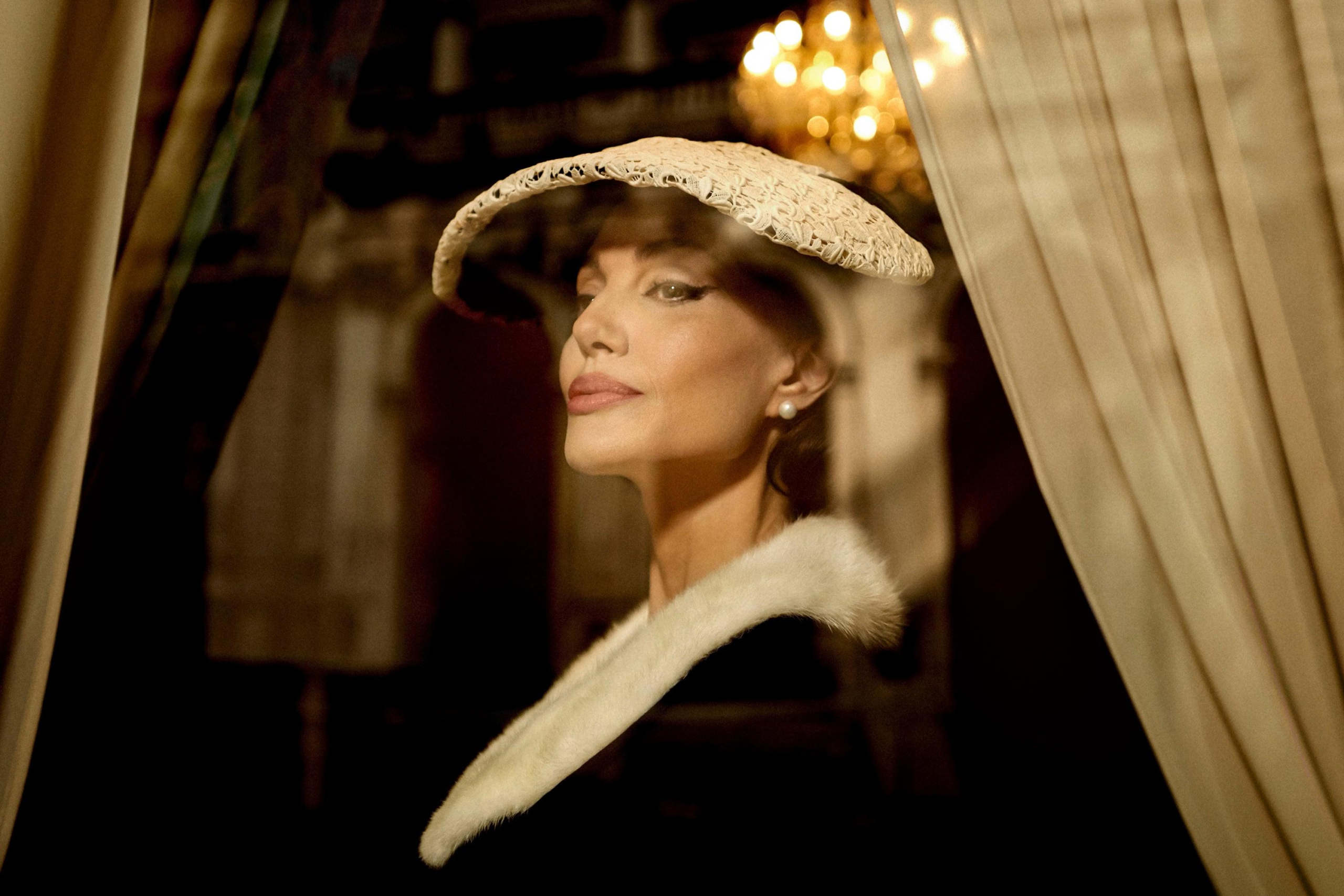
It wasn’t until her casting as Maria Callas in Maria, directed by Pablo Larraín, that Jolie finally found an opportunity to explore that long-suppressed dimension of her artistry. The role demanded extraordinary preparation: she spent seven months training in opera to approximate the legendary soprano’s voice. In certain scenes, she lip-synced to authentic recordings of Callas, blending technical precision with emotional depth.
The result was widely acclaimed, even if it did not translate into an Academy Award nomination in a fiercely competitive Best Actress race. Still, the film stands as one of Jolie’s most intimate performances—a reflective portrayal of a woman grappling with fame, regret, and legacy.
In many ways, Maria is not just a biopic. It is a mirror.
A Life Beyond Los Angeles: France and a New Beginning
Parallel to her artistic resurgence, Jolie appears to be reshaping her personal geography—and perhaps her identity.
Reports indicate that she is preparing to leave Los Angeles once her youngest children turn 18, marking the end of a chapter defined by custody arrangements following her divorce from Brad Pitt. She has reportedly begun selling her long-time Los Feliz estate and is planning a life that spans France, New York, Cambodia, and parts of Africa.
France, in particular, holds deep significance. Beyond its cultural appeal, it is home to Château Miraval, the vineyard she once shared with Pitt and which remains at the center of an ongoing legal dispute. The conflict—rooted in Jolie’s sale of her stake in the business—continues to generate legal friction, with court orders compelling her to disclose key communications related to the deal.
At the same time, Jolie has expressed a more personal connection to the country:
“I find it very enriching as an artist and as a woman to be in France… The conversations seem deeper and more enriching to me.”
This shift is not merely logistical. It reflects a broader desire to step away from Hollywood’s intensity and redefine her life on her own terms.
A Public Appearance Overshadowed by Scrutiny
Yet even as Jolie attempts to reframe her narrative, public perception remains a powerful—and often intrusive—force.
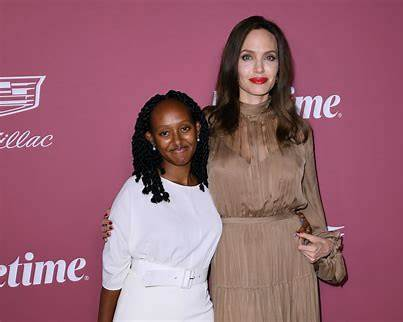
At a recent mother-daughter luncheon hosted by the Alpha Kappa Alpha sorority at Spelman College in Atlanta, Jolie appeared alongside her daughter Zahara in what was meant to be a celebration of family and empowerment. The event featured heartfelt speeches, including Zahara’s emotional tribute:
“I am a strong woman because a strong woman raised me. Thank you, Mom.”
However, the event’s message was quickly overshadowed. Social media reactions fixated not on the emotional significance of the gathering, but on Jolie’s appearance. Viewers speculated about changes in her look, attributing them to lighting, filters, or possible cosmetic procedures—despite Jolie’s past statements rejecting such interventions.
“I haven’t had anything done, and I don’t think I will,” she has previously said.
The episode underscores a persistent reality in celebrity culture: even moments of authenticity are vulnerable to distortion. In an era of viral clips and digital manipulation, public figures often lose control of their own narratives.
Motherhood, Identity, and a Changing Family Dynamic
Amid these developments, Jolie’s role as a mother remains central.
Her six children—Maddox, Pax, Zahara, Shiloh, Vivienne, and Knox—are increasingly stepping into adulthood and forging their own identities. Zahara, now a student at Spelman College, has emerged as a particularly visible figure, emphasizing values of empathy, mentorship, and social impact over any interest in Hollywood.
Her decision to use the name “Zahara Marley Jolie” reflects a broader trend within the family, as several of Jolie’s children distance themselves from the “Pitt” surname following the couple’s finalized divorce in 2024.
These shifts highlight a family in transition—one shaped not only by fame but by evolving personal choices and public scrutiny.
The Larger Narrative: Redemption, Control, and Reinvention
Taken together, the events of 2026 paint a portrait of Angelina Jolie at a pivotal moment.
Professionally, she has delivered one of the most acclaimed performances of her career, fulfilling a long-deferred artistic ambition. Personally, she is redefining her life beyond Los Angeles, seeking both physical and emotional distance from past conflicts. Publicly, she continues to navigate the challenges of scrutiny in an age where perception often overrides intention.
The throughline across all these developments is control—over her work, her environment, and her narrative.
Conclusion: A Star Still Writing Her Story
Angelina Jolie’s story has never followed a predictable arc. From early acclaim to critical setbacks, from global stardom to personal upheaval, she has consistently resisted easy categorization.
In 2026, she is neither simply making a comeback nor retreating from the spotlight. Instead, she is recalibrating—choosing roles that matter, environments that resonate, and a pace that reflects her priorities.
Whether through a quiet, introspective film like Maria or a public appearance that sparks global conversation, Jolie remains a figure of fascination—not because she conforms to expectations, but because she continually reshapes them.


