
Al Capone Net Worth, Relationships, Age/Birthdate & Birthday
Overview of Al Capone — net worth, relationships, age/birthdate, and birthday.
 loveness92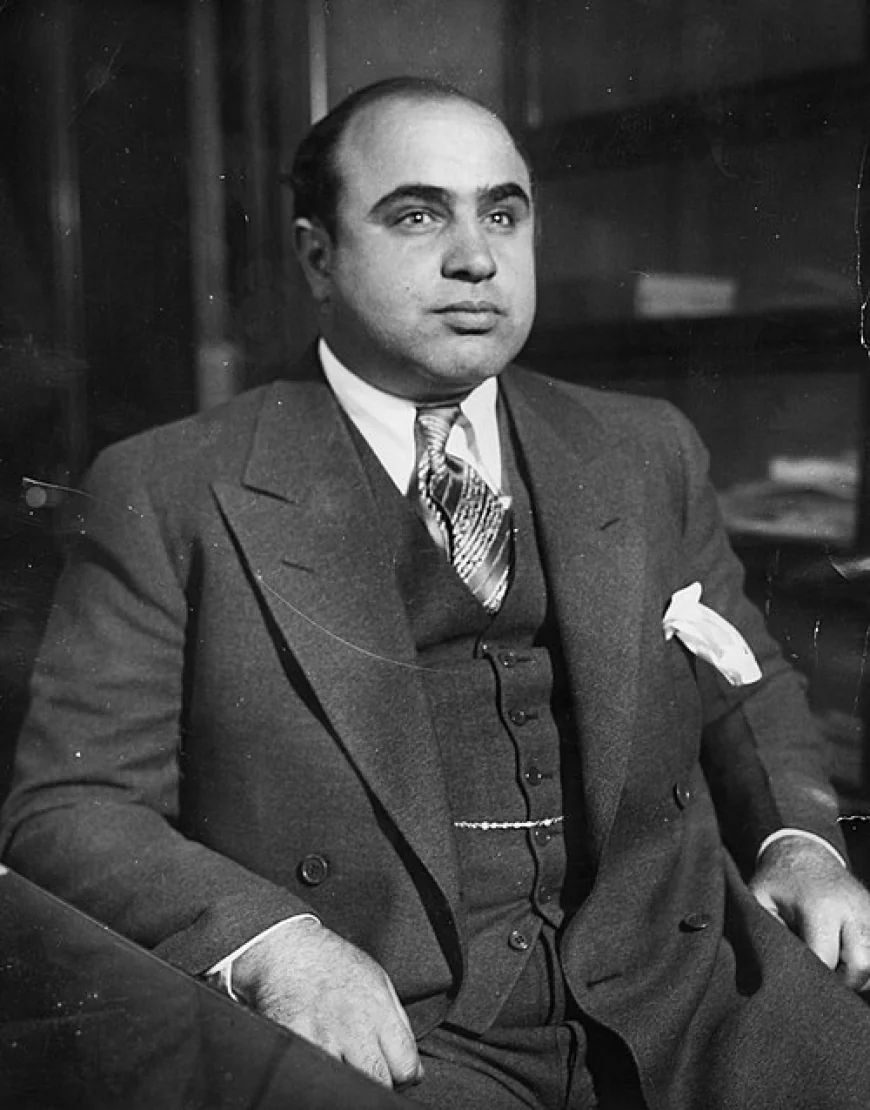
The Rise of a Notorious Empire
Alphonse Gabriel Capone — better known as Al Capone — was born on January 17, 1899, in Brooklyn, New York, to Italian immigrant parents. As a youth he dropped out of school and drifted into street life — an arc that would eventually redefine organized crime in America.
Capone’s ascent from a petty gangster to the leader of a crime syndicate was dramatic. Under his leadership, the criminal organization he oversaw — known widely as the Chicago Outfit — grew into a sprawling empire during the Prohibition era, controlling bootlegging, gambling, prostitution, and other illicit trades across Chicago and beyond.
When Money Talked: The Fortune Behind the Infamy
The question of what Al Capone’s net worth truly was has intrigued historians and criminologists for decades. Because much of his wealth was in cash and illicit revenue, precise accounting is all but impossible. Still, multiple estimates offer a window into the scale of his financial empire.
-
Some sources suggest that at the height of his power, Capone was making roughly $60 million annually from bootlegging — a figure which, when adjusted for inflation, has been quoted as equivalent to hundreds of millions or even over a billion in today’s dollars.
-
At his peak influence, some estimates place his personal net worth around $100 million (some sources argue that translates to approximately $1.5 billion today).
-
That said, not all assessments agree — others note that after legal costs, bribes, the overhead of maintaining a big criminal operation, and asset seizures by the government, his actual wealth was likely far lower.
In short: while it’s tempting to label Capone a “billionaire gangster,” a more defensible reading is that he controlled a cash flow and criminal enterprise comparable to a mid-sized company — vast for the time, but ambiguous by modern accounting standards.
Family, Love, and the Human Side of “Scarface”
Capone’s personal life was far less chaotic than his public persona might suggest. On December 30, 1918, he married Mae Capone, an Irish-Catholic woman; earlier that same month she had given birth to their son Albert Francis "Sonny" Capone.
By all accounts, their marriage was stable and supportive, a stark contrast to the violence and chaos associated with Capone’s criminal life. Many historians highlight this aspect to illustrate how, behind the myths of the gangster empire, there was a family structure and relationships — even if overshadowed by criminal infamy.
But Capone never escaped the consequences of his actions. After years of criminal dominance, his empire crumbled under relentless investigations into tax evasion. In 1931, he was convicted on those charges — not for murder or racketeering — and sent to prison.
The Final Years: Decline, Retreat, and Legacy
Following more than a half-decade in prison, health complications — chiefly stemming from long-term syphilis — ravaged Capone’s mind and body. He was released in 1939 and spent his final years away from the spotlight, far removed from the speakeasies, guns, and money vaults that once defined him.
Capone died on January 25, 1947, in Palm Island, Miami Beach, Florida — just days past his birthday. His death marked the end of one of the most notorious lives in American criminal history.
Yet his legend endures: as the gangster who turned crime into big business, as a public-enemy cult figure, and as a cautionary tale about the fleeting nature of illicit wealth and power. Historians still debate whether Capone’s legacy is one of ruthless ambition or organizational genius — but either way, his name remains carved into the annals of American history.
Why Al Capone Still Matters
Al Capone’s life is more than a crime story — it's a sobering reflection of the era: the desperation brought by immigration, the allure of fast money during Prohibition, and the interplay of corruption, power, and social upheaval.
Whether his net worth was $100 million, $1.5 billion (inflation-adjusted), or something in between, the fact remains that Capone built — and lost — a fortune of epic proportions. His rise and fall continue to fascinate because they mirror broader themes: ambition, excess, legacy, and downfall.
By weaving together his birthdate, personal relationships, business empire, and final decline, we see not just a gangster — but a figure whose story resonates beyond crime history, into American culture itself.