

End of an Era at Apple: Tim Cook Steps Down, John Ternus Prepares to Lead the Future
A Historic Leadership Transition Unfolds
Apple is entering one of the most significant leadership transitions in its modern history. After 15 years at the helm, Tim Cook will step down as Chief Executive Officer later this year, handing over the reins to longtime company veteran John Ternus.
The transition, set to take effect on September 1, 2026, marks the end of a defining chapter for the technology giant. Cook, who has led Apple since 2011 following the departure of co-founder Steve Jobs, will not leave the company entirely. Instead, he will assume the role of Executive Chairman of Apple’s board, continuing to influence strategic direction and global engagement.
For Apple, this is not just a routine leadership change—it is a generational shift that could redefine the company’s trajectory in an increasingly competitive and AI-driven tech landscape.
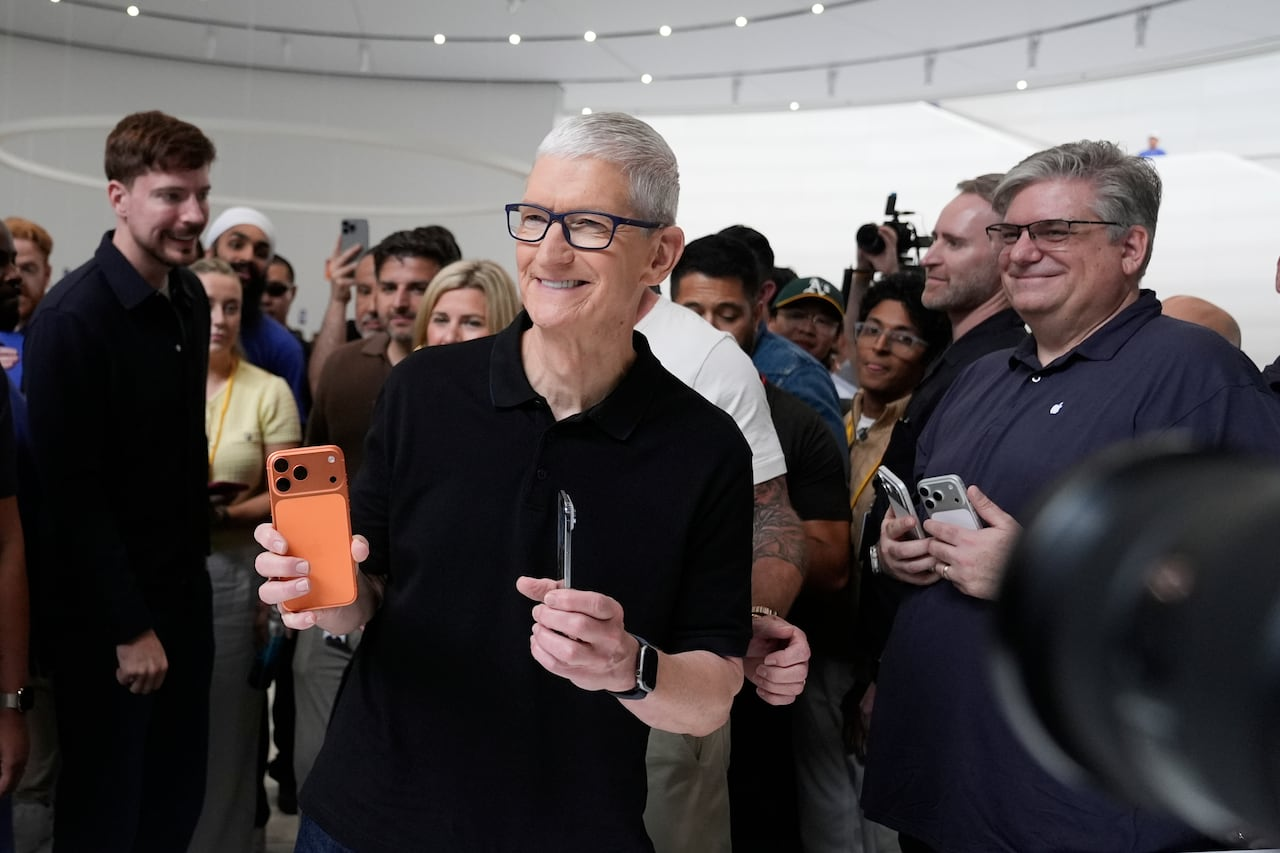
Tim Cook’s Legacy: From Stability to Trillion-Dollar Dominance
When Tim Cook became CEO in 2011, Apple was already a powerhouse, but it was still navigating uncertainty after Steve Jobs’ passing. Cook’s leadership style—methodical, operationally disciplined, and globally focused—proved transformative.
Over the course of his tenure:
- Apple’s market value surged from around $350 billion to approximately $4 trillion
- Annual revenue grew from $108 billion in 2011 to $416 billion in 2025
- The company expanded its footprint to more than 200 countries and territories
- Apple Services evolved into a business generating over $100 billion annually
Cook oversaw the launch of major product categories and services, including Apple Watch, AirPods, Vision Pro, and iCloud, while strengthening Apple’s ecosystem and refining its supply chain.
He also guided Apple through pivotal technological transitions, most notably the shift to Apple-designed silicon, which fundamentally reshaped the company’s hardware capabilities.
Reflecting on his time as CEO, Cook described the role as deeply personal:
“It has been the greatest privilege of my life to be the CEO of Apple… I love Apple with all of my being.”
Despite criticism that Apple became more incremental in innovation during his tenure, Cook leaves behind a company that is financially dominant, operationally efficient, and globally influential.
Meet John Ternus: The Engineer Taking the Helm
Stepping into this powerful position is John Ternus, Apple’s Senior Vice President of Hardware Engineering—a leader who has spent nearly his entire career inside the company.
Ternus joined Apple in 2001 and steadily rose through the ranks:
- Became Vice President of Hardware Engineering in 2013
- Joined the executive team as SVP in 2021
Over more than two decades, he has played a central role in developing Apple’s core product lines, contributing to:
- Multiple generations of iPhone, iPad, Mac, and Apple Watch
- Launch of new categories like AirPods
- The transition to Apple Silicon, a cornerstone of Apple’s modern hardware strategy
Cook himself endorsed Ternus in unequivocal terms:
“John Ternus has the mind of an engineer, the soul of an innovator, and the heart to lead with integrity and with honor… he is without question the right person to lead Apple into the future.”
Unlike Cook, whose strengths lay in operations and logistics, Ternus represents a return to a product- and engineering-centric leadership style—a shift many analysts see as deliberate.
Why This Transition Was Expected
For industry observers, the move did not come as a surprise. Cook, now 65, has been CEO for 15 years, and speculation about succession had been building for months.
Meanwhile, Ternus has become increasingly visible within Apple, frequently appearing at major product launches and playing a prominent role in recent announcements—signals often interpreted as grooming for leadership.
His appointment also aligns with Apple’s historical pattern of internal succession, maintaining continuity while adapting leadership to new strategic priorities.
The Challenges Awaiting Apple’s New CEO
While Ternus inherits one of the most valuable companies in the world, he also faces a complex and evolving set of challenges.
1. The AI Gap
Perhaps the most pressing issue is Apple’s position in artificial intelligence.
Despite early innovations like Siri, Apple has struggled to keep pace with competitors such as Google, Microsoft, and OpenAI. Recent efforts, including Apple Intelligence, have yet to achieve widespread adoption, and delays in upgrading Siri have raised concerns.
Ternus must now define Apple’s AI strategy—balancing innovation with the company’s longstanding emphasis on privacy.
2. Innovation Pressure
Critics argue that Apple has relied heavily on iterative updates rather than breakthrough products in recent years. The next CEO will be expected to deliver new categories or transformative technologies that can drive future growth.
Analysts suggest that a hardware-focused leader like Ternus could reignite Apple’s product innovation pipeline, potentially exploring areas such as wearables, foldable devices, or entirely new ecosystems.
3. Regulatory and Global Pressures
Apple continues to face mounting scrutiny from regulators in the United States and Europe over its “walled garden” ecosystem. At the same time, geopolitical tensions and supply chain shifts—particularly away from China—add further complexity to its operations.
4. Defining the Next Growth Engine
Despite its success, Apple remains heavily dependent on the iPhone. Identifying the company’s next major revenue driver will be critical for sustaining long-term growth.
A Broader Leadership Reshuffle
The transition also brings changes across Apple’s executive structure:
- Johny Srouji will become Chief Hardware Officer, taking over responsibilities previously managed by Ternus.
- Arthur Levinson, Apple’s longtime non-executive chairman, will move into the role of lead independent director.
These shifts signal a broader organizational realignment as Apple prepares for its next chapter.
What This Means for Apple’s Future
Leadership transitions at Apple have historically defined eras. Steve Jobs shaped the company’s identity as a design-driven innovator. Tim Cook transformed it into a global economic powerhouse.
Now, John Ternus steps into a role that requires balancing both legacies—innovation and execution.
His appointment suggests Apple may be pivoting toward a renewed emphasis on hardware excellence as the foundation for emerging technologies like AI. As one analyst noted, even in an AI-dominated future, devices will remain essential—and Apple’s strength has always been building those devices exceptionally well.
Conclusion: A Defining Moment for the Tech Giant
The departure of Tim Cook as CEO marks the end of a remarkably successful era, defined by stability, growth, and global expansion. His successor, John Ternus, inherits not only a thriving company but also the responsibility to guide it through a rapidly changing technological landscape.
With challenges ranging from artificial intelligence to regulatory scrutiny and innovation demands, the coming years will test Apple’s ability to evolve once again.
If history is any guide, the company’s next chapter—under Ternus—could be just as consequential as the last.


